













Antioxidant canolol production from a renewable feedstock via an engineered decarboxylase
Literature Information
Publication Date
2013-10-03
DOI
10.1039/C3GC40748A
Impact Factor
10.182
Authors
Krista L. Morley, Stephan Grosse, Hannes Leisch
View Original
Abstract
Canolol (4-vinylsyringol, VS), a potent antioxidant and an alkylperoxyl radical scavenger originally discovered in crude canola oil (rapeseed), is produced by decarboxylation of sinapic acid (SA) during canola seed roasting. Chemical syntheses of VS from SA require thermal or microwave induced decarboxylation in the presence of a base. A laboratory-evolved enzyme, designated SA decarboxylase (SAD), was developed in this study. In a biphasic bioreactor system, SAD was shown to produce VS from SA extracts prepared from canola meal with an overall yield of 3.0 mg VS per g of canola meal. In addition, we investigated the application of VS in polymerization to produce polyvinylsyringol (PVS) as a potential biodegradable polymer. The characteristics of PVS determined by thermogravimetric analysis, differential scanning calorimetry and nanoindentation tests are described.
Related Literature
Target-controlled in situ formation of G-quadruplex DNAzyme for a sensitive visual assay of telomerase activity
Yaocai Wang, Luzhu Yang, Yanjun Wang, Wei Liu, Baoxin Li, Yan Jin
2019-08-09
Paper
DOI: 10.1039/C9AN01271K
A catalytic DNA circuit-programmed and enzyme-powered autonomous DNA machine for nucleic acid detection
Shuang Liu, Chen Xin, Xiaoxiao Yu, Zhenbo Ding, Shufeng Liu
2019-09-09
Communication
DOI: 10.1039/C9AN01568J
Electrochemical detection of protein glycosylation using lectin and protein–gold affinity interactions
Laura G. Carrascosa, Abu A. I. Sina, Muhammad J. A. Shiddiky
2016-03-11
Communication
DOI: 10.1039/C6AN00528D
Tracking of STAT3 signaling for anticancer drug-discovery based on localized surface plasmon resonance
Sojin Song, Anh H. Nguyen, Jong Uk Lee, Misun Cha
2016-03-21
Paper
DOI: 10.1039/C5AN02397A
A visual and reversible assay for temperature using thioflavin T-doped lanthanide/nucleotide coordination polymers
Yan-Yun Li, Xiao-Qin Jiang, Min Zhang, Guoyue Shi
2016-03-11
Communication
DOI: 10.1039/C6AN00274A
Analytically useful blue chemiluminescence from a water-soluble iridium(iii) complex containing a tetraethylene glycol functionalised triazolylpyridine ligand
Zoe M. Smith, Emily Kerr, Egan H. Doeven, Neil W. Barnett, Paul S. Donnelly, Stephen J. Haswell, Paul S. Francis
2016-02-26
Communication
DOI: 10.1039/C6AN00141F
Efficient enantiorecognition of amino acids under a stimuli-responsive system: synthesis, characterization and application of electroactive rotaxane
Datong Wu, Fei Pan, Gao-Chao Fan, Ziming Zhu, Li Gao, Yongxin Tao, Yong Kong
2019-09-23
Paper
DOI: 10.1039/C9AN01692A
A near infrared fluorescent probe for the detection and imaging of prolyl aminopeptidase activity in living cells
Xianjun Liu, Quan-Yu Zhang, Fenglin Wang, Jian-Hui Jiang
2019-08-27
Paper
DOI: 10.1039/C9AN01303B
Cognitive spectroscopy for wood species identification: near infrared hyperspectral imaging combined with convolutional neural networks
Hideaki Kanayama, Te Ma, Satoru Tsuchikawa, Tetsuya Inagaki
2019-10-02
Paper
DOI: 10.1039/C9AN01180C
Convenient and controllable preparation of a novel uniformly nitrogen doped porous graphene/Pt nanoflower material and its highly-efficient electrochemical biosensing
Shuang Ren, Huan Wang, Yufan Zhang, Yuena Sun, Lanfen Li, Hongyi Zhang, Zhihong Shi, Mingjie Li, Meng Li
2016-03-11
Paper
DOI: 10.1039/C5AN02654G
You might also like
Compound Q&A
What precautions should be taken when handling 4-(2-Furylmethyl)thiomorpholine 1,1-dioxide (CAS: 79206-94-3)?
When handling 4-(2-Furylmethyl)thiomorpholine 1,1-dioxide (CAS: 79206-94-3), it ...
79206-94-34-(2-Furylmethyl)thi...
Compound Q&A
What precautions should be taken when handling 4-Chloro-N-[2-(4-morpholinyl)ethyl]benzamide (CAS: 71320-77-9)?
When handling 4-Chloro-N-[2-(4-morpholinyl)ethyl]benzamide (CAS: 71320-77-9), it...
71320-77-94-Chloro-N-[2-(4-mor...
Compound Q&A
How should waste containing 2-[2-(2-Methoxyethoxy)ethoxy]ethyl 4-methylbenzenesulfonate (CAS: 62921-74-8) be handled?
Waste containing this compound (CAS: 62921-74-8) should be handled according to ...
62921-74-82-[2-(2-Methoxyethox...
Compound Q&A
How should waste containing (S)-Methyl 2-amino-3-cyclohexylpropanoate be handled?
Waste containing (S)-Methyl 2-amino-3-cyclohexylpropanoate should be collected i...
40056-18-6(S)-Methyl 2-amino-3...
Compound Q&A
How is 5-({4-[(2S,4R)-4-Hydroxy-2-methyltetrahydro-2H-pyran-4-yl]-2-thienyl}sulfanyl)-1-methyl-1,3-dihydro-2H-indol-2-one (CAS: 166882-70-8) typically synthesized?
This compound can be synthesized using a multi-step process involving the conjug...
166882-70-85-({4-[(2S,4R)-4-Hyd...
Compound Q&A
Are there alternatives to (2E)-3-(3,4-Dichlorophenyl)acrylic acid (CAS: 7312-27-8) in synthesis?
There are several alternatives to (2E)-3-(3,4-Dichlorophenyl)acrylic acid in syn...
7312-27-8(2E)-3-(3,4-Dichloro...
Compound Q&A
How should Ethyl 6-(2-nitrophenyl)imidazo[2,1-b][1,3]thiazole-3-carboxylate (CAS: 925437-84-9) be stored?
Ethyl 6-(2-nitrophenyl)imidazo[2,1-b][1,3]thiazole-3-carboxylate (CAS: 925437-84...
925437-84-9Ethyl 6-(2-nitrophen...
Compound Q&A
How should waste containing 2-(1,3-Thiazol-2-yl)ethanamine (CAS: 18453-07-1) be handled?
Waste containing 2-(1,3-Thiazol-2-yl)ethanamine (CAS: 18453-07-1) should be coll...
18453-07-12-(1,3-Thiazol-2-yl)...
Compound Q&A
How is Methyl 5-iodo-2-methylbenzoate (CAS: 103440-54-6) typically synthesized?
Methyl 5-iodo-2-methylbenzoate can be synthesized through the iodination of meth...
103440-54-6Methyl 5-iodo-2-meth...
Compound Q&A
How is 5-Chloro[1,2,4]triazolo[1,5-a]pyridine (CAS: 1427399-34-5) typically synthesized?
5-Chloro[1,2,4]triazolo[1,5-a]pyridine is commonly synthesized via the condensat...
1427399-34-55-Chloro[1,2,4]triaz...
Source Journal
Green Chemistry

CiteScore:
16.1
Self-citation Rate:
7.5%
Articles per Year:
944
Green Chemistry provides a unique forum for the publication of innovative research on the development of alternative green and sustainable technologies. The scope of Green Chemistry is based on, but not limited to, the definition proposed by Anastas and Warner (Green Chemistry: Theory and Practice, P T Anastas and J C Warner, Oxford University Press, Oxford, 1998). Green chemistry is the utilisation of a set of principles that reduces or eliminates the use or generation of hazardous substances in the design, manufacture and application of chemical products. Green Chemistry is at the frontiers of this continuously-evolving interdisciplinary science and publishes research that attempts to reduce the environmental impact of the chemical enterprise by developing a technology base that is inherently non-toxic to living things and the environment. Submissions on all aspects of research relating to the endeavour are welcome. The journal publishes original and significant cutting-edge research that is likely to be of wide general appeal. To be published, work must present a significant advance in green chemistry. Papers must contain a comparison with existing methods and demonstrate advantages over those methods before publication can be considered. For more information please see this Editorial. Coverage includes the following, but is not limited to: Design (e.g. biomimicry, design for degradation/recycling/reduced toxicity…) Reagents & Feedstocks (e.g. renewables, CO2, solvents, auxiliary agents, waste utilization…) Synthesis (e.g. organic, inorganic, synthetic biology…) Catalysis (e.g. homogeneous, heterogeneous, enzyme, whole cell…) Process (e.g. process design, intensification, separations, recycling, efficiency…) Energy (e.g. renewable energy, fuels, photovoltaics, fuel cells, energy storage, energy carriers…) Applications (e.g. electronics, dyes, consumer products, coatings, pharmaceuticals, preservatives, building materials, chemicals for industry/agriculture/mining…) Impact (e.g. safety, metrics, LCA, sustainability, (eco)toxicology…) Green chemistry is, by definition, a continuously-evolving frontier. Therefore, the inclusion of a particular material or technology does not, of itself, guarantee that a paper is suitable for the journal. To be suitable, the novel advance should have the potential for reduced environmental impact relative to the state of the art. Green Chemistry does not normally deal with research associated with 'end-of-pipe' or remediation issues.
Recommended Compounds
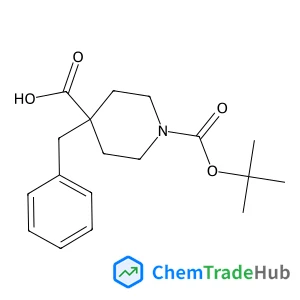
4-Benzyl-1-(tert-butoxycarbonyl)piperidine-4-carboxylic acid
CAS Number:
170838-87-6
Molecular Formula:
C18H25NO4
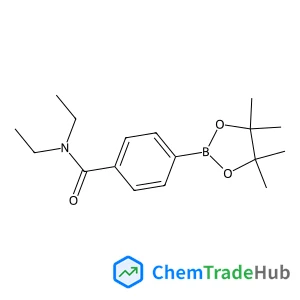
N,N-Diethyl-4-(4,4,5,5-tetramethyl-1,3,2-dioxaborolan-2-yl)benzamide
CAS Number:
325142-99-2
Molecular Formula:
C17H26BNO3
![Methyl 4-({[(2-methyl-2-propanyl)oxy]carbonyl}amino)bicyclo[2.2.2]octane-1-carboxylate structure](https://static.chemtradehub.com/structs/943/943845-74-7-b7e5.webp "Methyl 4-({[(2-methyl-2-propanyl)oxy]carbonyl}amino)bicyclo[2.2.2]octane-1-carboxylate structure")
Methyl 4-({[(2-methyl-2-propanyl)oxy]carbonyl}amino)bicyclo[2.2.2]octane-1-carboxylate
CAS Number:
943845-74-7
Molecular Formula:
C15H25NO4
Recommended Suppliers






Disclaimer
This page provides academic journal information for reference and research purposes only. We are not affiliated with any journal publishers and do not handle publication submissions. For publication-related inquiries, please contact the respective journal publishers directly.
If you notice any inaccuracies in the information displayed, please contact us at support@chemtradehub.com. We will promptly review and address your concerns.