













The behavior and origin of the excess wing in DEET (N,N-diethyl-3-methylbenzamide)
Literature Information
Publication Date
2013-04-15
DOI
10.1039/C3CP50975C
Impact Factor
3.676
Authors
S. Hensel-Bielowka, J. R. Sangoro, Z. Wojnarowska, M. Paluch
View Original
Abstract
Broadband dielectric spectroscopy along with a high pressure technique and quantum-mechanical calculations are employed to study in detail the behavior and to reveal the origin of the excess wing (EW) in neat N,N-diethyl-3-methylbenzamide (DEET). Our analysis of dielectric spectra again corroborates the idea that the EW is a hidden β-relaxation peak. Moreover, we found that the position frequency of the β peak corresponds to the position of the primitive relaxation of the Coupling Model. We also studied the possible intramolecular rotations in DEET by means of DFT calculation. On that basis we were able to describe the EW as the JG β-relaxation and find the possible origin of the γ-relaxation visible in DEET dielectric spectra at very low temperatures.
Related Literature
Assembly of a polyoxometalate into an anisotropic gel
Sophie Favette, Bernold Hasenknopf, Jacqueline Vaissermann, Pierre Gouzerh, Cécile Roux
2003-09-25
Communication
DOI: 10.1039/B308889H
Synthetic studies on ecteinascidin 743: rapid access to the fully functionalized tetrahydroisoquinoline with a bridged 10-membered sulfur containing macrocycle
Michaël De Paolis, Angèle Chiaroni, Jieping Zhu
2003-10-20
Communication
DOI: 10.1039/B309824A
Phase transitions in calcium nitrate thin films
Hind A. Al-Abadleh, B. J. Krueger, J. L. Ross, V. H. Grassian
2003-10-14
Communication
DOI: 10.1039/B308632A
Rotavap simulation and the estimation of boiling points
Craig R. Stewart, Jonathan M. Goodman
2003-09-29
Communication
DOI: 10.1039/B309488J
Palladium-containing perovskites: recoverable and reuseable catalysts for Suzuki couplings
Martin D. Smith, Antonia F. Stepan, Chandrashekar Ramarao, Paul E. Brennan, Steven V. Ley
2003-09-30
Communication
DOI: 10.1039/B308465E
Total synthesis of (±)-acetoxyodontoschismenol using zirconium chemistry
Ian R. Baldwin, Richard J. Whitby
2003-10-11
Communication
DOI: 10.1039/B309848F
Long-term pervaporation performance of microporous methylated silica membranes
Jean Campaniello, Charles W. R. Engelen, Wim G. Haije, Paul P. A. C. Pex, Jaap F. Vente
2004-02-27
Communication
DOI: 10.1039/B401496K
Unexpected features of stretched Si–H⋯Mo β-agostic interactions‡
Stanislav K. Ignatov, Nicholas H. Rees, Stuart R. Dubberley, Alexei G. Razuvaev, Philip Mountford, Georgii I. Nikonov
2004-03-10
Communication
DOI: 10.1039/B315517J
Solvent-free ketone hydrogenations catalyzed by molybdenum complexes
Barbara F. M. Kimmich, Paul J. Fagan, Elisabeth Hauptman, R. Morris Bullock
2004-03-22
Communication
DOI: 10.1039/B401760A
Electrochemical lithography: fabrication of nanoscale Si tips by porous anodization of Al/Si wafer
L. Pu, Y. Shi, J. M. Zhu, X. M. Bao, R. Zhang, Y. D. Zheng
2004-03-18
Communication
DOI: 10.1039/B315810A
You might also like
Compound Q&A
What is the market or research trend for N-(4-Methoxybenzyl)-2-pyridinamine (CAS: 52818-63-0)?
N-(4-Methoxybenzyl)-2-pyridinamine (CAS: 52818-63-0) is increasingly being used ...
52818-63-0N-(4-Methoxybenzyl)-...
Compound Q&A
What precautions should be taken when handling Ethyl 4-(2-chlorophenyl)-1,3-thiazole-2-carboxylate (CAS: 1050507-06-6)?
When handling Ethyl 4-(2-chlorophenyl)-1,3-thiazole-2-carboxylate, appropriate p...
1050507-06-6Ethyl 4-(2-chlorophe...
Compound Q&A
What regulatory guidelines apply to diethyldiselane (CAS: 628-39-7)?
Diethyldiselane (CAS: 628-39-7) is classified under the Globally Harmonized Syst...
628-39-7Diethyldiselane
Compound Q&A
What is the market or research trend for oxocopper (CAS: 12053-18-8)?
The market for oxocopper (CAS: 12053-18-8) is primarily driven by its use in cat...
12053-18-8oxocopper; oxo-(oxoc...
Compound Q&A
What is the market or research trend for 5-{[(2-Methyl-2-propanyl)oxy]carbonyl}-5-azaspiro[2.4]heptane-7-carboxylic acid?
The market for 5-{[(2-Methyl-2-propanyl)oxy]carbonyl}-5-azaspiro[2.4]heptane-7-c...
1268519-54-55-{[(2-Methyl-2-prop...
Compound Q&A
What is 2-(1-Pyrrolidinyl)-4-pyridinamine (CAS: 35981-63-6)?
2-(1-Pyrrolidinyl)-4-pyridinamine is a chemical compound with the CAS number 359...
35981-63-62-(1-Pyrrolidinyl)-4...
Compound Q&A
What are the physical and chemical properties of 2-(3-Pyridinyl)-1-azabicyclo[2.2.2]octane (CAS: 91556-75-1)?
2-(3-Pyridinyl)-1-azabicyclo[2.2.2]octane (CAS: 91556-75-1) is a crystalline sol...
91556-75-12-(3-Pyridinyl)-1-az...
Compound Q&A
How is (S)-Alpha-allyl-proline hydrochloride (CAS: 129704-91-2) typically synthesized?
(S)-Alpha-allyl-proline hydrochloride is usually synthesized via a Wittig reacti...
129704-91-2(S)-Alpha-allyl-prol...
Compound Q&A
What is 3-Methyl-1,2-oxazole-5-carboxylic acid (CAS: 4857-42-5)?
3-Methyl-1,2-oxazole-5-carboxylic acid (CAS: 4857-42-5) is an organic compound w...
4857-42-53-Methyl-1,2-oxazole...
Compound Q&A
How is Lys-SMCC-DM1 (CAS: 1281816-04-3) typically synthesized?
Lys-SMCC-DM1 is synthesized via a multi-step process involving the coupling of S...
1281816-04-3Lys-SMCC-DM1
Source Journal
Physical Chemistry Chemical Physics

CiteScore:
5.5
Self-citation Rate:
10.3%
Articles per Year:
3036
Physical Chemistry Chemical Physics (PCCP) is an international journal co-owned by 19 physical chemistry and physics societies from around the world. This journal publishes original, cutting-edge research in physical chemistry, chemical physics and biophysical chemistry. To be suitable for publication in PCCP, articles must include significant innovation and/or insight into physical chemistry; this is the most important criterion that reviewers and Editors will judge against when evaluating submissions. The journal has a broad scope and welcomes contributions spanning experiment, theory, computation and data science. Topical coverage includes spectroscopy, dynamics, kinetics, statistical mechanics, thermodynamics, electrochemistry, catalysis, surface science, quantum mechanics, quantum computing and machine learning. Interdisciplinary research areas such as polymers and soft matter, materials, nanoscience, energy, surfaces/interfaces, and biophysical chemistry are welcomed if they demonstrate significant innovation and/or insight into physical chemistry. Joined experimental/theoretical studies are particularly appreciated when complementary and based on up-to-date approaches.
Recommended Compounds
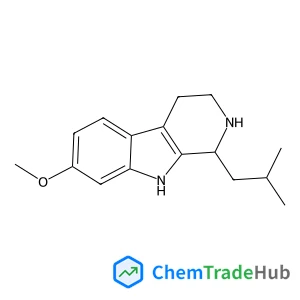
1-Isobutyl-7-methoxy-2,3,4,9-tetrahydro-1H-beta-carboline
CAS Number:
175975-76-5
Molecular Formula:
C16H22N2O
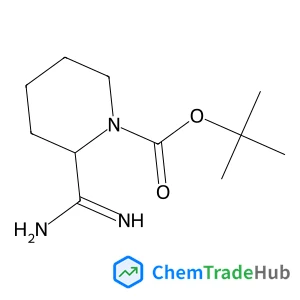
2-Methyl-2-propanyl 2-carbamimidoyl-1-piperidinecarboxylate
CAS Number:
1258640-98-0
Molecular Formula:
C11H21N3O2
![1-{3-[4-Amino-3-(4-phenoxyphenyl)-1H-pyrazolo[3,4-d]pyrimidin-1-yl]-1-piperidinyl}-2,3-dihydroxy-1-propanone structure](https://static.chemtradehub.com/structs/122/1226872-27-0-e037.webp "1-{3-[4-Amino-3-(4-phenoxyphenyl)-1H-pyrazolo[3,4-d]pyrimidin-1-yl]-1-piperidinyl}-2,3-dihydroxy-1-propanone structure")
1-{3-[4-Amino-3-(4-phenoxyphenyl)-1H-pyrazolo[3,4-d]pyrimidin-1-yl]-1-piperidinyl}-2,3-dihydroxy-1-propanone
CAS Number:
1226872-27-0
Molecular Formula:
C25H26N6O4
Recommended Suppliers






Disclaimer
This page provides academic journal information for reference and research purposes only. We are not affiliated with any journal publishers and do not handle publication submissions. For publication-related inquiries, please contact the respective journal publishers directly.
If you notice any inaccuracies in the information displayed, please contact us at support@chemtradehub.com. We will promptly review and address your concerns.