












Thiophene-fused isoindigo based conjugated polymers for ambipolar organic field-effect transistors
Literature Information
Publication Date
2015-10-23
DOI
10.1039/C5PY01488C
Impact Factor
5.582
Authors
Na Ai, Xiao Wang, Jian Pei, Xiaobo Wan
View Original
Abstract
A series of donor–acceptor (D–A) type conjugated polymers based on novel thiophene-fused isoindigo (TII) were designed and synthesized via palladium catalyzed Stille copolymerization. We found that the redesign of the synthesis of brominated TII was necessary, and the α-bromination had to be completed at the very beginning, or β-brominated TII was obtained, which only led to cross conjugated polymers. Once the bromination was introduced at the correct position, fully conjugated D–A type polymers could be obtained. A series of fully conjugated polymers were obtained by Stille coupling polymerization of α-brominated TII with different donors, and among them, copolymers with thiophene (T) and (E)-1,2-bis(3-octylthiophen-2-yl)ethene (TVT-8) showed acceptable solubility and were suitable to fabricate solution-processable organic field-effect transistors (OFETs). Top-gate/bottom-contact (TG/BC) devices were constructed for the polymers to test their OFET performances. Both fully conjugated polymers exhibit two-orders of magnitude higher charge carrier mobilities than the cross conjugated ones, and PTII-T shows balanced electron and hole mobilities and PTII-TVT-8 is a p-type dominated semiconductor. These observations indicated that the developed TII unit that has improved coplanarity can be a promising building block for the construction of highly efficient conjugated polymers for OFET applications.
Recommended Journals
Related Literature
New data on photochemistry of the interstellar molecule: HNCS. Identification of the S⋯HCN complex
Justyna Krupa, Iwona Kosendiak, Maria Wierzejewska
2015-07-27
Paper
DOI: 10.1039/C5CP03663A
Glycosaminoglycans are potential pharmacological targets for classic DNA minor groove binder drugs berenil and pentamidine
2015-08-26
Communication
DOI: 10.1039/C5CP03153B
Bio-sensing with butterfly wings: naturally occurring nano-structures for SERS-based malaria parasite detection
Matthew W. A. Dixon, Leann Tilley, Keith R. Bambery, Bayden R. Wood
2014-12-03
Paper
DOI: 10.1039/C4CP04930F
Tandem mass spectrometry and infrared spectroscopy as a tool to identify peptide oxidized residues
2015-08-10
Paper
DOI: 10.1039/C5CP03223G
Molecular dynamics simulations and NMR spectroscopy studies of trehalose–lipid bilayer systems
Jon Kapla, Olof Engström, Baltzar Stevensson, Jakob Wohlert, Göran Widmalm, Arnold Maliniak
2015-07-22
Paper
DOI: 10.1039/C5CP02472B
An operando surface enhanced Raman spectroscopy (SERS) study of carbon deposition on SOFC anodes
Xiaxi Li, Mingfei Liu, Dong Ding, Lawrence A. Bottomley, Soojin Park, Meilin Liu
2015-01-07
Communication
DOI: 10.1039/C4CP05176A
Understanding the microstructure of particle dispersion in confined copolymer nanocomposites
Wenliang Wang, Chen Zhang, Zhongjie Du, Jianguo Mi
2015-09-14
Paper
DOI: 10.1039/C5CP03915K
Surface-enhanced Raman spectroscopy characterisation of functionalised multi-walled carbon nanotubes
Sabina Botti, Susanna Laurenzi, Luca Mezi, Alessandro Rufoloni, M. Gabriella Santonicola
2015-06-04
Paper
DOI: 10.1039/C4CP05075D
Enhanced-fluorescence correlation spectroscopy at micro-molar dye concentration around a single gold nanorod
Saumyakanti Khatua, Haifeng Yuan, Michel Orrit
2014-09-01
Paper
DOI: 10.1039/C4CP03057E
You might also like
Compound Q&A
Is 2-(2-chloroacetamido)-3-phenylpropanoic acid (CAS: 7765-11-9) safe?
2-(2-Chloroacetamido)-3-phenylpropanoic acid (CAS: 7765-11-9) is generally consi...
7765-11-92-(2-chloroacetamido...
Compound Q&A
Is 2-(Benzyloxy)-5-bromobenzoic acid (CAS: 62176-31-2) safe?
2-(Benzyloxy)-5-bromobenzoic acid can be handled safely if appropriate precautio...
62176-31-22-(Benzyloxy)-5-brom...
Compound Q&A
What is (4-Methyl-1,2,5-oxadiazol-3-yl)methanamine hydrochloride (CAS: 1159825-48-5)?
(4-Methyl-1,2,5-oxadiazol-3-yl)methanamine hydrochloride is a chemical compound ...
1159825-48-5(4-Methyl-1,2,5-oxad...
Compound Q&A
What is 2-(5-Hexylthiophen-2-yl)-4,4,5,5-tetramethyl-1,3,2-dioxaborolane (CAS: 917985-54-7)?
2-(5-Hexylthiophen-2-yl)-4,4,5,5-tetramethyl-1,3,2-dioxaborolane (CAS: 917985-54...
917985-54-72-(5-Hexylthiophen-2...
Compound Q&A
Are there alternatives to 4-(8-Methyl-9H-1,3-dioxolo[4,5-h][2,3]benzodiazepin-5-yl)benzenamine (CAS: 102771-26-6) in synthesis?
While 4-(8-Methyl-9H-1,3-dioxolo[4,5-h][2,3]benzodiazepin-5-yl)benzenamine (CAS:...
102771-26-64-(8-Methyl-9H-1,3-d...
Compound Q&A
What is the market or research trend for tert-butyl 3-hydroxy-4,5,7,8-tetrahydro-2H-pyrazolo[3,4-d]azepine-6-carboxylate (CAS: 851376-80-2)?
The market for tert-butyl 3-hydroxy-4,5,7,8-tetrahydro-2H-pyrazolo[3,4-d]azepine...
851376-80-2tert-butyl 3-hydroxy...
Compound Q&A
How should waste containing 3,5-Diamino-1H-pyrazole-4-carbonitrile (CAS: 6844-58-2) be handled?
Waste containing 3,5-Diamino-1H-pyrazole-4-carbonitrile (CAS: 6844-58-2) should ...
6844-58-23,5-Diamino-1H-pyraz...
Compound Q&A
How is (6-Fluoro-3-pyridinyl)boronic acid (CAS: 351019-18-6) typically synthesized?
(6-Fluoro-3-pyridinyl)boronic acid can be synthesized through the reaction of 6-...
351019-18-6(6-Fluoro-3-pyridiny...
Compound Q&A
What industries use Dibenzyl carbonimidoylbiscarbamate (CAS: 10065-79-9)?
Dibenzyl carbonimidoylbiscarbamate (CAS: 10065-79-9) finds applications in vario...
10065-79-9Dibenzyl carbonimido...
Compound Q&A
What is the market or research trend for (beta,beta,2,3,4,5,6-~2~H_7_)Phenylalanine (CAS: 74228-83-4)?
The market for (beta,beta,2,3,4,5,6-~2~H_7_)Phenylalanine (CAS: 74228-83-4) is g...
74228-83-4(beta,beta,2,3,4,5,6...
Source Journal
Polymer Chemistry

CiteScore:
8.6
Self-citation Rate:
7.3%
Articles per Year:
457
Polymer Chemistry welcomes submissions in all areas of polymer science that have a strong focus on macromolecular chemistry. Manuscripts may cover a broad range of fields, yet no direct application focus is required.
Recommended Compounds
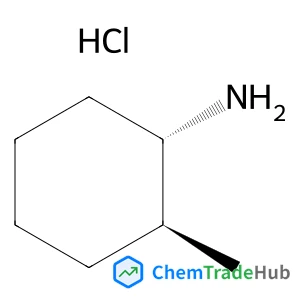
(1R,2R)-2-Methylcyclohexanamine hydrochloride (1:1)
CAS Number:
39558-31-1
Molecular Formula:
C7H16ClN
Recommended Suppliers




Disclaimer
This page provides academic journal information for reference and research purposes only. We are not affiliated with any journal publishers and do not handle publication submissions. For publication-related inquiries, please contact the respective journal publishers directly.
If you notice any inaccuracies in the information displayed, please contact us at support@chemtradehub.com. We will promptly review and address your concerns.