


Processing and adjusting the hydrophilicity of poly(oxymethylene) (co)polymers: nanoparticle preparation and film formation
Literature Information
Publication Date
2015-10-21
DOI
10.1039/C5PY01418B
Impact Factor
5.582
Authors
Sven Kurch, Holger Frey, Katharina Landfester, Frederik R. Wurm
View Original
Abstract
Handling the insoluble POM: the preparation of nanoparticles based on hyperbranched-linear-hyperbranched ABA triblock copolymers with variable hydrophilicity and composed of short hyperbranched polyglycerol (hbPG) as the A-blocks and linear poly(oxymethylene) (POM) as a B-block is described. The POM-hbPG-nanoparticles with diameters in the range of 190 to 250 nm were generated in a convenient process, combining the solvent evaporation process with the miniemulsion technique, a water borne handling for POM-copolymers. Furthermore, the film formation properties of the nanoparticles were investigated by deposition on silicon and subsequent sintering, which leads to films with a thickness in the μm-range that were investigated via SEM. The surface properties of these films were investigated via static contact angle measurements at the liquid/vapor interface. The contact angle decreases from 67° for the polymer film based on POM with two hydroxyl end groups to 29° for POM-copolymers with 16 hydroxyl groups, confirming the influence of the polymer structure and size of the hbPG block on the surface properties. In summary, this work presents a possibility for a facile handling and film formation of the insoluble POM, opening new applications, e.g., in coatings.
Recommended Journals

Physical Chemistry Chemical Physics

Photochemical & Photobiological Sciences

Mini-Reviews in Medicinal Chemistry

Current Pharmaceutical Biotechnology

Coloration Technology

European Journal of Organic Chemistry

Contact Lens & Anterior Eye

Molecules

Angewandte Chemie International Edition

Journal of Enzyme inhibition and Medicinal Chemistry
Related Literature
Surface-enhanced IR absorption spectroscopy of the KcsA potassium channel upon application of an electric field
Akira Yamakata, Hirofumi Shimizu, Shigetoshi Oiki
2015-06-23
Perspective
DOI: 10.1039/C5CP02681D
A means to an interface: investigating monoethanolamine behavior at an aqueous surface
Laura E. McWilliams, Nicholas A. Valley, Sumi N. Wren, Geraldine L. Richmond
2015-07-22
Paper
DOI: 10.1039/C5CP02931G
Strength order and nature of the π-hole bond of cyanuric chloride and 1,3,5-triazine with halide
Hui Wang, Chen Li, Weizhou Wang, Wei Jun Jin
2015-07-07
Paper
DOI: 10.1039/C5CP03076E
Monitoring the intramolecular charge transfer process in the Z907 solar cell sensitizer: a transient Vis and IR spectroscopy and ab initio investigation
Nicolò Azzaroli, Maria Grazia Lobello, Laura Bussotti, Giuseppe Calogero, Mariachiara Pastore, Filippo De Angelis
2015-07-13
Paper
DOI: 10.1039/C5CP03314D
Probing the mechanism of CO2 capture in diamine-appended metal–organic frameworks using measured and simulated X-ray spectroscopy
Walter S. Drisdell, Roberta Poloni, Thomas M. McDonald, Tod A. Pascal, Liwen F. Wan, C. Das Pemmaraju, Bess Vlaisavljevich, Samuel O. Odoh, Jeffrey B. Neaton, David Prendergast, Jeffrey B. Kortright
2015-07-23
Paper
DOI: 10.1039/C5CP02951A
Thermal instabilities and Rayleigh breakup of ultrathin silver nanowires grown in helium nanodroplets
Alexander Volk, Daniel Knez, Philipp Thaler, Andreas W. Hauser, Werner Grogger, Ferdinand Hofer, Wolfgang E. Ernst
2015-09-10
Communication
DOI: 10.1039/C5CP04696C
Critical assessment of enhancement factor measurements in surface-enhanced Raman scattering on different substrates
Daniel C. Rodrigues, Michele L. de Souza, Klester S. Souza, Diego P. dos Santos, Gustavo F. S. Andrade, Marcia L. A. Temperini
2015-01-26
Paper
DOI: 10.1039/C4CP05080K
Calculating average surface enhancement factors of randomly nanostructured electrodes by a combination of SERS and impedance spectroscopy
J. Kozuch, N. Petrusch, U. Gernert, I. M. Weidinger
2015-01-09
Paper
DOI: 10.1039/C4CP05015K
Bio-sensing with butterfly wings: naturally occurring nano-structures for SERS-based malaria parasite detection
Matthew W. A. Dixon, Leann Tilley, Keith R. Bambery, Bayden R. Wood
2014-12-03
Paper
DOI: 10.1039/C4CP04930F
You might also like
Compound Q&A
Is 2-(2-chloroacetamido)-3-phenylpropanoic acid (CAS: 7765-11-9) safe?
2-(2-Chloroacetamido)-3-phenylpropanoic acid (CAS: 7765-11-9) is generally consi...
7765-11-92-(2-chloroacetamido...
Compound Q&A
Is 2-(Benzyloxy)-5-bromobenzoic acid (CAS: 62176-31-2) safe?
2-(Benzyloxy)-5-bromobenzoic acid can be handled safely if appropriate precautio...
62176-31-22-(Benzyloxy)-5-brom...
Compound Q&A
What is (4-Methyl-1,2,5-oxadiazol-3-yl)methanamine hydrochloride (CAS: 1159825-48-5)?
(4-Methyl-1,2,5-oxadiazol-3-yl)methanamine hydrochloride is a chemical compound ...
1159825-48-5(4-Methyl-1,2,5-oxad...
Compound Q&A
What is 2-(5-Hexylthiophen-2-yl)-4,4,5,5-tetramethyl-1,3,2-dioxaborolane (CAS: 917985-54-7)?
2-(5-Hexylthiophen-2-yl)-4,4,5,5-tetramethyl-1,3,2-dioxaborolane (CAS: 917985-54...
917985-54-72-(5-Hexylthiophen-2...
Compound Q&A
Are there alternatives to 4-(8-Methyl-9H-1,3-dioxolo[4,5-h][2,3]benzodiazepin-5-yl)benzenamine (CAS: 102771-26-6) in synthesis?
While 4-(8-Methyl-9H-1,3-dioxolo[4,5-h][2,3]benzodiazepin-5-yl)benzenamine (CAS:...
102771-26-64-(8-Methyl-9H-1,3-d...
Compound Q&A
What is the market or research trend for tert-butyl 3-hydroxy-4,5,7,8-tetrahydro-2H-pyrazolo[3,4-d]azepine-6-carboxylate (CAS: 851376-80-2)?
The market for tert-butyl 3-hydroxy-4,5,7,8-tetrahydro-2H-pyrazolo[3,4-d]azepine...
851376-80-2tert-butyl 3-hydroxy...
Compound Q&A
How should waste containing 3,5-Diamino-1H-pyrazole-4-carbonitrile (CAS: 6844-58-2) be handled?
Waste containing 3,5-Diamino-1H-pyrazole-4-carbonitrile (CAS: 6844-58-2) should ...
6844-58-23,5-Diamino-1H-pyraz...
Compound Q&A
How is (6-Fluoro-3-pyridinyl)boronic acid (CAS: 351019-18-6) typically synthesized?
(6-Fluoro-3-pyridinyl)boronic acid can be synthesized through the reaction of 6-...
351019-18-6(6-Fluoro-3-pyridiny...
Compound Q&A
What industries use Dibenzyl carbonimidoylbiscarbamate (CAS: 10065-79-9)?
Dibenzyl carbonimidoylbiscarbamate (CAS: 10065-79-9) finds applications in vario...
10065-79-9Dibenzyl carbonimido...
Compound Q&A
What is the market or research trend for (beta,beta,2,3,4,5,6-~2~H_7_)Phenylalanine (CAS: 74228-83-4)?
The market for (beta,beta,2,3,4,5,6-~2~H_7_)Phenylalanine (CAS: 74228-83-4) is g...
74228-83-4(beta,beta,2,3,4,5,6...
Source Journal
Polymer Chemistry

CiteScore:
8.6
Self-citation Rate:
7.3%
Articles per Year:
457
Polymer Chemistry welcomes submissions in all areas of polymer science that have a strong focus on macromolecular chemistry. Manuscripts may cover a broad range of fields, yet no direct application focus is required.
Recommended Compounds
![2-(5-Bromo-1H-pyrrolo[2,3-B]pyridin-3-YL)acetic acid structure](https://static.chemtradehub.com/structs/106/1060795-03-0-0589.webp "2-(5-Bromo-1H-pyrrolo[2,3-B]pyridin-3-YL)acetic acid structure")
2-(5-Bromo-1H-pyrrolo[2,3-B]pyridin-3-YL)acetic acid
CAS Number:
1060795-03-0
Molecular Formula:
C9H7BrN2O2
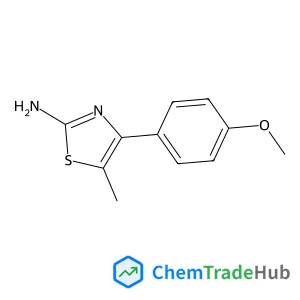
4-(4-Methoxyphenyl)-5-methyl-1,3-thiazol-2-amine
CAS Number:
105512-88-7
Molecular Formula:
C11H12N2OS
Recommended Suppliers






Disclaimer
This page provides academic journal information for reference and research purposes only. We are not affiliated with any journal publishers and do not handle publication submissions. For publication-related inquiries, please contact the respective journal publishers directly.
If you notice any inaccuracies in the information displayed, please contact us at support@chemtradehub.com. We will promptly review and address your concerns.