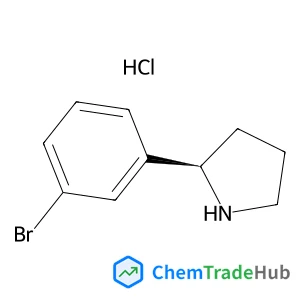
(2R)-2-(3-Bromophenyl)pyrrolidine hydrochloride (1:1)
CAS Number:
1391550-13-2
Molecular Formula:
C10H13BrClN
A. Gallo-Bueno, E. Francisco, A. Martín Pendás
We examine in this contribution the possible relation between the spatial decay rate of real space delocalization measures and the insulating- or metallic-like character of molecular and extended systems. We first show that in simple one-electron models, like the Hückel or tight binding approximations, delocalization indices (DIs) are intimately linked to the first-order reduced density matrix (1RDM), whose decay rate is known to be exponential in gapped systems and algebraic in gapless ones. DIs are shown to behave equivalently, with wild oscillations in gapless 1D, 2D and 3D models that do only persist in one-dimensional real cases, as computed at the Hartree–Fock or Kohn–Sham levels. Oscillations are shown to be directly related to Pauling resonant structures and chemical mesomerism. DIs in insulating-like moieties decay extremely fast. We propose that examining the decay of DIs along different directions in real materials may be used to detect facile and non-facile conductivity channels.
Borja Cantero-Tubilla, Larry P. Walker
DOI: 10.1039/C8AN01137K
Josiah McKenna, Elizabeth S. Dhummakupt, Theresa Connell, Paul S. Demond, Dennis B. Miller, J. Michael Nilles, Nicholas E. Manicke, Trevor Glaros
DOI: 10.1039/C7AN00144D
Yunlei Zhou, Huanshun Yin, Yue Wang, Chengji Sui, Minghui Wang, Shiyun Ai
DOI: 10.1039/C8AN01356J
Lok Nath Neupane, Pramod Kumar Mehta, Semin Oh, See-Hyoung Park, Keun-Hyeung Lee
DOI: 10.1039/C8AN01221K
Joannie Desroches, Audrey Laurence, Michael Pinto, Marie-Andrée Tremblay, Kevin Petrecca, Frédéric Leblond
DOI: 10.1039/C6AN02061E
Yinghong Zhang, Lijuan Li, Tao Li, Ying Xin, Junxiu Liu, Furong Ma, Lanqun Mao
DOI: 10.1039/C8AN01300D
Yufeng Zhou, Yali Yu, Longlong Gao, Yifan Fei, Ting Ye, Qiusha Li, Xiaoshun Zhou, Ning Gan, Yong Shao
DOI: 10.1039/C8AN01561A
Lin Ma, Mengyue Zhang, Aijun Yang, Qin Wang, Fei Qu, Fengli Qu, Rong-Mei Kong
DOI: 10.1039/C8AN01556B
Meng Wang, Xianwen Kan
DOI: 10.1039/C8AN01502C
N-(4-Methoxybenzyl)-2-pyridinamine (CAS: 52818-63-0) is increasingly being used ...
When handling Ethyl 4-(2-chlorophenyl)-1,3-thiazole-2-carboxylate, appropriate p...
Diethyldiselane (CAS: 628-39-7) is classified under the Globally Harmonized Syst...
The market for oxocopper (CAS: 12053-18-8) is primarily driven by its use in cat...
The market for 5-{[(2-Methyl-2-propanyl)oxy]carbonyl}-5-azaspiro[2.4]heptane-7-c...
2-(1-Pyrrolidinyl)-4-pyridinamine is a chemical compound with the CAS number 359...
2-(3-Pyridinyl)-1-azabicyclo[2.2.2]octane (CAS: 91556-75-1) is a crystalline sol...
(S)-Alpha-allyl-proline hydrochloride is usually synthesized via a Wittig reacti...
3-Methyl-1,2-oxazole-5-carboxylic acid (CAS: 4857-42-5) is an organic compound w...
Lys-SMCC-DM1 is synthesized via a multi-step process involving the coupling of S...

Physical Chemistry Chemical Physics (PCCP) is an international journal co-owned by 19 physical chemistry and physics societies from around the world. This journal publishes original, cutting-edge research in physical chemistry, chemical physics and biophysical chemistry. To be suitable for publication in PCCP, articles must include significant innovation and/or insight into physical chemistry; this is the most important criterion that reviewers and Editors will judge against when evaluating submissions. The journal has a broad scope and welcomes contributions spanning experiment, theory, computation and data science. Topical coverage includes spectroscopy, dynamics, kinetics, statistical mechanics, thermodynamics, electrochemistry, catalysis, surface science, quantum mechanics, quantum computing and machine learning. Interdisciplinary research areas such as polymers and soft matter, materials, nanoscience, energy, surfaces/interfaces, and biophysical chemistry are welcomed if they demonstrate significant innovation and/or insight into physical chemistry. Joined experimental/theoretical studies are particularly appreciated when complementary and based on up-to-date approaches.
![1-(1-Benzyl-1,2,3,6-tetrahydropyridin-4-yl)-1H-benzo[d]imidazol-2(3H)-one structure](https://static.chemtradehub.com/structs/603/60373-71-9-7dfb.webp "1-(1-Benzyl-1,2,3,6-tetrahydropyridin-4-yl)-1H-benzo[d]imidazol-2(3H)-one structure")