













In vivo measurement of the dynamics of norepinephrine in an olfactory bulb following ischemia-induced olfactory dysfunction and its responses to dexamethasone treatment
Literature Information
Publication Date
2018-09-06
DOI
10.1039/C8AN01300D
Impact Factor
4.616
Authors
Yinghong Zhang, Lijuan Li, Tao Li, Ying Xin, Junxiu Liu, Furong Ma, Lanqun Mao
View Original
Abstract
Information on the dynamics of molecules following olfactory dysfunction remains essential for understanding the molecular events involved in the pathological process of olfactory dysfunction. This study for the first time demonstrates a method based on the combination of in vivo microdialysis with high performance liquid chromatography (HPLC) and electrochemical detection (ECD) for the measurement of the dynamics of norepinephrine (NE) in the olfactory bulbs of Sprague-Dawley rats following olfactory dysfunction induced by brain ischemia and its responses toward dexamethasone treatment. The method possesses a high spatial resolution and benefits from in vivo microdialysis and high selectivity and is thus capable of measuring NE in the olfactory bulb of rats. With this method, the basal level of NE in the olfactory bulb was evaluated to be ca. 235 ± 25 nM (n = 6). This level was found to increase by 260 ± 90% at a time point of 240 min after brain ischemia with bilateral ligation of both common carotid arteries. The increase was found to be suppressed upon the treatment of the animals with 0.2% dexamethasone in the olfactory bulb. These results suggest that NE is involved in the pathological process of ischemia-induced olfactory dysfunction and this information is useful to further understand the molecular events involved in olfactory dysfunction.
Related Literature
Complementary mechanistic properties of Fe- and Mn-doped aluminophosphates in the catalytic aerobic oxidation of hydrocarbons
Luis Gómez-Hortigüela, Furio Corà, C. Richard A. Catlow
2013-03-14
Paper
DOI: 10.1039/C3CP51079D
An etched nanoporous Ge anode in a novel metal–air energy conversion cell
Sunghyun Uhm
2013-03-07
Paper
DOI: 10.1039/C3CP50885D
In situ determination of the surface excess upon electrochemical sulfate adsorption on Au(111) films by surface plasmon resonance
2013-02-14
Paper
DOI: 10.1039/C3CP44303E
Hydrogen and carbon monoxide generation from laser-induced graphitized nanodiamonds in water
Dong Myung Jang, Hyung Soon Im, Yoon Myung, Yong Jae Cho, Han Sung Kim, Seung Hyuk Back, Jeunghee Park, Eun Hee Cha, Minyung Lee
2013-03-19
Paper
DOI: 10.1039/C3CP50769F
In situ fluorescence and electrochemical monitoring of a photosynthetic microbial fuel cell
Alister E. Inglesby, Kamran Yunus, Adrian C. Fisher
2013-04-02
Paper
DOI: 10.1039/C3CP51076J
On the role of singlet versus triplet excited states in the uncaging of ortho-nitrobenzyl caged compounds
Jan-Michael Mewes, Andreas Dreuw
2013-03-01
Paper
DOI: 10.1039/C3CP44338H
Ab initio simulations of scanning-tunneling-microscope images with embedding techniques and application to C58-dimers on Au(111)
Alexei Bagrets
2013-02-14
Paper
DOI: 10.1039/C3CP44286A
Understanding multi-quantum NMR through secular approximation
Deepansh Srivastava, R. Venkata SubbaRao, Ramesh Ramachandran
2013-02-15
Paper
DOI: 10.1039/C3CP44296A
You might also like
Compound Q&A
What is the market or research trend for N-(4-Methoxybenzyl)-2-pyridinamine (CAS: 52818-63-0)?
N-(4-Methoxybenzyl)-2-pyridinamine (CAS: 52818-63-0) is increasingly being used ...
52818-63-0N-(4-Methoxybenzyl)-...
Compound Q&A
What precautions should be taken when handling Ethyl 4-(2-chlorophenyl)-1,3-thiazole-2-carboxylate (CAS: 1050507-06-6)?
When handling Ethyl 4-(2-chlorophenyl)-1,3-thiazole-2-carboxylate, appropriate p...
1050507-06-6Ethyl 4-(2-chlorophe...
Compound Q&A
What regulatory guidelines apply to diethyldiselane (CAS: 628-39-7)?
Diethyldiselane (CAS: 628-39-7) is classified under the Globally Harmonized Syst...
628-39-7Diethyldiselane
Compound Q&A
What is the market or research trend for oxocopper (CAS: 12053-18-8)?
The market for oxocopper (CAS: 12053-18-8) is primarily driven by its use in cat...
12053-18-8oxocopper; oxo-(oxoc...
Compound Q&A
What is the market or research trend for 5-{[(2-Methyl-2-propanyl)oxy]carbonyl}-5-azaspiro[2.4]heptane-7-carboxylic acid?
The market for 5-{[(2-Methyl-2-propanyl)oxy]carbonyl}-5-azaspiro[2.4]heptane-7-c...
1268519-54-55-{[(2-Methyl-2-prop...
Compound Q&A
What is 2-(1-Pyrrolidinyl)-4-pyridinamine (CAS: 35981-63-6)?
2-(1-Pyrrolidinyl)-4-pyridinamine is a chemical compound with the CAS number 359...
35981-63-62-(1-Pyrrolidinyl)-4...
Compound Q&A
What are the physical and chemical properties of 2-(3-Pyridinyl)-1-azabicyclo[2.2.2]octane (CAS: 91556-75-1)?
2-(3-Pyridinyl)-1-azabicyclo[2.2.2]octane (CAS: 91556-75-1) is a crystalline sol...
91556-75-12-(3-Pyridinyl)-1-az...
Compound Q&A
How is (S)-Alpha-allyl-proline hydrochloride (CAS: 129704-91-2) typically synthesized?
(S)-Alpha-allyl-proline hydrochloride is usually synthesized via a Wittig reacti...
129704-91-2(S)-Alpha-allyl-prol...
Compound Q&A
What is 3-Methyl-1,2-oxazole-5-carboxylic acid (CAS: 4857-42-5)?
3-Methyl-1,2-oxazole-5-carboxylic acid (CAS: 4857-42-5) is an organic compound w...
4857-42-53-Methyl-1,2-oxazole...
Compound Q&A
How is Lys-SMCC-DM1 (CAS: 1281816-04-3) typically synthesized?
Lys-SMCC-DM1 is synthesized via a multi-step process involving the coupling of S...
1281816-04-3Lys-SMCC-DM1
Source Journal
Analyst

CiteScore:
7.8
Self-citation Rate:
5.6%
Articles per Year:
653
Analyst publishes analytical and bioanalytical research that reports premier fundamental discoveries and inventions, and the applications of those discoveries, unconfined by traditional discipline barriers.
Recommended Compounds
![1-oxaspiro[4.4]nonan-6-one structure](https://static.chemtradehub.com/structs/134/134179-01-4-e051.webp "1-oxaspiro[4.4]nonan-6-one structure")
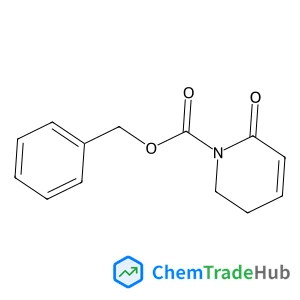
Benzyl 6-oxo-3,6-dihydro-1(2H)-pyridinecarboxylate
CAS Number:
725746-35-0
Molecular Formula:
C13H13NO3
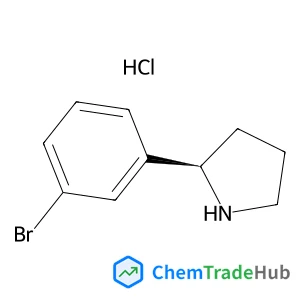
(2R)-2-(3-Bromophenyl)pyrrolidine hydrochloride (1:1)
CAS Number:
1391550-13-2
Molecular Formula:
C10H13BrClN
Recommended Suppliers






Disclaimer
This page provides academic journal information for reference and research purposes only. We are not affiliated with any journal publishers and do not handle publication submissions. For publication-related inquiries, please contact the respective journal publishers directly.
If you notice any inaccuracies in the information displayed, please contact us at support@chemtradehub.com. We will promptly review and address your concerns.