












Rotational spectroscopy of the atmospheric photo-oxidation product o-toluic acid and its monohydrate
Literature Information
Publication Date
2015-11-23
DOI
10.1039/C5CP06073G
Impact Factor
3.676
Authors
Elijah G. Schnitzler, Brandi L. M. Zenchyzen, Wolfgang Jäger
View Original
Abstract
o-Toluic acid, a photo-oxidation product in the atmosphere, and its monohydrate were characterized in the gas phase by pure rotational spectroscopy. High-resolution spectra were measured in the range of 5–14 Hz using a cavity-based molecular beam Fourier-transform microwave spectrometer. Possible conformers were identified computationally, at the MP2/6-311++G(2df,2pd) level of theory. For both species, one conformer was identified experimentally, and no methyl internal rotation splittings were observed, indicative of relatively high barriers to rotation. In the monomer, rocking of the carboxylic acid group is a large amplitude motion, characterized by a symmetrical double-well potential. This and other low-lying out-of-plane vibrations contribute to a significant (methyl top-corrected) inertial defect (−1.09 amu Å2). In the monohydrate, wagging of the free hydrogen atom of water is a second large amplitude motion, so the average structure is planar. As a result, no c-type transitions were observed. Water tunneling splittings were not observed, because the water rotation coordinate is characterized by an asymmetrical double-well potential. Since the minima are not degenerate, tunneling is precluded. Furthermore, a concerted tunneling path involving simultaneous rotation of the water moiety and rocking of the carboxylic acid group is precluded, because the hilltop along this coordinate is a virtual, rather than a real, saddle-point. Inter- and intramolecular non-covalent bonding is discussed in terms of the quantum theory of atoms in molecules. The percentage of o-toluic acid hydrated in the atmosphere is estimated to be about 0.1% using statistical thermodynamics.
Related Literature
Mussel-inspired coordination functional polymer brushes-decorated rGO-stabilized silver nanoparticles composite for antibacterial application
Haixun Ji, Linjing Liu, Sijia Feng, Yuqin Fu, Yu Yang, Changli Lü
2020-03-19
Paper
DOI: 10.1039/D0PY00180E
Photo-switching of surface wettability on micropatterned photopolymers for fast transport of water droplets over a long-distance
E. Rossegger, D. Nees, S. Turisser, S. Radl, T. Griesser, S. Schlögl
2020-03-24
Paper
DOI: 10.1039/D0PY00263A
Synthetic strategies for raspberry-like polymer composite particles
Hua Zou, Shuxia Zhai
2020-05-01
Review Article
DOI: 10.1039/D0PY00394H
Metal-free polymerization: synthesis and properties of fused benzo[1,2-b:4,5-b′]bis[b]benzothiophene (BBBT) polymers
Hailiang Liao, Mahesh Kumar Ravva, Yanjun Guo, Jiayao Duan, Yazhou Wang, Yaping Yu, Zhengke Li, Wan Yue
2020-05-19
Communication
DOI: 10.1039/D0PY00623H
Preparation of aryl polysulfonates via a highly efficient SuFEx click reaction, their controllable degradation and functionalized behavior
Zhenlei Cao, Feng Zhou, Pei-Yang Gu, Dongyun Chen, Jinghui He, John R. Cappiello, Peng Wu, Qingfeng Xu, Jianmei Lu
2020-04-23
Communication
DOI: 10.1039/D0PY00435A
Surfactant-free synthesis of layered double hydroxide-armored latex particles
P.-Y. Dugas, V. Prevot, E. Bourgeat-Lami
2020-04-13
Paper
DOI: 10.1039/D0PY00140F
Alternating ring-opening copolymerization of epoxides with saturated and unsaturated cyclic anhydrides: reduced viscosity poly(propylene fumarate) oligomers for use in cDLP 3D printing
Matthew L. Becker
2020-04-21
Paper
DOI: 10.1039/D0PY00453G
Visible light-mediated ring-opening polymerization of lactones based on the excited state acidity of ESPT molecules
Xun Zhang, Siping Hu, Qiang Ma
2020-04-06
Paper
DOI: 10.1039/D0PY00369G
Dibenzothiophene-S,S-dioxide-bispyridinium-fluorene-based polyelectrolytes for cathode buffer layers of polymer solar cells
Guiting Chen, Dan Cheng, Wenyan Zou, Ziyan Cai, Yufeng Xie, Yaqi Chen, Baitian He, Hongqing Hao, Wei Yang, Yong Cao
2020-05-04
Paper
DOI: 10.1039/D0PY00416B
You might also like
Compound Q&A
How should waste containing 6-Chloro-5-(2'-hydroxy-3'-methoxy-4-biphenylyl)-3-(3-methoxyphenyl)-1H-pyrrolo[3,2-d]pyrimidine-2,4(3H,5H)-dione (CAS: 1346607-05-3) be handled?
Waste containing 6-Chloro-5-(2'-hydroxy-3'-methoxy-4-biphenylyl)-3-(3-methoxyphe...
1346607-05-36-Chloro-5-(2'-hydro...
Compound Q&A
What are the main uses of (3alpha,5alpha)-3-Hydroxypregnane-11,20-dione (CAS: 23930-19-0)?
(3alpha,5alpha)-3-Hydroxypregnane-11,20-dione is primarily used in the pharmaceu...
23930-19-0(3alpha,5alpha)-3-Hy...
Compound Q&A
What is the market or research trend for 4-Amino-6-chloro-2-pyridinecarboxylic acid (CAS: 546141-56-4)?
The market for 4-Amino-6-chloro-2-pyridinecarboxylic acid (CAS: 546141-56-4) is ...
546141-56-44-Amino-6-chloro-2-p...
Compound Q&A
Are there alternatives to (2-Benzoylethyl)trimethylammonium chloride (CAS: 24472-88-6) in synthesis?
Alternatives to (2-Benzoylethyl)trimethylammonium chloride (CAS: 24472-88-6) in ...
24472-88-6(2-Benzoylethyl)trim...
Compound Q&A
Is N-[4-Nitro-3-(trifluoromethyl)phenyl]acetamide (CAS: 393-12-4) safe?
N-[4-Nitro-3-(trifluoromethyl)phenyl]acetamide (CAS: 393-12-4) is generally safe...
393-12-4N-[4-Nitro-3-(triflu...
Compound Q&A
Are there alternatives to [(4R,5R,6S)-5-hydroxy-10-imino-3,7-dioxa-1,9-diazatricyclo[6.4.0.02,6]dodeca-8,11-dien-4-yl]methyl dihydrogen phosphate (CAS: 39679-56-6) in synthesis?
Alternative reagents such as other phosphates or similar functional groups can b...
39679-56-6[(4R,5R,6S)-5-hydrox...
Compound Q&A
Are there alternatives to N,N'-Bis(3-aminopropyl)-1,3-propanediamine (CAS: 4605-14-5) in synthesis?
There are alternatives to N,N'-Bis(3-aminopropyl)-1,3-propanediamine (CAS: 4605-...
4605-14-5N,N'-Bis(3-aminoprop...
Compound Q&A
What precautions should be taken when handling Aluminium trihexadecanoate (CAS: 555-35-1)?
When handling Aluminium trihexadecanoate, it is important to use appropriate per...
555-35-1Aluminium trihexadec...
Compound Q&A
What is (1,1-Dioxido-3-oxo-1,2-benzothiazol-2(3H)-yl)acetic acid (CAS: 52188-11-1)?
(1,1-Dioxido-3-oxo-1,2-benzothiazol-2(3H)-yl)acetic acid is a chemical compound ...
52188-11-1(1,1-Dioxido-3-oxo-1...
Compound Q&A
Are there alternatives to 5,5-dimethyloxolan-2-one (CAS: 3123-97-5) in synthesis?
Several alternatives to 5,5-dimethyloxolan-2-one (CAS: 3123-97-5) can be used in...
3123-97-55,5-dimethyloxolan-2...
Source Journal
Physical Chemistry Chemical Physics

CiteScore:
5.5
Self-citation Rate:
10.3%
Articles per Year:
3036
Physical Chemistry Chemical Physics (PCCP) is an international journal co-owned by 19 physical chemistry and physics societies from around the world. This journal publishes original, cutting-edge research in physical chemistry, chemical physics and biophysical chemistry. To be suitable for publication in PCCP, articles must include significant innovation and/or insight into physical chemistry; this is the most important criterion that reviewers and Editors will judge against when evaluating submissions. The journal has a broad scope and welcomes contributions spanning experiment, theory, computation and data science. Topical coverage includes spectroscopy, dynamics, kinetics, statistical mechanics, thermodynamics, electrochemistry, catalysis, surface science, quantum mechanics, quantum computing and machine learning. Interdisciplinary research areas such as polymers and soft matter, materials, nanoscience, energy, surfaces/interfaces, and biophysical chemistry are welcomed if they demonstrate significant innovation and/or insight into physical chemistry. Joined experimental/theoretical studies are particularly appreciated when complementary and based on up-to-date approaches.
Recommended Compounds
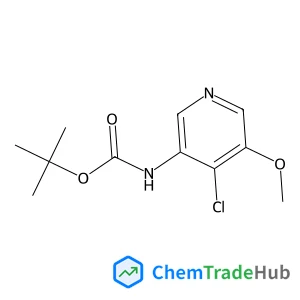
tert-Butyl 4-chloro-5-methoxypyridin-3-ylcarbamate
CAS Number:
1045858-17-0
Molecular Formula:
C11H15ClN2O3
![(3-{[4-(Aminomethyl)-6-(trifluoromethyl)-2-pyridinyl]oxy}phenyl)[(3R,4R)-3-fluoro-4-hydroxy-1-pyrrolidinyl]methanone structure](https://static.chemtradehub.com/structs/200/2007885-39-2-affc.webp "(3-{[4-(Aminomethyl)-6-(trifluoromethyl)-2-pyridinyl]oxy}phenyl)[(3R,4R)-3-fluoro-4-hydroxy-1-pyrrolidinyl]methanone structure")
(3-{[4-(Aminomethyl)-6-(trifluoromethyl)-2-pyridinyl]oxy}phenyl)[(3R,4R)-3-fluoro-4-hydroxy-1-pyrrolidinyl]methanone
CAS Number:
2007885-39-2
Molecular Formula:
C18H17F4N3O3
Recommended Suppliers




Disclaimer
This page provides academic journal information for reference and research purposes only. We are not affiliated with any journal publishers and do not handle publication submissions. For publication-related inquiries, please contact the respective journal publishers directly.
If you notice any inaccuracies in the information displayed, please contact us at support@chemtradehub.com. We will promptly review and address your concerns.