


Surfactant-free synthesis of layered double hydroxide-armored latex particles
Literature Information
Publication Date
2020-04-13
DOI
10.1039/D0PY00140F
Impact Factor
5.582
Authors
P.-Y. Dugas, V. Prevot, E. Bourgeat-Lami
View Original
Abstract
MgAl-layered double hydroxide (LDH)-armored latexes were produced by Pickering emulsion polymerization of styrene (St) using 2-hydroxyethyl methacrylate (HEMA) and methyl methacrylate (MMA) as auxiliary comonomers. While St led to bare polymer latex particles, St/HEMA and St/MMA mixtures produced nanocomposite latexes. Clearly, the use of hydrophilic comonomers such as HEMA or MMA is key to promoting adhesion of the LDH nanoplatelets onto the polymer particle surface and latex stabilization. Several parameters such as the nature and amount of auxiliary comonomer, the ionic strength and the LDH percentage were shown to play a crucial role in the formation and stability of the resulting MgAl-LDH-armored particles. Increasing the HEMA content above 8 wt% (based on total monomer) induced aggregation of both the LDH and latex particles, which was tentatively attributed to HEMA hydrolysis under basic conditions. Similar results were observed for MMA although destabilization occurred for higher concentrations (i.e., >30 wt%). Transmission electron microscopy confirmed the armored morphology with the concomitant presence of excess of free-standing platelets for high LDH contents. The average particle diameter was strongly dependent on the synthesis conditions and decreased with increasing the amount of MMA and/or the LDH content, indicating that the inorganic particles effectively played the role of a Pickering stabilizer. The addition of salt screened the positive charges between adjacent LDH sheets allowing closer packing of the LDH platelets onto the latex particle surface. The higher the salt content in the polymerization medium, the larger was the size of the nanocomposite particles.
Recommended Journals

Bioorganic & Medicinal Chemistry Letters

Journal of Asian Natural Products Research

Bioorganic & Medicinal Chemistry

Critical Reviews in Solid State and Materials Sciences

Medicinal Chemistry Research

Journal of Chemical Sciences

Biocatalysis and Biotransformation

Journal of the Indian Institute of Science

Polycyclic Aromatic Compounds

Heteroatom Chemistry
Related Literature
A review of the latest research on Mpro targeting SARS-COV inhibitors
Huihui Yang
2021-04-14
Review Article
DOI: 10.1039/D1MD00066G
Irreversible inhibition of BoNT/A protease: proximity-driven reactivity contingent upon a bifunctional approach
Lewis D. Turner, Lucy Lin, Sabine Pellett, Takashi Sugane, Eric A. Johnson, Kim D. Janda
2021-05-19
Research Article
DOI: 10.1039/D1MD00089F
Proline pre-conditioning of cell monolayers increases post-thaw recovery and viability by distinct mechanisms to other osmolytes‡
Trisha L. Bailey, Juan Ramon Hernandez-Fernaud
2021-05-18
Research Article
DOI: 10.1039/D1MD00078K
Discovery, synthesis and biological characterization of a series of N-(1-(1,1-dioxidotetrahydrothiophen-3-yl)-3-methyl-1H-pyrazol-5-yl)acetamide ethers as novel GIRK1/2 potassium channel activators
Swagat Sharma, Lauren Lesiak, Christopher D. Aretz, Yu Du, Sushil Kumar, Nagsen Gautam, Yazen Alnouti, Nikilesh V. Dhuria, Yashpal S. Chhonker, C. David Weaver, Corey R. Hopkins
2021-06-21
Research Article
DOI: 10.1039/D1MD00129A
Synthesis and evaluation of pyridine-derived bedaquiline analogues containing modifications at the A-ring subunit
Lisa Barbaro, Gayathri Nagalingam, James A. Triccas, Jonathan B. Baell, Daniel L. Priebbenow
2021-05-07
Research Article
DOI: 10.1039/D1MD00063B
Comprehensive overview of biased pharmacology at the opioid receptors: biased ligands and bias factors‡
Jolien De Neve, Thomas M. A. Barlow, Dirk Tourwé, Frédéric Bihel, Frédéric Simonin, Steven Ballet
2021-04-21
Review Article
DOI: 10.1039/D1MD00041A
Synthesis and biological evaluation of a monocyclic Fc-binding antibody-recruiting molecule for cancer immunotherapy
Koichi Sasaki, Kyohei Muguruma, Rento Osawa, Akane Fukuda, Atsuhiko Taniguchi, Yoshio Hayashi
2021-01-21
Research Article
DOI: 10.1039/D0MD00337A
You might also like
Compound Q&A
How should waste containing 6-Chloro-5-(2'-hydroxy-3'-methoxy-4-biphenylyl)-3-(3-methoxyphenyl)-1H-pyrrolo[3,2-d]pyrimidine-2,4(3H,5H)-dione (CAS: 1346607-05-3) be handled?
Waste containing 6-Chloro-5-(2'-hydroxy-3'-methoxy-4-biphenylyl)-3-(3-methoxyphe...
1346607-05-36-Chloro-5-(2'-hydro...
Compound Q&A
What are the main uses of (3alpha,5alpha)-3-Hydroxypregnane-11,20-dione (CAS: 23930-19-0)?
(3alpha,5alpha)-3-Hydroxypregnane-11,20-dione is primarily used in the pharmaceu...
23930-19-0(3alpha,5alpha)-3-Hy...
Compound Q&A
What is the market or research trend for 4-Amino-6-chloro-2-pyridinecarboxylic acid (CAS: 546141-56-4)?
The market for 4-Amino-6-chloro-2-pyridinecarboxylic acid (CAS: 546141-56-4) is ...
546141-56-44-Amino-6-chloro-2-p...
Compound Q&A
Are there alternatives to (2-Benzoylethyl)trimethylammonium chloride (CAS: 24472-88-6) in synthesis?
Alternatives to (2-Benzoylethyl)trimethylammonium chloride (CAS: 24472-88-6) in ...
24472-88-6(2-Benzoylethyl)trim...
Compound Q&A
Is N-[4-Nitro-3-(trifluoromethyl)phenyl]acetamide (CAS: 393-12-4) safe?
N-[4-Nitro-3-(trifluoromethyl)phenyl]acetamide (CAS: 393-12-4) is generally safe...
393-12-4N-[4-Nitro-3-(triflu...
Compound Q&A
Are there alternatives to [(4R,5R,6S)-5-hydroxy-10-imino-3,7-dioxa-1,9-diazatricyclo[6.4.0.02,6]dodeca-8,11-dien-4-yl]methyl dihydrogen phosphate (CAS: 39679-56-6) in synthesis?
Alternative reagents such as other phosphates or similar functional groups can b...
39679-56-6[(4R,5R,6S)-5-hydrox...
Compound Q&A
Are there alternatives to N,N'-Bis(3-aminopropyl)-1,3-propanediamine (CAS: 4605-14-5) in synthesis?
There are alternatives to N,N'-Bis(3-aminopropyl)-1,3-propanediamine (CAS: 4605-...
4605-14-5N,N'-Bis(3-aminoprop...
Compound Q&A
What precautions should be taken when handling Aluminium trihexadecanoate (CAS: 555-35-1)?
When handling Aluminium trihexadecanoate, it is important to use appropriate per...
555-35-1Aluminium trihexadec...
Compound Q&A
What is (1,1-Dioxido-3-oxo-1,2-benzothiazol-2(3H)-yl)acetic acid (CAS: 52188-11-1)?
(1,1-Dioxido-3-oxo-1,2-benzothiazol-2(3H)-yl)acetic acid is a chemical compound ...
52188-11-1(1,1-Dioxido-3-oxo-1...
Compound Q&A
Are there alternatives to 5,5-dimethyloxolan-2-one (CAS: 3123-97-5) in synthesis?
Several alternatives to 5,5-dimethyloxolan-2-one (CAS: 3123-97-5) can be used in...
3123-97-55,5-dimethyloxolan-2...
Source Journal
Polymer Chemistry

CiteScore:
8.6
Self-citation Rate:
7.3%
Articles per Year:
457
Polymer Chemistry welcomes submissions in all areas of polymer science that have a strong focus on macromolecular chemistry. Manuscripts may cover a broad range of fields, yet no direct application focus is required.
Recommended Compounds

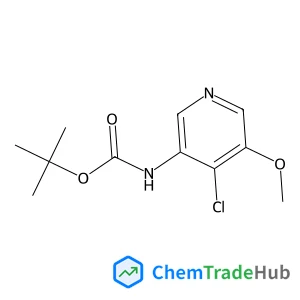
tert-Butyl 4-chloro-5-methoxypyridin-3-ylcarbamate
CAS Number:
1045858-17-0
Molecular Formula:
C11H15ClN2O3
Recommended Suppliers




Disclaimer
This page provides academic journal information for reference and research purposes only. We are not affiliated with any journal publishers and do not handle publication submissions. For publication-related inquiries, please contact the respective journal publishers directly.
If you notice any inaccuracies in the information displayed, please contact us at support@chemtradehub.com. We will promptly review and address your concerns.