












Improvement of the electron collection efficiency in porous hematite using a thin iron oxide underlayer: towards efficient all-iron based photoelectrodes
Literature Information
Publication Date
2015-10-19
DOI
10.1039/C5CP04152J
Impact Factor
3.676
Authors
Nicola Dalle Carbonare, Stefano Carli, Roberto Argazzi, Michele Orlandi, Nicola Bazzanella, Antonio Miotello, Stefano Caramori, Carlo A. Bignozzi
View Original
Abstract
Different approaches have been explored to increase the water oxidation activity of nanostructured hematite (α-Fe2O3) photoanodes, including doping with various elements, surface functionalization with both oxygen evolving catalysts (OEC) and functional overlayers and, more recently, the introduction of ultrathin oxide underlayers as tunneling back contacts. Inspired by this latter strategy, we present here a photoanode design with a nanometric spin-coated iron oxide underlayer coupled with a mesoporous hematite film deposited by electrophoresis. The electrodes equipped with the thin underlayer exhibit a four-fold improvement in photoactivity over the simple hematite porous film, reaching a stable photocurrent density of ca. 1 mA cm−2 at 0.65 V versus the saturated calomel electrode (SCE) at pH 13.3 (NaOH 0.1 M) under air mass (AM) 1.5G illumination. A further improvement to 1.5 mA cm−2 is observed after decoration of the hematite surface with a Fe(III)-OEC. These results demonstrate that by combining different iron oxide morphologies, it is possible to improve the selectivity of the interfaces towards both electron collection at the back contact and hole transfer to the electrolyte, obtaining an efficient all-iron based photoelectrode entirely realized with simple wet solution scalable procedures.
Related Literature
A novel paper-based colorimetry device for the determination of the albumin to creatinine ratio
Sudkate Chaiyo, Kurt Kalcher, Amara Apilux, Orawon Chailapakul, Weena Siangproh
2018-10-09
Paper
DOI: 10.1039/C8AN01122B
Label-free imaging of epidermal growth factor receptor-induced response in single living cells
Zanying Peng, Jin Lu, Ling Zhang, Yang Liu, Jinghong Li
2018-09-19
Paper
DOI: 10.1039/C8AN01534A
Raman spectroscopy in microsurgery: impact of operating microscope illumination sources on data quality and tissue classification
Joannie Desroches, Audrey Laurence, Michael Pinto, Marie-Andrée Tremblay, Kevin Petrecca, Frédéric Leblond
2016-10-31
Paper
DOI: 10.1039/C6AN02061E
Digital enzyme assay using attoliter droplet array
Takao Ono, Takanori Ichiki
2018-09-17
Paper
DOI: 10.1039/C8AN01152D
A facile AuNPs@aptamer-modified mercaptosiloxane-based hybrid affinity monolith with an unusually high coverage density of aptamer for on-column selective extraction of ochratoxin A
Maolin Chen, Lijun Deng, Xucong Lin, Zenghong Xie
2018-09-14
Paper
DOI: 10.1039/C8AN01531G
Effects and controls of capacitive hysteresis in ionic liquid electrochemical measurements
Anthony J. Lucio, Scott K. Shaw
2018-08-29
Paper
DOI: 10.1039/C8AN01085D
Transformations to reduce the effect of particle size in mid-infrared spectra of biomass
Borja Cantero-Tubilla, Larry P. Walker
2018-09-10
Paper
DOI: 10.1039/C8AN01137K
Recent advances in cataluminescence-based optical sensing systems
Si Wang, Zhiqin Yuan, Lijuan Zhang, Yanjun Lin, Chao Lu
2017-03-08
Tutorial Review
DOI: 10.1039/C7AN00091J
You might also like
Compound Q&A
What is the market or research trend for N-(4-Methoxybenzyl)-2-pyridinamine (CAS: 52818-63-0)?
N-(4-Methoxybenzyl)-2-pyridinamine (CAS: 52818-63-0) is increasingly being used ...
52818-63-0N-(4-Methoxybenzyl)-...
Compound Q&A
What precautions should be taken when handling Ethyl 4-(2-chlorophenyl)-1,3-thiazole-2-carboxylate (CAS: 1050507-06-6)?
When handling Ethyl 4-(2-chlorophenyl)-1,3-thiazole-2-carboxylate, appropriate p...
1050507-06-6Ethyl 4-(2-chlorophe...
Compound Q&A
What regulatory guidelines apply to diethyldiselane (CAS: 628-39-7)?
Diethyldiselane (CAS: 628-39-7) is classified under the Globally Harmonized Syst...
628-39-7Diethyldiselane
Compound Q&A
What is the market or research trend for oxocopper (CAS: 12053-18-8)?
The market for oxocopper (CAS: 12053-18-8) is primarily driven by its use in cat...
12053-18-8oxocopper; oxo-(oxoc...
Compound Q&A
What is the market or research trend for 5-{[(2-Methyl-2-propanyl)oxy]carbonyl}-5-azaspiro[2.4]heptane-7-carboxylic acid?
The market for 5-{[(2-Methyl-2-propanyl)oxy]carbonyl}-5-azaspiro[2.4]heptane-7-c...
1268519-54-55-{[(2-Methyl-2-prop...
Compound Q&A
What is 2-(1-Pyrrolidinyl)-4-pyridinamine (CAS: 35981-63-6)?
2-(1-Pyrrolidinyl)-4-pyridinamine is a chemical compound with the CAS number 359...
35981-63-62-(1-Pyrrolidinyl)-4...
Compound Q&A
What are the physical and chemical properties of 2-(3-Pyridinyl)-1-azabicyclo[2.2.2]octane (CAS: 91556-75-1)?
2-(3-Pyridinyl)-1-azabicyclo[2.2.2]octane (CAS: 91556-75-1) is a crystalline sol...
91556-75-12-(3-Pyridinyl)-1-az...
Compound Q&A
How is (S)-Alpha-allyl-proline hydrochloride (CAS: 129704-91-2) typically synthesized?
(S)-Alpha-allyl-proline hydrochloride is usually synthesized via a Wittig reacti...
129704-91-2(S)-Alpha-allyl-prol...
Compound Q&A
What is 3-Methyl-1,2-oxazole-5-carboxylic acid (CAS: 4857-42-5)?
3-Methyl-1,2-oxazole-5-carboxylic acid (CAS: 4857-42-5) is an organic compound w...
4857-42-53-Methyl-1,2-oxazole...
Compound Q&A
How is Lys-SMCC-DM1 (CAS: 1281816-04-3) typically synthesized?
Lys-SMCC-DM1 is synthesized via a multi-step process involving the coupling of S...
1281816-04-3Lys-SMCC-DM1
Source Journal
Physical Chemistry Chemical Physics

CiteScore:
5.5
Self-citation Rate:
10.3%
Articles per Year:
3036
Physical Chemistry Chemical Physics (PCCP) is an international journal co-owned by 19 physical chemistry and physics societies from around the world. This journal publishes original, cutting-edge research in physical chemistry, chemical physics and biophysical chemistry. To be suitable for publication in PCCP, articles must include significant innovation and/or insight into physical chemistry; this is the most important criterion that reviewers and Editors will judge against when evaluating submissions. The journal has a broad scope and welcomes contributions spanning experiment, theory, computation and data science. Topical coverage includes spectroscopy, dynamics, kinetics, statistical mechanics, thermodynamics, electrochemistry, catalysis, surface science, quantum mechanics, quantum computing and machine learning. Interdisciplinary research areas such as polymers and soft matter, materials, nanoscience, energy, surfaces/interfaces, and biophysical chemistry are welcomed if they demonstrate significant innovation and/or insight into physical chemistry. Joined experimental/theoretical studies are particularly appreciated when complementary and based on up-to-date approaches.
Recommended Compounds
![N-{[(2-Methyl-2-propanyl)oxy]carbonyl}-L-methionylglycine structure](https://static.chemtradehub.com/structs/234/23446-03-9-e1e5.webp "N-{[(2-Methyl-2-propanyl)oxy]carbonyl}-L-methionylglycine structure")
N-{[(2-Methyl-2-propanyl)oxy]carbonyl}-L-methionylglycine
CAS Number:
23446-03-9
Molecular Formula:
C12H22N2O5S
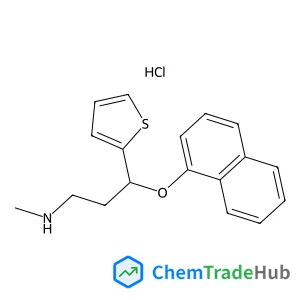
N-Methyl-3-(1-naphthyloxy)-3-(2-thienyl)-1-propanamine hydrochloride (1:1)
CAS Number:
1188266-11-6
Molecular Formula:
C18H20ClNOS
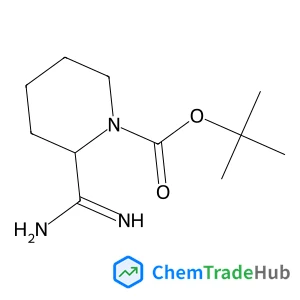
2-Methyl-2-propanyl 2-carbamimidoyl-1-piperidinecarboxylate
CAS Number:
1258640-98-0
Molecular Formula:
C11H21N3O2
Recommended Suppliers






Disclaimer
This page provides academic journal information for reference and research purposes only. We are not affiliated with any journal publishers and do not handle publication submissions. For publication-related inquiries, please contact the respective journal publishers directly.
If you notice any inaccuracies in the information displayed, please contact us at support@chemtradehub.com. We will promptly review and address your concerns.