












Pressure perturbation calorimetic studies of the solvation properties and the thermal unfolding of staphylococcal nuclease
Literature Information
Publication Date
2004-01-23
DOI
10.1039/B314172A
Impact Factor
3.676
Authors
Revanur Ravindra, Catherine Royer, Roland Winter
View Original
Abstract
A rather new technique, pressure perturbation calorimetry (PPC), was applied to study volumetric and solvation properties of staphylococcal nuclease (Snase) in its native and unfolded state with high precision. Furthermore, the effects of various chaotropic and cosmotropic co-solvents on the solvation and unfolding behaviour of Snase was investigated in detail. In PPC, the apparent coefficient of thermal expansion of the protein is deduced from the heat consumed or produced after small isothermal pressure jumps, which strongly depends on the interaction of the protein with the solvent at the protein–solvent interface. In the native state, the protein shows a very strong thermal expansion of 1.0 × 10⁻³ K−1 at 10 °C, which decreases steeply to 0.65 × 10⁻³ K−1 at 40 °C. This behaviour is discussed in terms of a continuous release of condensed water from the protein surface. Upon unfolding, the volume decreases by about 19 mL × mol−1. Solutions of the cosmotropic and chaotropic compounds glycerol, sorbitol, K2SO4 and urea, respectively, show characteristic deviations from the thermal expansion and volumetric properties of the pure buffer solution. The solvent contribution to the apparent coefficient of thermal expansion of the protein, α, is enhanced considerably when the protein is immersed in a solvent known to be more structured than H2O (even the more structured D2O has a drastic effect) and nearly eliminated in a solvent in which “normal” water is largely absent (e.g., in 1.5 M urea). Similarly to D2O, a continuous increase in solvation was observed with increase in glycerol or sorbitol content in the buffer, which leads to an increase in protein stability, as is verified by the increasing Tm and ΔH values obtained by microcalorimetric measurements (DSC). In this regard, sorbitol is the more efficient agent. The reduction of ΔV in the presence of these stabilisers can in part be attributed to the formation of a partial unfolded state of the protein, in part it is due to the temperature dependence of ΔV. The preferential binding of urea reduces the hydration level, also in the native state, causing the protein to approach a more disordered state at high urea concentration. The increase in ΔV and the decrease in ΔH with increasing urea concentration support these conclusions. A stabilising effect, even though there is a reduction in solvation around the protein is observed for 0.5 M K2SO4 as co-solvent. In this case, surprisingly, ΔV is found to be positive which is an indication of the formation of a swollen, molten globule kind of unfolded state at the transition. Finally, ΔV values for the temperature-induced unfolding are compared with corresponding data for the pressure-induced unfolding of Snase.
Recommended Journals
Related Literature
Internal mobilities and diffusion in an ionic liquid mixture
Céline Merlet, Paul A. Madden, Mathieu Salanne
2010-10-06
Paper
DOI: 10.1039/C0CP01412E
Amphiphilic and magnetic behavior of Fe3O4nanocrystals
Wladimir Thiessen, Aliaksei Dubavik, Vladimir Lesnyak, Nikolai Gaponik, Alexander Eychmüller, Thomas Wolff
2010-01-12
Communication
DOI: 10.1039/B917276A
Electrical conductivity–defect structure correlation of variable-valence and fixed-valence acceptor-doped BaTiO3 in quenched state
Han-Ill Yoo, Tae-Sik Oh, Hyung-Soon Kwon, Dong-Kyu Shin, Jong-Sook Lee
2009-03-18
Paper
DOI: 10.1039/B822381P
Electrodeposition of Zn and Au–Zn alloys at low temperature in an ionic liquid
Dimitar Borissov, Aparna Pareek, Frank Uwe Renner, Michael Rohwerder
2010-01-11
Communication
DOI: 10.1039/B919669B
Cyclohexane selective photocatalytic oxidation by anatase TiO2: influence of particle size and crystallinity
Joana T. Carneiro, Ana R. Almeida, Jacob A. Moulijn, Guido Mul
2010-01-27
Paper
DOI: 10.1039/B919886E
Ionic liquids in surface electrochemistry
Hongtao Liu, Yang Liu, Jinghong Li
2010-01-26
Perspective
DOI: 10.1039/B921469K
Activity, stability and degradation of multi walled carbon nanotube (MWCNT) supported Ptfuelcell electrocatalysts‡
Frédéric Hasché, Mehtap Oezaslan
2010-10-29
Paper
DOI: 10.1039/C0CP00609B
Morphologically and electrochemically stable bipolar host for efficient green electrophosphorescence
Youtian Tao, Shaolong Gong, Cheng Zhong, Chuluo Yang, Jingui Qin, Dongge Ma
2010-01-22
Paper
DOI: 10.1039/B922110G
Ion-size effect within the aqueous solution interface at the Pt(111) surface: molecular dynamics studies
Aljaž Godec, Miran Gaberšček, Janko Jamnik, Dušanka Janežič, Franci Merzel
2010-09-20
Paper
DOI: 10.1039/C004435K
You might also like
Compound Q&A
Is 6-(3-Fluorophenyl)picolinic acid (CAS: 887982-40-3) safe?
6-(3-Fluorophenyl)picolinic acid is generally considered safe for laboratory use...
887982-40-36-(3-Fluorophenyl)pi...
Compound Q&A
What industries use (3R)-3-Pyrrolidinol (CAS: 2799-21-5)?
(3R)-3-Pyrrolidinol is used in the pharmaceutical industry as a precursor for dr...
2799-21-5(3R)-3-Pyrrolidinol
Compound Q&A
What precautions should be taken when handling (4R,5R)-4,5-Diethoxycarbonyl-2,2-dimethyldioxolane (CAS: 59779-75-8)?
When handling (4R,5R)-4,5-Diethoxycarbonyl-2,2-dimethyldioxolane (CAS: 59779-75-...
59779-75-8(4R,5R)-4,5-Diethoxy...
Compound Q&A
How is 1-(6-Chloroimidazo[1,2-b]pyridazin-3-yl)ethanone (CAS: 90734-71-7) typically synthesized?
1-(6-Chloroimidazo[1,2-b]pyridazin-3-yl)ethanone is often synthesized via a mult...
90734-71-71-(6-Chloroimidazo[1...
Compound Q&A
What is the market or research trend for N-Ethyl-3,4-dimethylbenzylamine (CAS: 39180-83-1)?
The market for N-Ethyl-3,4-dimethylbenzylamine (CAS: 39180-83-1) remains steady,...
39180-83-1N-Ethyl-3,4-dimethyl...
Compound Q&A
What is Tert-butyl 3-(pyrrolidin-1-yl)azetidine-1-carboxylate (CAS: 1019008-21-9)?
Tert-butyl 3-(pyrrolidin-1-yl)azetidine-1-carboxylate is a chemical compound wit...
1019008-21-9Tert-butyl 3-(pyrrol...
Compound Q&A
What regulatory guidelines apply to 1-Bromo-3-chloro-2,4-dimethoxybenzene (CAS: 1228956-93-1)?
1-Bromo-3-chloro-2,4-dimethoxybenzene (CAS: 1228956-93-1) falls under the classi...
1228956-93-11-Bromo-3-chloro-2,4...
Compound Q&A
Is 8-Bromo-2-methyl-3,4-dihydroisoquinolin-1(2H)-one (CAS: 1368622-07-4) safe?
The safety of 8-Bromo-2-methyl-3,4-dihydroisoquinolin-1(2H)-one (CAS: 1368622-07...
1368622-07-48-Bromo-2-methyl-3,4...
Compound Q&A
Is Benzyl [(3S)-2,6-dioxo-3-piperidinyl]carbamate (CAS: 22785-43-9) safe?
Benzyl [(3S)-2,6-dioxo-3-piperidinyl]carbamate is generally safe when handled wi...
22785-43-9Benzyl [(3S)-2,6-dio...
Compound Q&A
How should 1-{[4-(4,4,5,5-Tetramethyl-1,3,2-dioxaborolan-2-yl)phenyl]sulfonyl}pyrrolidine (CAS: 928657-21-0) be stored?
1-{[4-(4,4,5,5-Tetramethyl-1,3,2-dioxaborolan-2-yl)phenyl]sulfonyl}pyrrolidine s...
928657-21-01-{[4-(4,4,5,5-Tetra...
Source Journal
Physical Chemistry Chemical Physics

CiteScore:
5.5
Self-citation Rate:
10.3%
Articles per Year:
3036
Physical Chemistry Chemical Physics (PCCP) is an international journal co-owned by 19 physical chemistry and physics societies from around the world. This journal publishes original, cutting-edge research in physical chemistry, chemical physics and biophysical chemistry. To be suitable for publication in PCCP, articles must include significant innovation and/or insight into physical chemistry; this is the most important criterion that reviewers and Editors will judge against when evaluating submissions. The journal has a broad scope and welcomes contributions spanning experiment, theory, computation and data science. Topical coverage includes spectroscopy, dynamics, kinetics, statistical mechanics, thermodynamics, electrochemistry, catalysis, surface science, quantum mechanics, quantum computing and machine learning. Interdisciplinary research areas such as polymers and soft matter, materials, nanoscience, energy, surfaces/interfaces, and biophysical chemistry are welcomed if they demonstrate significant innovation and/or insight into physical chemistry. Joined experimental/theoretical studies are particularly appreciated when complementary and based on up-to-date approaches.
Recommended Compounds
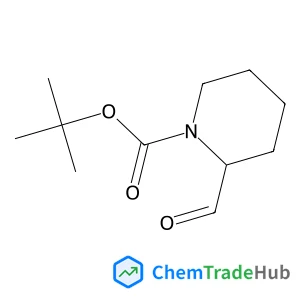
2-Methyl-2-propanyl (2R)-2-formyl-1-piperidinecarboxylate
CAS Number:
134526-69-5
Molecular Formula:
C11H19NO3
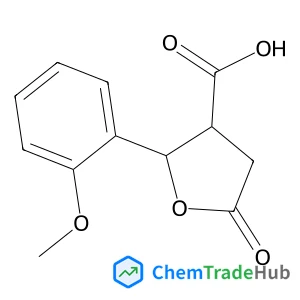
trans-2-(2-Methoxyphenyl)-5-oxotetrahydrofuran-3-carboxylic acid
CAS Number:
99226-02-5
Molecular Formula:
C12H12O5
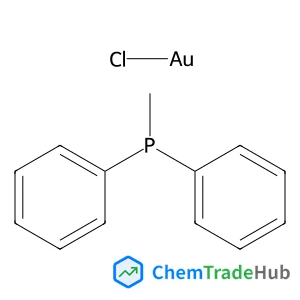
![[4-Chloro-3-(diethylcarbamoyl)phenyl]boronic acid structure](https://static.chemtradehub.com/structs/871/871332-68-2-0e3b.webp "[4-Chloro-3-(diethylcarbamoyl)phenyl]boronic acid structure")
[4-Chloro-3-(diethylcarbamoyl)phenyl]boronic acid
CAS Number:
871332-68-2
Molecular Formula:
C11H15BClNO3
Recommended Suppliers




Disclaimer
This page provides academic journal information for reference and research purposes only. We are not affiliated with any journal publishers and do not handle publication submissions. For publication-related inquiries, please contact the respective journal publishers directly.
If you notice any inaccuracies in the information displayed, please contact us at support@chemtradehub.com. We will promptly review and address your concerns.