












A spectroscopic study of the interaction catalase–cationic surfactant (n-decyltrimethylammonium bromide) in aqueous solutions at different pH and temperatures
Literature Information
Publication Date
2004-01-22
DOI
10.1039/B308466C
Impact Factor
3.676
Authors
Gerardo Prieto, María J. Suárez, Alfredo González-Pérez, Juan M. Ruso, Félix Sarmiento
View Original
Abstract
A surfactant-induced and temperature conformational transition of catalase has been examined by difference spectroscopy for n-decyltrimethylammonium bromide (C10TAB) in different media (pHs 3.2, 6.4 and 10.0). The conformational transition of catalase by C10TAB was followed as a function of denaturant concentration using absorbance measurements at 280 nm and the data were analysed to obtain the Gibbs energy of the transition in water (ΔG0w) and in a hydrophobic environment (ΔG0hc) for saturated protein–surfactant complexes. Changes in absorbance at 280 nm of catalase with temperature were used to determine the parameters characterising the thermodynamics of unfolding, melting temperature (Tm), enthalpy (ΔHm), entropy (ΔSm) and heat capacity (ΔCp). The results suggest that catalase interacts with C10TAB in the media of pHs 6.4 and 10.0 inducing a conformational transition. However, an interaction in acid medium of pH 3.2 was not present. Finally, we compared the interaction of catalase with other cationic surfactants studied by other authors.
Related Literature
Catalytic asymmetric Tamura cycloaddition of homophthalic anhydrides with 2-arylidene-1,3-diones
Han Xu, Feng Sha, Qiong Li, Xin-Yan Wu
2018-09-19
Paper
DOI: 10.1039/C8OB01970C
Rhodium-catalyzed coupling-cyclization reaction of isocyanides and 2-azidophenyloxyacrylates: synthesis of N-(3-substituted benzo[d]oxazol-2(3H)-ylidene)amines and dihydrobenzo[d]oxazoles
Ming Yang, Xue-Cen Xu, Yue Gong, Yu-Long Zhao
2021-12-06
Research Article
DOI: 10.1039/D1QO01506K
Tuning the biomimetic performances of 4-hydroxyproline-containing cyclic peptoids
R. Schettini, C. Costabile, G. Della Sala, J. Buirey, M. Tosolini, P. Tecilla, M. C. Vaccaro, I. Bruno, F. De Riccardis, I. Izzo
2018-08-27
Paper
DOI: 10.1039/C8OB01522H
Manganese(iii) acetate-mediated alkylation of β-keto esters and β-keto amides: an enantio- and diastereo-selective approach to substituted pyrrolidinones
Gregory Bar, Andrew F. Parsons, C. Barry Thomas
2002-12-13
Paper
DOI: 10.1039/B209123B
Synthesis of CID-cleavable protein crosslinking agents containing quaternary amines for structural mass spectrometry
Susan E. Hagen, Kun Liu, Yafei Jin, Lolita Piersimoni, Hollis D. Showalter
2018-03-07
Communication
DOI: 10.1039/C8OB00329G
Diastereoselective construction of structurally diverse 2,3-dihydroquinolin-4-one scaffolds via redox neutral cascade [1,7]-hydride transfer/cyclization
Ronghao Xie, Shixiao Chen, Xianping Xiang, Xiangcong Yin, Lubin Xu, Shuai-Shuai Li, Liang Wang, Fengying Dong
2021-12-07
Research Article
DOI: 10.1039/D1QO01530C
Differential effects of bromination on substrates and inhibitors of kynureninase from Pseudomonas fluorescens
Christian Heiss, Jay Anderson
2002-12-09
Paper
DOI: 10.1039/B208910F
Molecular tweezers with a rotationally restricted linker and freely rotating porphyrin moieties
Rhys B. Murphy, Duc-Truc Pham, Jonathan M. White, Stephen F. Lincoln, Martin R. Johnston
2018-08-14
Paper
DOI: 10.1039/C8OB00944A
From α-keto acids to nitrile oxides enabled by copper nitrate: a facile access to fused isoxazolines
Yuping Zhu, Tianqi Liu, Bingxin Liu, Houguang Shi, Qitao Tan
2021-12-10
Research Article
DOI: 10.1039/D1QO01574E
You might also like
Compound Q&A
Is 6-(3-Fluorophenyl)picolinic acid (CAS: 887982-40-3) safe?
6-(3-Fluorophenyl)picolinic acid is generally considered safe for laboratory use...
887982-40-36-(3-Fluorophenyl)pi...
Compound Q&A
What industries use (3R)-3-Pyrrolidinol (CAS: 2799-21-5)?
(3R)-3-Pyrrolidinol is used in the pharmaceutical industry as a precursor for dr...
2799-21-5(3R)-3-Pyrrolidinol
Compound Q&A
What precautions should be taken when handling (4R,5R)-4,5-Diethoxycarbonyl-2,2-dimethyldioxolane (CAS: 59779-75-8)?
When handling (4R,5R)-4,5-Diethoxycarbonyl-2,2-dimethyldioxolane (CAS: 59779-75-...
59779-75-8(4R,5R)-4,5-Diethoxy...
Compound Q&A
How is 1-(6-Chloroimidazo[1,2-b]pyridazin-3-yl)ethanone (CAS: 90734-71-7) typically synthesized?
1-(6-Chloroimidazo[1,2-b]pyridazin-3-yl)ethanone is often synthesized via a mult...
90734-71-71-(6-Chloroimidazo[1...
Compound Q&A
What is the market or research trend for N-Ethyl-3,4-dimethylbenzylamine (CAS: 39180-83-1)?
The market for N-Ethyl-3,4-dimethylbenzylamine (CAS: 39180-83-1) remains steady,...
39180-83-1N-Ethyl-3,4-dimethyl...
Compound Q&A
What is Tert-butyl 3-(pyrrolidin-1-yl)azetidine-1-carboxylate (CAS: 1019008-21-9)?
Tert-butyl 3-(pyrrolidin-1-yl)azetidine-1-carboxylate is a chemical compound wit...
1019008-21-9Tert-butyl 3-(pyrrol...
Compound Q&A
What regulatory guidelines apply to 1-Bromo-3-chloro-2,4-dimethoxybenzene (CAS: 1228956-93-1)?
1-Bromo-3-chloro-2,4-dimethoxybenzene (CAS: 1228956-93-1) falls under the classi...
1228956-93-11-Bromo-3-chloro-2,4...
Compound Q&A
Is 8-Bromo-2-methyl-3,4-dihydroisoquinolin-1(2H)-one (CAS: 1368622-07-4) safe?
The safety of 8-Bromo-2-methyl-3,4-dihydroisoquinolin-1(2H)-one (CAS: 1368622-07...
1368622-07-48-Bromo-2-methyl-3,4...
Compound Q&A
Is Benzyl [(3S)-2,6-dioxo-3-piperidinyl]carbamate (CAS: 22785-43-9) safe?
Benzyl [(3S)-2,6-dioxo-3-piperidinyl]carbamate is generally safe when handled wi...
22785-43-9Benzyl [(3S)-2,6-dio...
Compound Q&A
How should 1-{[4-(4,4,5,5-Tetramethyl-1,3,2-dioxaborolan-2-yl)phenyl]sulfonyl}pyrrolidine (CAS: 928657-21-0) be stored?
1-{[4-(4,4,5,5-Tetramethyl-1,3,2-dioxaborolan-2-yl)phenyl]sulfonyl}pyrrolidine s...
928657-21-01-{[4-(4,4,5,5-Tetra...
Source Journal
Physical Chemistry Chemical Physics

CiteScore:
5.5
Self-citation Rate:
10.3%
Articles per Year:
3036
Physical Chemistry Chemical Physics (PCCP) is an international journal co-owned by 19 physical chemistry and physics societies from around the world. This journal publishes original, cutting-edge research in physical chemistry, chemical physics and biophysical chemistry. To be suitable for publication in PCCP, articles must include significant innovation and/or insight into physical chemistry; this is the most important criterion that reviewers and Editors will judge against when evaluating submissions. The journal has a broad scope and welcomes contributions spanning experiment, theory, computation and data science. Topical coverage includes spectroscopy, dynamics, kinetics, statistical mechanics, thermodynamics, electrochemistry, catalysis, surface science, quantum mechanics, quantum computing and machine learning. Interdisciplinary research areas such as polymers and soft matter, materials, nanoscience, energy, surfaces/interfaces, and biophysical chemistry are welcomed if they demonstrate significant innovation and/or insight into physical chemistry. Joined experimental/theoretical studies are particularly appreciated when complementary and based on up-to-date approaches.
Recommended Compounds
![(2E)-4-[(1R,2S,8R,19S,21R)-14-Hydroxy-11-isopropenyl-8,23,23-trimethyl-5-(3-methyl-2-buten-1-yl)-16,20-dioxo-3,7,22-trioxaheptacyclo[17.4.1.1~8,12~.0~2,17~.0~2,21~.0~4,15~.0~6,13~]pentacosa-4(15),5,13
,17-tetraen-21-yl]-2-methyl-2-butenoic acid structure](https://static.chemtradehub.com/structs/173/173867-04-4-d2d3.webp "(2E)-4-[(1R,2S,8R,19S,21R)-14-Hydroxy-11-isopropenyl-8,23,23-trimethyl-5-(3-methyl-2-buten-1-yl)-16,20-dioxo-3,7,22-trioxaheptacyclo[17.4.1.1~8,12~.0~2,17~.0~2,21~.0~4,15~.0~6,13~]pentacosa-4(15),5,13
,17-tetraen-21-yl]-2-methyl-2-butenoic acid structure")
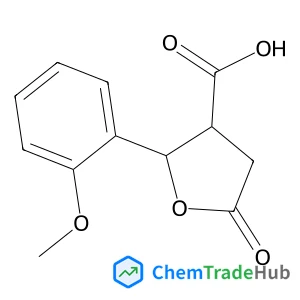
trans-2-(2-Methoxyphenyl)-5-oxotetrahydrofuran-3-carboxylic acid
CAS Number:
99226-02-5
Molecular Formula:
C12H12O5
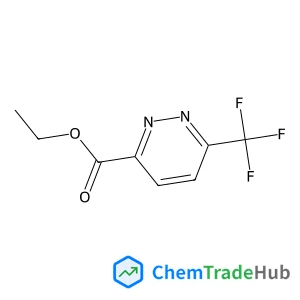
Ethyl 6-(trifluoromethyl)pyridazine-3-carboxylate
CAS Number:
1192155-06-8
Molecular Formula:
C8H7F3N2O2
Recommended Suppliers



Disclaimer
This page provides academic journal information for reference and research purposes only. We are not affiliated with any journal publishers and do not handle publication submissions. For publication-related inquiries, please contact the respective journal publishers directly.
If you notice any inaccuracies in the information displayed, please contact us at support@chemtradehub.com. We will promptly review and address your concerns.