












Nitrogen content and morphology dependent field emission properties of nitrogen-doped SiC nanowires and density functional calculations
Literature Information
Publication Date
2015-09-28
DOI
10.1039/C5CP04064G
Impact Factor
3.676
Authors
Jian Zhao, Alan Meng, Meng Zhang, Zhenjiang Li
View Original
Abstract
Nitrogen-doped SiC nanowires (N-doped SiC NWs) with a nitrogen content from 0.975 wt% to 2.265 wt% have been synthesized via a one-step chemical vapor reaction (CVR), where melamine served as both the carbon and nitrogen source. Interestingly, the morphology of the products changed from slightly curled to very curled with crowding together with the increase of N dopants, which was interpreted reasonably by the proposed N-doping growth model of SiC NWs. In addition, according to the electronic structure calculation results, the band gap is narrowed progressively with the increase of N content, which greatly enhances the field emission (FE) properties. However, the experimental results of the FE measurements substantiate that only when the N content takes an optimal value can the N-doped SiC NWs act as candidates for field emitters with very low turn-on fields (Eto) of 1.5 V μm−1 and threshold fields (Ethr) of 4 V μm−1. On the basis of the aforementioned phenomenon, a universal cooperativity mechanism was put forward to explain the effect of the N content and morphology on the FE properties of the N-doped SiC NWs.
Recommended Journals
Related Literature
Tuning the thermoresponsive properties of PEG-based fluorinated polymers and stimuli responsive drug release for switchable 19F magnetic resonance imaging
Nyoman D. Kurniawan
2021-09-08
Paper
DOI: 10.1039/D1PY00602A
Nanoengineering with RAFT polymers: from nanocomposite design to applications
Wentao Peng, Yingying Cai, Luise Fanslau, Philipp Vana
2021-10-20
Review Article
DOI: 10.1039/D1PY01172C
Direct fluorination as a one-step ATRP initiator immobilization for convenient surface grafting of phenyl ring-containing substrates
Taijun He, Zhenyu Xing, Yixing Wang, Difeng Wu, Yang Liu, Xiangyang Liu
2020-07-31
Paper
DOI: 10.1039/D0PY00860E
Crystallization behavior, structure, morphology, and thermal properties of crystalline and amorphous stereo diblock copolymers, poly(l-lactide)-b-poly(dl-lactide)
Hideto Tsuji, Kazumasa Iguchi, Kohji Tashiro, Yuki Arakawa
2020-08-28
Paper
DOI: 10.1039/D0PY01115K
Aqueous ROPISA of α-amino acid N-carboxyanhydrides: polypeptide block secondary structure controls nanoparticle shape anisotropy
Pedro Salas-Ambrosio, Ségolène Antoine, Emmanuel Ibarboure, Olivier Sandre, Mark W. Grinstaff, Sébastien Lecommandoux, Colin Bonduelle
2021-09-21
Paper
DOI: 10.1039/D1PY00995H
Block copolymers comprising degradable poly(2-ethyl-2-oxazoline) analogues via copper-free click chemistry
2021-08-20
Paper
DOI: 10.1039/D1PY00853F
Self-healable functional polymers based on Diels–Alder ‘click chemistry’ involving substituted furan and triazolinedione derivatives: a simple and very fast approach
Prantik Mondal, Gourhari Jana, Tuhin Subhra Pal, Nikhil K. Singha
2021-09-27
Paper
DOI: 10.1039/D1PY00910A
Green-light photocleavable meso-methyl BODIPY building blocks for macromolecular chemistry
Paul Strasser, Pauline Stadler, Patrick Breiteneder, Günther Redhammer, Markus Himmelsbach, Oliver Brüggemann, Uwe Monkowius, Ian Teasdale
2021-11-16
Paper
DOI: 10.1039/D1PY01245B
Dicarboxylic acid-epoxy vitrimers: influence of the off-stoichiometric acid content on cure reactions and thermo-mechanical properties
Jonny J. Blaker, Constantinos Soutis, François Tournilhac, Matthieu Gresil
2020-06-17
Paper
DOI: 10.1039/D0PY00342E
You might also like
Compound Q&A
What is the market or research trend for N-(4-Methoxybenzyl)-2-pyridinamine (CAS: 52818-63-0)?
N-(4-Methoxybenzyl)-2-pyridinamine (CAS: 52818-63-0) is increasingly being used ...
52818-63-0N-(4-Methoxybenzyl)-...
Compound Q&A
What precautions should be taken when handling Ethyl 4-(2-chlorophenyl)-1,3-thiazole-2-carboxylate (CAS: 1050507-06-6)?
When handling Ethyl 4-(2-chlorophenyl)-1,3-thiazole-2-carboxylate, appropriate p...
1050507-06-6Ethyl 4-(2-chlorophe...
Compound Q&A
What regulatory guidelines apply to diethyldiselane (CAS: 628-39-7)?
Diethyldiselane (CAS: 628-39-7) is classified under the Globally Harmonized Syst...
628-39-7Diethyldiselane
Compound Q&A
What is the market or research trend for oxocopper (CAS: 12053-18-8)?
The market for oxocopper (CAS: 12053-18-8) is primarily driven by its use in cat...
12053-18-8oxocopper; oxo-(oxoc...
Compound Q&A
What is the market or research trend for 5-{[(2-Methyl-2-propanyl)oxy]carbonyl}-5-azaspiro[2.4]heptane-7-carboxylic acid?
The market for 5-{[(2-Methyl-2-propanyl)oxy]carbonyl}-5-azaspiro[2.4]heptane-7-c...
1268519-54-55-{[(2-Methyl-2-prop...
Compound Q&A
What is 2-(1-Pyrrolidinyl)-4-pyridinamine (CAS: 35981-63-6)?
2-(1-Pyrrolidinyl)-4-pyridinamine is a chemical compound with the CAS number 359...
35981-63-62-(1-Pyrrolidinyl)-4...
Compound Q&A
What are the physical and chemical properties of 2-(3-Pyridinyl)-1-azabicyclo[2.2.2]octane (CAS: 91556-75-1)?
2-(3-Pyridinyl)-1-azabicyclo[2.2.2]octane (CAS: 91556-75-1) is a crystalline sol...
91556-75-12-(3-Pyridinyl)-1-az...
Compound Q&A
How is (S)-Alpha-allyl-proline hydrochloride (CAS: 129704-91-2) typically synthesized?
(S)-Alpha-allyl-proline hydrochloride is usually synthesized via a Wittig reacti...
129704-91-2(S)-Alpha-allyl-prol...
Compound Q&A
What is 3-Methyl-1,2-oxazole-5-carboxylic acid (CAS: 4857-42-5)?
3-Methyl-1,2-oxazole-5-carboxylic acid (CAS: 4857-42-5) is an organic compound w...
4857-42-53-Methyl-1,2-oxazole...
Compound Q&A
How is Lys-SMCC-DM1 (CAS: 1281816-04-3) typically synthesized?
Lys-SMCC-DM1 is synthesized via a multi-step process involving the coupling of S...
1281816-04-3Lys-SMCC-DM1
Source Journal
Physical Chemistry Chemical Physics

CiteScore:
5.5
Self-citation Rate:
10.3%
Articles per Year:
3036
Physical Chemistry Chemical Physics (PCCP) is an international journal co-owned by 19 physical chemistry and physics societies from around the world. This journal publishes original, cutting-edge research in physical chemistry, chemical physics and biophysical chemistry. To be suitable for publication in PCCP, articles must include significant innovation and/or insight into physical chemistry; this is the most important criterion that reviewers and Editors will judge against when evaluating submissions. The journal has a broad scope and welcomes contributions spanning experiment, theory, computation and data science. Topical coverage includes spectroscopy, dynamics, kinetics, statistical mechanics, thermodynamics, electrochemistry, catalysis, surface science, quantum mechanics, quantum computing and machine learning. Interdisciplinary research areas such as polymers and soft matter, materials, nanoscience, energy, surfaces/interfaces, and biophysical chemistry are welcomed if they demonstrate significant innovation and/or insight into physical chemistry. Joined experimental/theoretical studies are particularly appreciated when complementary and based on up-to-date approaches.
Recommended Compounds
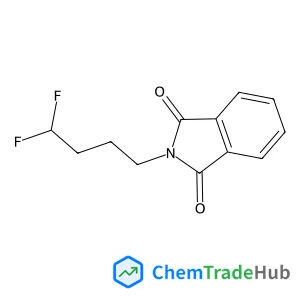
2-(4,4-Difluorobutyl)-1H-isoindole-1,3(2H)-dione
CAS Number:
1265341-14-7
Molecular Formula:
C12H11F2NO2
Recommended Suppliers




Disclaimer
This page provides academic journal information for reference and research purposes only. We are not affiliated with any journal publishers and do not handle publication submissions. For publication-related inquiries, please contact the respective journal publishers directly.
If you notice any inaccuracies in the information displayed, please contact us at support@chemtradehub.com. We will promptly review and address your concerns.