












Acetylene as an essential building block for prebiotic formation of pyrimidine bases on Titan
Literature Information
Publication Date
2015-08-24
DOI
10.1039/C5CP03247D
Impact Factor
3.676
Authors
Yassin A. Jeilani, Chelesa Fearce, Minh Tho Nguyen
View Original
Abstract
Prebiotic building blocks for the formation of biomolecules are important in understanding the abiotic origin of biomolecules. However, there is a limited choice of the building blocks as precursors for the biomolecules. Acetylene (HCCH) is found in Titan's atmosphere and is an abiotic-precursor of pyrimidine bases. HCCH reacts with urea to form both cytosine and uracil. The mechanisms for the formation of both cytosine and uracil were studied by density functional theory at B3LYP/6-311G(d,p) level. Ethynyl radicals (˙CCH) are relevant for the chemistry of Titan's atmosphere therefore both HCCH and ˙CCH were evaluated as carbon sources. The pathways, for both HCCH and ˙CCH, lead to intermediates with an unsaturated-group that facilitate the formation of the six-membered ring of the pyrimidine bases. The predicted structures for cytosine and uracil were compared with labeled cytosine and uracil that were formed from the reaction of DCCD with urea. The results suggest that cytosine is formed from HCCH while uracil is formed from ˙CCH. The mechanisms are energetically feasible and there is no conclusive evidence for the preferred pathway (HCCH or ˙CCH). The pathways were further extended for the formation of both uric acid and 8-oxoguanine from HCCH and urea, and demonstrate the utility of HCCH as a carbon source for diverse biomolecules. Biuret is identified as a precursor for the pyridimine bases, and it unifies the free radical pathways for the pyrimidine bases with those of triazines. The pathways are appropriate for the reducing atmosphere that creates both radicals and electrons due to ionizing radiation on Titan. The mechanisms are feasible for the extraterrestrial formation of the pyrimidine bases.
Related Literature
Studies on staged precipitation of cellulose from an ionic liquid by compressed carbon dioxide
Xiaofu Sun, Yanling Chi, Tiancheng Mu
2014-02-24
Paper
DOI: 10.1039/C4GC00085D
Studies on the oxidative N-demethylation of atropine, thebaine and oxycodone using a FeIII-TAML catalyst
Duy D. Do Pham, Geoffrey F. Kelso, Yuanzhong Yang, Milton T. W. Hearn
2013-11-27
Paper
DOI: 10.1039/C3GC41972J
Phosphotungstic acid-functionalized magnetic nanoparticles as an efficient and recyclable catalyst for the one-pot production of biodiesel from grease via esterification and transesterification
Zillillah, Toh Ann Ngu, Zhi Li
2013-10-14
Paper
DOI: 10.1039/C3GC41379A
Lignin fate and characterization during ionic liquid biomass pretreatment for renewable chemicals and fuels production
Noppadon Sathitsuksanoh, Kevin M. Holtman, Daniel J. Yelle, Trevor Morgan, Vitalie Stavila, Jeffrey Pelton
2013-11-18
Paper
DOI: 10.1039/C3GC42295J
A facile route to realize the copolymerization of l-lactic acid and ε-caprolactone: sulfonic acid-functionalized Brønsted acidic ionic liquids as both solvents and catalysts
Qiaohong Peng, Khalid Mahmood, Ying Wu, Leli Wang, Yanyan Liang, Jianan Shen, Zhengping Liu
2014-01-14
Paper
DOI: 10.1039/C3GC42477D
Facile route fabrication of nickel based mesoporous carbons with high catalytic performance towards 4-nitrophenol reduction
Ying Yang, Yang Ren, Chengjun Sun, Shijie Hao
2014-01-09
Paper
DOI: 10.1039/C3GC42121J
Comparison of catalysis by haloalkane dehalogenases in aqueous solutions of deep eutectic and organic solvents
Radka Chaloupkova
2014-02-12
Paper
DOI: 10.1039/C4GC00117F
Chemical recycling of the waste anodic electrolyte from the TiO2 nanotube preparation process to synthesize facet-controlled TiO2 single crystals as an efficient photocatalyst
Ai-Yong Zhang, Lu-Lu Long, Chang Liu, Wen-Wei Li, Han-Qing Yu
2014-02-24
Paper
DOI: 10.1039/C3GC42167H
Catalyst-free transformation of levulinic acid into pyrrolidinones with formic acid
Yawen Wei, Chao Wang, Xue Jiang, Dong Xue, Zhao-Tie Liu
2013-11-11
Communication
DOI: 10.1039/C3GC42125B
You might also like
Compound Q&A
What precautions should be taken when handling 4-Methyl-6-(trifluoromethyl)quinoline (CAS: 40716-16-3)?
When handling 4-Methyl-6-(trifluoromethyl)quinoline (CAS: 40716-16-3), safety go...
40716-16-34-Methyl-6-(trifluor...
Compound Q&A
What is 4-(3,5-Difluorophenyl)aniline (CAS: 405058-00-6)?
4-(3,5-Difluorophenyl)aniline is an aromatic organic compound with the CAS numbe...
405058-00-64-(3,5-Difluoropheny...
Compound Q&A
How is 5-{[4-(Trifluoromethyl)phenyl]sulfanyl}-1,2,3-thiadiazole-4-carboxylic acid (CAS: 338982-07-3) typically synthesized?
5-{[4-(Trifluoromethyl)phenyl]sulfanyl}-1,2,3-thiadiazole-4-carboxylic acid can ...
338982-07-35-{[4-(Trifluorometh...
Compound Q&A
What is the market or research trend for 4-Benzylaniline hydrochloride (CAS: 6317-57-3)?
The market for 4-Benzylaniline hydrochloride (CAS: 6317-57-3) is steadily growin...
6317-57-34-Benzylaniline hydr...
Compound Q&A
Is [3-(Diethylsulfamoyl)phenyl]boronic acid (CAS: 871329-58-7) safe?
[3-(Diethylsulfamoyl)phenyl]boronic acid is generally considered safe when handl...
871329-58-7[3-(Diethylsulfamoyl...
Compound Q&A
What are the main uses of 3-Bromo-2,5-dimethoxyaniline (CAS: 115929-62-9)?
3-Bromo-2,5-dimethoxyaniline is mainly used in the pharmaceutical and chemical i...
115929-62-93-Bromo-2,5-dimethox...
Compound Q&A
What regulatory guidelines apply to N-Methyl-1-(5-methyl-1H-indol-3-yl)methanamine (CAS: 915922-67-7)?
N-Methyl-1-(5-methyl-1H-indol-3-yl)methanamine (CAS: 915922-67-7) is subject to ...
915922-67-7N-Methyl-1-(5-methyl...
Compound Q&A
What industries use Carbamic acid, N-[(5S)-5,6-diamino-6-oxohexyl]-, 1,1-dimethylethyl ester (CAS: 24828-96-4)?
This compound is primarily used in the pharmaceutical industry for the synthesis...
24828-96-4Carbamic acid, N-[(5...
Compound Q&A
How should 2-Methyl-2-propanyl [(1S,3R)-3-aminocyclohexyl]carbamate (CAS: 1298101-47-9) be stored?
2-Methyl-2-propanyl [(1S,3R)-3-aminocyclohexyl]carbamate (CAS: 1298101-47-9) sho...
1298101-47-92-Methyl-2-propanyl ...
Compound Q&A
What industries use Ethyl 2-bromo-4,4,4-trifluorobutanoate (CAS: 367-33-9)?
Ethyl 2-bromo-4,4,4-trifluorobutanoate (CAS: 367-33-9) is utilized in the pharma...
367-33-9Ethyl 2-bromo-4,4,4-...
Source Journal
Physical Chemistry Chemical Physics

CiteScore:
5.5
Self-citation Rate:
10.3%
Articles per Year:
3036
Physical Chemistry Chemical Physics (PCCP) is an international journal co-owned by 19 physical chemistry and physics societies from around the world. This journal publishes original, cutting-edge research in physical chemistry, chemical physics and biophysical chemistry. To be suitable for publication in PCCP, articles must include significant innovation and/or insight into physical chemistry; this is the most important criterion that reviewers and Editors will judge against when evaluating submissions. The journal has a broad scope and welcomes contributions spanning experiment, theory, computation and data science. Topical coverage includes spectroscopy, dynamics, kinetics, statistical mechanics, thermodynamics, electrochemistry, catalysis, surface science, quantum mechanics, quantum computing and machine learning. Interdisciplinary research areas such as polymers and soft matter, materials, nanoscience, energy, surfaces/interfaces, and biophysical chemistry are welcomed if they demonstrate significant innovation and/or insight into physical chemistry. Joined experimental/theoretical studies are particularly appreciated when complementary and based on up-to-date approaches.
Recommended Compounds
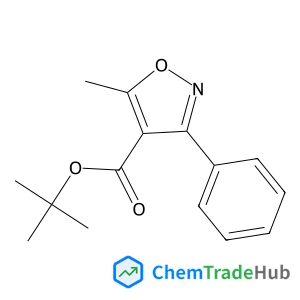
2-Methyl-2-propanyl 5-methyl-3-phenyl-1,2-oxazole-4-carboxylate
CAS Number:
211429-79-7
Molecular Formula:
C15H17NO3
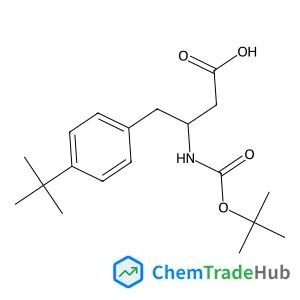
(S)-3-((tert-Butoxycarbonyl)amino)-4-(4-(tert-butyl)phenyl)butanoic acid
CAS Number:
403661-85-8
Molecular Formula:
C19H29NO4
Recommended Suppliers






Disclaimer
This page provides academic journal information for reference and research purposes only. We are not affiliated with any journal publishers and do not handle publication submissions. For publication-related inquiries, please contact the respective journal publishers directly.
If you notice any inaccuracies in the information displayed, please contact us at support@chemtradehub.com. We will promptly review and address your concerns.