


Inverse internal conversion in C4− below the electron detachment threshold
Literature Information
Publication Date
2015-07-07
DOI
10.1039/C5CP02549D
Impact Factor
3.676
Authors
Naoko Kono, Takeshi Furukawa, Hajime Tanuma, Jun Matsumoto, Haruo Shiromaru, Toshiyuki Azuma, Kaveh Najafian, Maria Susanne Pettersson, Bertil Dynefors, Klavs Hansen
View Original
Abstract
Inverse internal conversion followed by recurrent fluorescence was observed as a fast decay (10 μs range) in the time profile of neutral yields from photo-excited C4− molecular ions. We also elucidated the contribution of such electronic radiative cooling to the C4− ions with internal energy far below the detachment threshold by an alternative novel approach, observing the laser wavelength and storage time dependence (ms range) of the total yield of the photo-induced neutrals.
Recommended Journals

Israel Journal of Chemistry

Journal of Heterocyclic Chemistry

Pure and Applied Chemistry

Journal of Organometallic Chemistry

Nature

Journal of Medicinal Chemistry

Helvetica Chimica Acta

Journal of Physics and Chemistry of Solids

European Journal of Wood and Wood Products

Proceedings of the National Academy of Sciences of the United States of America
Related Literature
Eco-footprint: a new tool for the “Made in Chimex” considered approach
Lucie Leseurre, Cécilia Merea, Sébastien Duprat de Paule, Alain Pinchart
2013-12-11
Communication
DOI: 10.1039/C3GC42201A
Mixing ionic liquids – “simple mixtures” or “double salts”?
Gregory Chatel, Jorge F. B. Pereira, Varun Debbeti, Hui Wang, Robin D. Rogers
2014-01-21
Critical Review
DOI: 10.1039/C3GC41389F
A PDMS membrane with high pervaporation performance for the separation of furfural and its potential in industrial application
Fan Qin, Shufeng Li, Peiyong Qin, M. Nazmul Karim, Tianwei Tan
2013-11-05
Paper
DOI: 10.1039/C3GC41867G
Vanillin, a promising biobased building-block for monomer synthesis
Maxence Fache, Emilie Darroman, Vincent Besse, Rémi Auvergne, Sylvain Caillol, Bernard Boutevin
2014-02-18
Paper
DOI: 10.1039/C3GC42613K
Heterogeneous catalytic reaction of microcrystalline cellulose in hydrothermal microwave-assisted decomposition: effect of modified zeolite Beta
José González-Rivera, Ignacio R. Galindo-Esquivel, Massimo Onor, Emilia Bramanti, Iginio Longo, Carlo Ferrari
2013-11-27
Paper
DOI: 10.1039/C3GC42207K
Lignin extraction from biomass with protic ionic liquids
Ezinne C. Achinivu, Reagan M. Howard, Guoqing Li, Hanna Gracz, Wesley A. Henderson
2013-12-05
Communication
DOI: 10.1039/C3GC42306A
Organocatalysis in biorefining for biomass conversion and upgrading
Eugene Y.-X. Chen
2013-11-12
Critical Review
DOI: 10.1039/C3GC41934G
Heterocycle construction using the biomass-derived building block itaconic acid
Alexandra M. Medway, Jonathan Sperry
2014-02-05
Critical Review
DOI: 10.1039/C4GC00014E
Journey on greener pathways: from the use of alternate energy inputs and benign reaction media to sustainable applications of nano-catalysts in synthesis and environmental remediation
2014-01-17
Perspective
DOI: 10.1039/C3GC42640H
You might also like
Compound Q&A
What precautions should be taken when handling 4-Methyl-6-(trifluoromethyl)quinoline (CAS: 40716-16-3)?
When handling 4-Methyl-6-(trifluoromethyl)quinoline (CAS: 40716-16-3), safety go...
40716-16-34-Methyl-6-(trifluor...
Compound Q&A
What is 4-(3,5-Difluorophenyl)aniline (CAS: 405058-00-6)?
4-(3,5-Difluorophenyl)aniline is an aromatic organic compound with the CAS numbe...
405058-00-64-(3,5-Difluoropheny...
Compound Q&A
How is 5-{[4-(Trifluoromethyl)phenyl]sulfanyl}-1,2,3-thiadiazole-4-carboxylic acid (CAS: 338982-07-3) typically synthesized?
5-{[4-(Trifluoromethyl)phenyl]sulfanyl}-1,2,3-thiadiazole-4-carboxylic acid can ...
338982-07-35-{[4-(Trifluorometh...
Compound Q&A
What is the market or research trend for 4-Benzylaniline hydrochloride (CAS: 6317-57-3)?
The market for 4-Benzylaniline hydrochloride (CAS: 6317-57-3) is steadily growin...
6317-57-34-Benzylaniline hydr...
Compound Q&A
Is [3-(Diethylsulfamoyl)phenyl]boronic acid (CAS: 871329-58-7) safe?
[3-(Diethylsulfamoyl)phenyl]boronic acid is generally considered safe when handl...
871329-58-7[3-(Diethylsulfamoyl...
Compound Q&A
What are the main uses of 3-Bromo-2,5-dimethoxyaniline (CAS: 115929-62-9)?
3-Bromo-2,5-dimethoxyaniline is mainly used in the pharmaceutical and chemical i...
115929-62-93-Bromo-2,5-dimethox...
Compound Q&A
What regulatory guidelines apply to N-Methyl-1-(5-methyl-1H-indol-3-yl)methanamine (CAS: 915922-67-7)?
N-Methyl-1-(5-methyl-1H-indol-3-yl)methanamine (CAS: 915922-67-7) is subject to ...
915922-67-7N-Methyl-1-(5-methyl...
Compound Q&A
What industries use Carbamic acid, N-[(5S)-5,6-diamino-6-oxohexyl]-, 1,1-dimethylethyl ester (CAS: 24828-96-4)?
This compound is primarily used in the pharmaceutical industry for the synthesis...
24828-96-4Carbamic acid, N-[(5...
Compound Q&A
How should 2-Methyl-2-propanyl [(1S,3R)-3-aminocyclohexyl]carbamate (CAS: 1298101-47-9) be stored?
2-Methyl-2-propanyl [(1S,3R)-3-aminocyclohexyl]carbamate (CAS: 1298101-47-9) sho...
1298101-47-92-Methyl-2-propanyl ...
Compound Q&A
What industries use Ethyl 2-bromo-4,4,4-trifluorobutanoate (CAS: 367-33-9)?
Ethyl 2-bromo-4,4,4-trifluorobutanoate (CAS: 367-33-9) is utilized in the pharma...
367-33-9Ethyl 2-bromo-4,4,4-...
Source Journal
Physical Chemistry Chemical Physics

CiteScore:
5.5
Self-citation Rate:
10.3%
Articles per Year:
3036
Physical Chemistry Chemical Physics (PCCP) is an international journal co-owned by 19 physical chemistry and physics societies from around the world. This journal publishes original, cutting-edge research in physical chemistry, chemical physics and biophysical chemistry. To be suitable for publication in PCCP, articles must include significant innovation and/or insight into physical chemistry; this is the most important criterion that reviewers and Editors will judge against when evaluating submissions. The journal has a broad scope and welcomes contributions spanning experiment, theory, computation and data science. Topical coverage includes spectroscopy, dynamics, kinetics, statistical mechanics, thermodynamics, electrochemistry, catalysis, surface science, quantum mechanics, quantum computing and machine learning. Interdisciplinary research areas such as polymers and soft matter, materials, nanoscience, energy, surfaces/interfaces, and biophysical chemistry are welcomed if they demonstrate significant innovation and/or insight into physical chemistry. Joined experimental/theoretical studies are particularly appreciated when complementary and based on up-to-date approaches.
Recommended Compounds
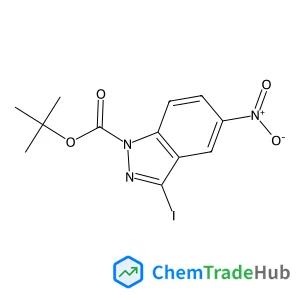
Tert-butyl 3-iodo-5-nitro-1H-indazole-1-carboxylate
CAS Number:
459133-69-8
Molecular Formula:
C12H12IN3O4
Recommended Suppliers






Disclaimer
This page provides academic journal information for reference and research purposes only. We are not affiliated with any journal publishers and do not handle publication submissions. For publication-related inquiries, please contact the respective journal publishers directly.
If you notice any inaccuracies in the information displayed, please contact us at support@chemtradehub.com. We will promptly review and address your concerns.