












Eco-footprint: a new tool for the “Made in Chimex” considered approach
Literature Information
Publication Date
2013-12-11
DOI
10.1039/C3GC42201A
Impact Factor
10.182
Authors
Lucie Leseurre, Cécilia Merea, Sébastien Duprat de Paule, Alain Pinchart
View Original
Abstract
In order to assess the sustainability of Chimex processes, we developed a visualization tool called Eco-footprint which gathers 10 indicators allocated either to manufacturing or eco-design footprints. All parameters are described in this article and illustrated by the case studies of Pro-Xylane™ and Mexoryl® SX syntheses.
Related Literature
Replica exchange reactive molecular dynamics simulations of initial reactions in zeolite synthesis
Zhifeng Jing
2015-08-25
Paper
DOI: 10.1039/C5CP03063C
Effects of substituents on fluorometric detection of cyanide anions by indolium–coumarin dyads
Masaya Nakamura, Takayuki Hirai
2015-08-27
Paper
DOI: 10.1039/C5CP03877D
Phosphoryl transfer reaction catalyzed by membrane diacylglycerol kinase: a theoretical mechanism study
Yafei Jiang, Hongwei Tan, Jimin Zheng, Xichen Li, Guangju Chen, Zongchao Jia
2015-08-24
Paper
DOI: 10.1039/C5CP03342J
Water adsorption in SAPO-34: elucidating the role of local heterogeneities and defects using dispersion-corrected DFT calculations
2015-08-28
Paper
DOI: 10.1039/C5CP04189A
Study of switching in spin transition compounds within the mechanoelastic model with realistic parameters
Cristian Enachescu, Andreas Hauser
2016-06-29
Paper
DOI: 10.1039/C6CP02806C
Theoretical study of the reactions of Criegee intermediates with ozone, alkylhydroperoxides, and carbon monoxide
L. Vereecken, W. J. Bloss
2015-08-20
Paper
DOI: 10.1039/C5CP03862F
Double deuterated acetylacetone in neon matrices: infrared spectroscopy, photoreactivity and the tunneling process
Michèle Chevalier, Claudine Crépin
2016-06-27
Paper
DOI: 10.1039/C6CP02796B
Electron–vibration entanglement in the Born–Oppenheimer description of chemical reactions and spectroscopy
Ross H. McKenzie
2015-07-08
Paper
DOI: 10.1039/C5CP02239H
Deformation twinning and the role of amino acids and magnesium in calcite hardness from molecular simulation
A. S. Côté, R. Darkins, D. M. Duffy
2015-07-13
Paper
DOI: 10.1039/C5CP03370E
Electronic properties of epitaxial cerium oxide films during controlled reduction and oxidation studied by resonant inelastic X-ray scattering
Lucia Amidani, Pieter Glatzel, Paola Luches
2016-06-29
Paper
DOI: 10.1039/C6CP04407G
You might also like
Compound Q&A
What precautions should be taken when handling 4-Methyl-6-(trifluoromethyl)quinoline (CAS: 40716-16-3)?
When handling 4-Methyl-6-(trifluoromethyl)quinoline (CAS: 40716-16-3), safety go...
40716-16-34-Methyl-6-(trifluor...
Compound Q&A
What is 4-(3,5-Difluorophenyl)aniline (CAS: 405058-00-6)?
4-(3,5-Difluorophenyl)aniline is an aromatic organic compound with the CAS numbe...
405058-00-64-(3,5-Difluoropheny...
Compound Q&A
How is 5-{[4-(Trifluoromethyl)phenyl]sulfanyl}-1,2,3-thiadiazole-4-carboxylic acid (CAS: 338982-07-3) typically synthesized?
5-{[4-(Trifluoromethyl)phenyl]sulfanyl}-1,2,3-thiadiazole-4-carboxylic acid can ...
338982-07-35-{[4-(Trifluorometh...
Compound Q&A
What is the market or research trend for 4-Benzylaniline hydrochloride (CAS: 6317-57-3)?
The market for 4-Benzylaniline hydrochloride (CAS: 6317-57-3) is steadily growin...
6317-57-34-Benzylaniline hydr...
Compound Q&A
Is [3-(Diethylsulfamoyl)phenyl]boronic acid (CAS: 871329-58-7) safe?
[3-(Diethylsulfamoyl)phenyl]boronic acid is generally considered safe when handl...
871329-58-7[3-(Diethylsulfamoyl...
Compound Q&A
What are the main uses of 3-Bromo-2,5-dimethoxyaniline (CAS: 115929-62-9)?
3-Bromo-2,5-dimethoxyaniline is mainly used in the pharmaceutical and chemical i...
115929-62-93-Bromo-2,5-dimethox...
Compound Q&A
What regulatory guidelines apply to N-Methyl-1-(5-methyl-1H-indol-3-yl)methanamine (CAS: 915922-67-7)?
N-Methyl-1-(5-methyl-1H-indol-3-yl)methanamine (CAS: 915922-67-7) is subject to ...
915922-67-7N-Methyl-1-(5-methyl...
Compound Q&A
What industries use Carbamic acid, N-[(5S)-5,6-diamino-6-oxohexyl]-, 1,1-dimethylethyl ester (CAS: 24828-96-4)?
This compound is primarily used in the pharmaceutical industry for the synthesis...
24828-96-4Carbamic acid, N-[(5...
Compound Q&A
How should 2-Methyl-2-propanyl [(1S,3R)-3-aminocyclohexyl]carbamate (CAS: 1298101-47-9) be stored?
2-Methyl-2-propanyl [(1S,3R)-3-aminocyclohexyl]carbamate (CAS: 1298101-47-9) sho...
1298101-47-92-Methyl-2-propanyl ...
Compound Q&A
What industries use Ethyl 2-bromo-4,4,4-trifluorobutanoate (CAS: 367-33-9)?
Ethyl 2-bromo-4,4,4-trifluorobutanoate (CAS: 367-33-9) is utilized in the pharma...
367-33-9Ethyl 2-bromo-4,4,4-...
Source Journal
Green Chemistry

CiteScore:
16.1
Self-citation Rate:
7.5%
Articles per Year:
944
Green Chemistry provides a unique forum for the publication of innovative research on the development of alternative green and sustainable technologies. The scope of Green Chemistry is based on, but not limited to, the definition proposed by Anastas and Warner (Green Chemistry: Theory and Practice, P T Anastas and J C Warner, Oxford University Press, Oxford, 1998). Green chemistry is the utilisation of a set of principles that reduces or eliminates the use or generation of hazardous substances in the design, manufacture and application of chemical products. Green Chemistry is at the frontiers of this continuously-evolving interdisciplinary science and publishes research that attempts to reduce the environmental impact of the chemical enterprise by developing a technology base that is inherently non-toxic to living things and the environment. Submissions on all aspects of research relating to the endeavour are welcome. The journal publishes original and significant cutting-edge research that is likely to be of wide general appeal. To be published, work must present a significant advance in green chemistry. Papers must contain a comparison with existing methods and demonstrate advantages over those methods before publication can be considered. For more information please see this Editorial. Coverage includes the following, but is not limited to: Design (e.g. biomimicry, design for degradation/recycling/reduced toxicity…) Reagents & Feedstocks (e.g. renewables, CO2, solvents, auxiliary agents, waste utilization…) Synthesis (e.g. organic, inorganic, synthetic biology…) Catalysis (e.g. homogeneous, heterogeneous, enzyme, whole cell…) Process (e.g. process design, intensification, separations, recycling, efficiency…) Energy (e.g. renewable energy, fuels, photovoltaics, fuel cells, energy storage, energy carriers…) Applications (e.g. electronics, dyes, consumer products, coatings, pharmaceuticals, preservatives, building materials, chemicals for industry/agriculture/mining…) Impact (e.g. safety, metrics, LCA, sustainability, (eco)toxicology…) Green chemistry is, by definition, a continuously-evolving frontier. Therefore, the inclusion of a particular material or technology does not, of itself, guarantee that a paper is suitable for the journal. To be suitable, the novel advance should have the potential for reduced environmental impact relative to the state of the art. Green Chemistry does not normally deal with research associated with 'end-of-pipe' or remediation issues.
Recommended Compounds
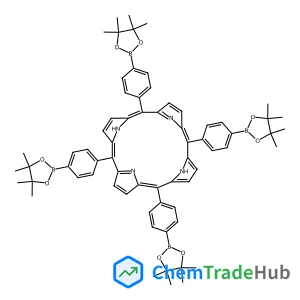
5,10,15,20-tetrakis(4-boronic acid pinacol ester phenyl) porphyrin
CAS Number:
1332748-00-1
Molecular Formula:
C68H74B4N4O8
![2-[(5Z,8Z,11Z,14Z)-5,8,11,14-Icosatetraen-1-yloxy]-1,3-propanediol structure](https://static.chemtradehub.com/structs/222/222723-55-9-0348.webp "2-[(5Z,8Z,11Z,14Z)-5,8,11,14-Icosatetraen-1-yloxy]-1,3-propanediol structure")
2-[(5Z,8Z,11Z,14Z)-5,8,11,14-Icosatetraen-1-yloxy]-1,3-propanediol
CAS Number:
222723-55-9
Molecular Formula:
C23H40O3
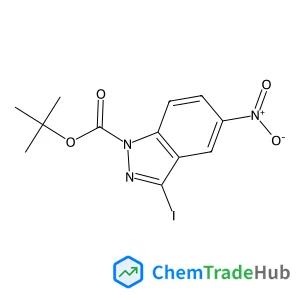
Tert-butyl 3-iodo-5-nitro-1H-indazole-1-carboxylate
CAS Number:
459133-69-8
Molecular Formula:
C12H12IN3O4
Recommended Suppliers





Disclaimer
This page provides academic journal information for reference and research purposes only. We are not affiliated with any journal publishers and do not handle publication submissions. For publication-related inquiries, please contact the respective journal publishers directly.
If you notice any inaccuracies in the information displayed, please contact us at support@chemtradehub.com. We will promptly review and address your concerns.