












Organocatalysis in biorefining for biomass conversion and upgrading
Literature Information
Publication Date
2013-11-12
DOI
10.1039/C3GC41934G
Impact Factor
10.182
Authors
Eugene Y.-X. Chen
View Original
Abstract
Organocatalysis using small-molecule organic compounds as catalysts has risen to prominence in organic synthesis and polymer synthesis. However, its application in biorefining for catalytic biomass conversion and upgrading into sustainable chemicals, materials, and biofuels has come to light only recently. This emergence of applying organocatalysis for biorefining has not only broadened the scope of organocatalysis and offered metal-free “greener” alternatives for biomass conversion and upgrading, it has also showed some unique activity and selectivity in such transformations as compared to metal-mediated processes. This review captures highlights of this emerging area by focusing on utilization of organocatalytic means for catalytic conversions of cellulose, glucose and fructose, upgrading of furaldehydes, and organocatalytic polymerization of biomass feedstocks.
Related Literature
The efficiency of driving chemical reactions by a physical non-equilibrium is kinetically controlled
Tobias Göppel, Vladimir V. Palyulin, Ulrich Gerland
2016-04-28
Paper
DOI: 10.1039/C6CP01034B
Effect of Ca2+ codoping on the Eu2+ luminescence properties in the Sr2Si5N8 host lattice: a theoretical approach
Claudio Bulloni, Amador García-Fuente, Werner Urland, Claude Daul
2015-09-07
Paper
DOI: 10.1039/C5CP02915E
The oxidation of copper catalysts during ethylene epoxidation
M. T. Greiner, T. E. Jones, B. E. Johnson, T. C. R. Rocha, Z. J. Wang, M. Armbrüster, M. Willinger, A. Knop-Gericke, R. Schlögl
2015-08-28
Paper
DOI: 10.1039/C5CP03722K
Nanoscale magnetism and novel electronic properties of a bilayer bismuth(111) film with vacancies and chemical doping
Yajun Zhang
2016-06-29
Paper
DOI: 10.1039/C6CP03056D
THz time-domain spectroscopy of mixed CO2–CH3OH interstellar ice analogs
2016-06-07
Paper
DOI: 10.1039/C6CP00632A
Mechano-switchable, luminescent gels derived from salts of a long-chained, fatty-acid gelator
Mohan Zhang
2016-07-12
Paper
DOI: 10.1039/C6CP03435G
Assessing backbone solvation effects in the conformational propensities of amino acid residues in unfolded peptides
Niranjan V. Ilawe, Alexandra E. Raeber, Reinhard Schweitzer-Stenner, Siobhan E. Toal, Bryan M. Wong
2015-08-27
Paper
DOI: 10.1039/C5CP03646A
An advanced approach for measuring acidity of hydroxyls in confined space: a FTIR study of low-temperature CO and 15N2 adsorption on MOF samples from the MIL-53(Al) series
M. Mihaylov, S. Andonova, K. Chakarova, A. Vimont, E. Ivanova, N. Drenchev, K. Hadjiivanov
2015-08-17
Paper
DOI: 10.1039/C5CP04139B
The fracture behaviors of monolayer phosphorene with grain boundaries under tension: a molecular dynamics study
Chong Qiao, Aihua Wang, Jinping Zhang, Songyou Wang, Wan-Sheng Su, Yu Jia
2016-06-30
Paper
DOI: 10.1039/C6CP03655D
The absence of a gap state and enhancement of the Mars–van Krevelen reaction on oxygen defective Cu/CeO2 surfaces
Mauro Boero
2016-07-05
Paper
DOI: 10.1039/C6CP03880H
You might also like
Compound Q&A
What precautions should be taken when handling 4-Methyl-6-(trifluoromethyl)quinoline (CAS: 40716-16-3)?
When handling 4-Methyl-6-(trifluoromethyl)quinoline (CAS: 40716-16-3), safety go...
40716-16-34-Methyl-6-(trifluor...
Compound Q&A
What is 4-(3,5-Difluorophenyl)aniline (CAS: 405058-00-6)?
4-(3,5-Difluorophenyl)aniline is an aromatic organic compound with the CAS numbe...
405058-00-64-(3,5-Difluoropheny...
Compound Q&A
How is 5-{[4-(Trifluoromethyl)phenyl]sulfanyl}-1,2,3-thiadiazole-4-carboxylic acid (CAS: 338982-07-3) typically synthesized?
5-{[4-(Trifluoromethyl)phenyl]sulfanyl}-1,2,3-thiadiazole-4-carboxylic acid can ...
338982-07-35-{[4-(Trifluorometh...
Compound Q&A
What is the market or research trend for 4-Benzylaniline hydrochloride (CAS: 6317-57-3)?
The market for 4-Benzylaniline hydrochloride (CAS: 6317-57-3) is steadily growin...
6317-57-34-Benzylaniline hydr...
Compound Q&A
Is [3-(Diethylsulfamoyl)phenyl]boronic acid (CAS: 871329-58-7) safe?
[3-(Diethylsulfamoyl)phenyl]boronic acid is generally considered safe when handl...
871329-58-7[3-(Diethylsulfamoyl...
Compound Q&A
What are the main uses of 3-Bromo-2,5-dimethoxyaniline (CAS: 115929-62-9)?
3-Bromo-2,5-dimethoxyaniline is mainly used in the pharmaceutical and chemical i...
115929-62-93-Bromo-2,5-dimethox...
Compound Q&A
What regulatory guidelines apply to N-Methyl-1-(5-methyl-1H-indol-3-yl)methanamine (CAS: 915922-67-7)?
N-Methyl-1-(5-methyl-1H-indol-3-yl)methanamine (CAS: 915922-67-7) is subject to ...
915922-67-7N-Methyl-1-(5-methyl...
Compound Q&A
What industries use Carbamic acid, N-[(5S)-5,6-diamino-6-oxohexyl]-, 1,1-dimethylethyl ester (CAS: 24828-96-4)?
This compound is primarily used in the pharmaceutical industry for the synthesis...
24828-96-4Carbamic acid, N-[(5...
Compound Q&A
How should 2-Methyl-2-propanyl [(1S,3R)-3-aminocyclohexyl]carbamate (CAS: 1298101-47-9) be stored?
2-Methyl-2-propanyl [(1S,3R)-3-aminocyclohexyl]carbamate (CAS: 1298101-47-9) sho...
1298101-47-92-Methyl-2-propanyl ...
Compound Q&A
What industries use Ethyl 2-bromo-4,4,4-trifluorobutanoate (CAS: 367-33-9)?
Ethyl 2-bromo-4,4,4-trifluorobutanoate (CAS: 367-33-9) is utilized in the pharma...
367-33-9Ethyl 2-bromo-4,4,4-...
Source Journal
Green Chemistry

CiteScore:
16.1
Self-citation Rate:
7.5%
Articles per Year:
944
Green Chemistry provides a unique forum for the publication of innovative research on the development of alternative green and sustainable technologies. The scope of Green Chemistry is based on, but not limited to, the definition proposed by Anastas and Warner (Green Chemistry: Theory and Practice, P T Anastas and J C Warner, Oxford University Press, Oxford, 1998). Green chemistry is the utilisation of a set of principles that reduces or eliminates the use or generation of hazardous substances in the design, manufacture and application of chemical products. Green Chemistry is at the frontiers of this continuously-evolving interdisciplinary science and publishes research that attempts to reduce the environmental impact of the chemical enterprise by developing a technology base that is inherently non-toxic to living things and the environment. Submissions on all aspects of research relating to the endeavour are welcome. The journal publishes original and significant cutting-edge research that is likely to be of wide general appeal. To be published, work must present a significant advance in green chemistry. Papers must contain a comparison with existing methods and demonstrate advantages over those methods before publication can be considered. For more information please see this Editorial. Coverage includes the following, but is not limited to: Design (e.g. biomimicry, design for degradation/recycling/reduced toxicity…) Reagents & Feedstocks (e.g. renewables, CO2, solvents, auxiliary agents, waste utilization…) Synthesis (e.g. organic, inorganic, synthetic biology…) Catalysis (e.g. homogeneous, heterogeneous, enzyme, whole cell…) Process (e.g. process design, intensification, separations, recycling, efficiency…) Energy (e.g. renewable energy, fuels, photovoltaics, fuel cells, energy storage, energy carriers…) Applications (e.g. electronics, dyes, consumer products, coatings, pharmaceuticals, preservatives, building materials, chemicals for industry/agriculture/mining…) Impact (e.g. safety, metrics, LCA, sustainability, (eco)toxicology…) Green chemistry is, by definition, a continuously-evolving frontier. Therefore, the inclusion of a particular material or technology does not, of itself, guarantee that a paper is suitable for the journal. To be suitable, the novel advance should have the potential for reduced environmental impact relative to the state of the art. Green Chemistry does not normally deal with research associated with 'end-of-pipe' or remediation issues.
Recommended Compounds
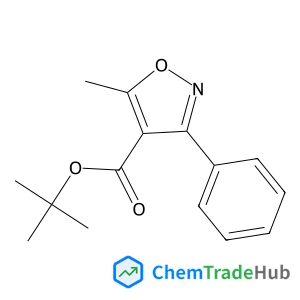
2-Methyl-2-propanyl 5-methyl-3-phenyl-1,2-oxazole-4-carboxylate
CAS Number:
211429-79-7
Molecular Formula:
C15H17NO3
![2,4-Dichloro-6-isopropyl-5H-pyrrolo[3,4-d]pyrimidin-7(6H)-one structure](https://static.chemtradehub.com/structs/107/1079649-94-7-ad4a.webp "2,4-Dichloro-6-isopropyl-5H-pyrrolo[3,4-d]pyrimidin-7(6H)-one structure")
2,4-Dichloro-6-isopropyl-5H-pyrrolo[3,4-d]pyrimidin-7(6H)-one
CAS Number:
1079649-94-7
Molecular Formula:
C9H9Cl2N3O
Recommended Suppliers





Disclaimer
This page provides academic journal information for reference and research purposes only. We are not affiliated with any journal publishers and do not handle publication submissions. For publication-related inquiries, please contact the respective journal publishers directly.
If you notice any inaccuracies in the information displayed, please contact us at support@chemtradehub.com. We will promptly review and address your concerns.