












A PDMS membrane with high pervaporation performance for the separation of furfural and its potential in industrial application
Literature Information
Publication Date
2013-11-05
DOI
10.1039/C3GC41867G
Impact Factor
10.182
Authors
Fan Qin, Shufeng Li, Peiyong Qin, M. Nazmul Karim, Tianwei Tan
View Original
Abstract
Producing furfural based on the hydrolysis of biomass rich in hemicellulose is a sustainable technique; however, separating furfural from the hydrolysate by the conventional methods like distillation is energy-intensive and environmentally unfriendly. Pervaporation, an energy-efficient ‘clean technology’, is thus suggested for the separation of furfural. A polydimethylsiloxane (PDMS) membrane was prepared using water as a solvent in the presence of a surfactant (sodium dodecyl sulfate, SDS). Effects of feed concentration and temperature, thickness of the PDMS layer and operation time on pervaporation performance were investigated, and the apparent activation energies of furfural and water permeating through the membrane were calculated according to the Arrhenius-type equation. Permeate concentration and furfural flux reached 62.4 wt% and 3222.6 g m−2 h−1 when separating 6.5 wt% furfural aqueous solution at 95 °C. Compared to distillation, pervaporation by the PDMS membrane provided higher selectivity while consuming 70% less evaporation energy. Additionally, the PDMS membrane displayed more promising potential in industrial application than those reported in the literature due to its higher furfural flux.
Related Literature
Alkali metal ion induced cube shaped mesoporous hematite particles for improved magnetic properties and efficient degradation of water pollutants
Mouni Roy, Milan Kanti Naskar
2016-07-01
Paper
DOI: 10.1039/C6CP02442D
Electron confinement induced by diluted hydrogen-like ad-atoms in graphene ribbons
L. Rosales, M. Pacheco, A. Ayuela
2015-08-21
Paper
DOI: 10.1039/C5CP03061G
Electrical impedance spectroscopy of a PET chip sandwiched between two disk electrodes: understanding the contribution of the polymer/electrode interface
L. Chaal, V. Vivier, B. Tribollet, J. Gamby
2016-06-29
Paper
DOI: 10.1039/C6CP03042D
Photodissociation of aniline N–H bonds in clusters of different nature
Viktoriya Poterya, Dana Nachtigallová, Jozef Lengyel, Michal Fárník
2015-09-01
Paper
DOI: 10.1039/C5CP04485E
Theoretical study of the reactions of Criegee intermediates with ozone, alkylhydroperoxides, and carbon monoxide
L. Vereecken, W. J. Bloss
2015-08-20
Paper
DOI: 10.1039/C5CP03862F
Divergent trend in density versus viscosity of ionic liquid/water mixtures: a molecular view from guanidinium ionic liquids
Ramesh L. Gardas, Sanjib Senapati
2015-08-28
Paper
DOI: 10.1039/C5CP02841H
A chemical chaperone induces inhomogeneous conformational changes in flexible proteins
Djemel Hamdane, Christophe Velours, David Cornu, Magali Nicaise, Murielle Lombard, Marc Fontecave
2016-07-01
Paper
DOI: 10.1039/C6CP03635J
Near infrared electroluminescence of ZnMgO/InN core–shell nanorod heterostructures grown on Si substrate
Guoguang Wu, Weitao Zheng, Fubin Gao, Hang Yang, Yang Zhao, Jingzhi Yin, Wei Zheng, Wancheng Li, Baolin Zhang, Guotong Du
2016-06-07
Paper
DOI: 10.1039/C6CP03199D
Electronic properties of epitaxial cerium oxide films during controlled reduction and oxidation studied by resonant inelastic X-ray scattering
Lucia Amidani, Pieter Glatzel, Paola Luches
2016-06-29
Paper
DOI: 10.1039/C6CP04407G
Strong solvent dependence of linear and non-linear optical properties of donor–acceptor type pyrrolo[3,2-b]pyrroles
Rafał Orłowski, Marzena Banasiewicz, Guillaume Clermont, Frédéric Castet, Rashid Nazir, Mireille Blanchard-Desce, Daniel T. Gryko
2015-07-08
Paper
DOI: 10.1039/C5CP03523F
You might also like
Compound Q&A
What precautions should be taken when handling 4-Methyl-6-(trifluoromethyl)quinoline (CAS: 40716-16-3)?
When handling 4-Methyl-6-(trifluoromethyl)quinoline (CAS: 40716-16-3), safety go...
40716-16-34-Methyl-6-(trifluor...
Compound Q&A
What is 4-(3,5-Difluorophenyl)aniline (CAS: 405058-00-6)?
4-(3,5-Difluorophenyl)aniline is an aromatic organic compound with the CAS numbe...
405058-00-64-(3,5-Difluoropheny...
Compound Q&A
How is 5-{[4-(Trifluoromethyl)phenyl]sulfanyl}-1,2,3-thiadiazole-4-carboxylic acid (CAS: 338982-07-3) typically synthesized?
5-{[4-(Trifluoromethyl)phenyl]sulfanyl}-1,2,3-thiadiazole-4-carboxylic acid can ...
338982-07-35-{[4-(Trifluorometh...
Compound Q&A
What is the market or research trend for 4-Benzylaniline hydrochloride (CAS: 6317-57-3)?
The market for 4-Benzylaniline hydrochloride (CAS: 6317-57-3) is steadily growin...
6317-57-34-Benzylaniline hydr...
Compound Q&A
Is [3-(Diethylsulfamoyl)phenyl]boronic acid (CAS: 871329-58-7) safe?
[3-(Diethylsulfamoyl)phenyl]boronic acid is generally considered safe when handl...
871329-58-7[3-(Diethylsulfamoyl...
Compound Q&A
What are the main uses of 3-Bromo-2,5-dimethoxyaniline (CAS: 115929-62-9)?
3-Bromo-2,5-dimethoxyaniline is mainly used in the pharmaceutical and chemical i...
115929-62-93-Bromo-2,5-dimethox...
Compound Q&A
What regulatory guidelines apply to N-Methyl-1-(5-methyl-1H-indol-3-yl)methanamine (CAS: 915922-67-7)?
N-Methyl-1-(5-methyl-1H-indol-3-yl)methanamine (CAS: 915922-67-7) is subject to ...
915922-67-7N-Methyl-1-(5-methyl...
Compound Q&A
What industries use Carbamic acid, N-[(5S)-5,6-diamino-6-oxohexyl]-, 1,1-dimethylethyl ester (CAS: 24828-96-4)?
This compound is primarily used in the pharmaceutical industry for the synthesis...
24828-96-4Carbamic acid, N-[(5...
Compound Q&A
How should 2-Methyl-2-propanyl [(1S,3R)-3-aminocyclohexyl]carbamate (CAS: 1298101-47-9) be stored?
2-Methyl-2-propanyl [(1S,3R)-3-aminocyclohexyl]carbamate (CAS: 1298101-47-9) sho...
1298101-47-92-Methyl-2-propanyl ...
Compound Q&A
What industries use Ethyl 2-bromo-4,4,4-trifluorobutanoate (CAS: 367-33-9)?
Ethyl 2-bromo-4,4,4-trifluorobutanoate (CAS: 367-33-9) is utilized in the pharma...
367-33-9Ethyl 2-bromo-4,4,4-...
Source Journal
Green Chemistry

CiteScore:
16.1
Self-citation Rate:
7.5%
Articles per Year:
944
Green Chemistry provides a unique forum for the publication of innovative research on the development of alternative green and sustainable technologies. The scope of Green Chemistry is based on, but not limited to, the definition proposed by Anastas and Warner (Green Chemistry: Theory and Practice, P T Anastas and J C Warner, Oxford University Press, Oxford, 1998). Green chemistry is the utilisation of a set of principles that reduces or eliminates the use or generation of hazardous substances in the design, manufacture and application of chemical products. Green Chemistry is at the frontiers of this continuously-evolving interdisciplinary science and publishes research that attempts to reduce the environmental impact of the chemical enterprise by developing a technology base that is inherently non-toxic to living things and the environment. Submissions on all aspects of research relating to the endeavour are welcome. The journal publishes original and significant cutting-edge research that is likely to be of wide general appeal. To be published, work must present a significant advance in green chemistry. Papers must contain a comparison with existing methods and demonstrate advantages over those methods before publication can be considered. For more information please see this Editorial. Coverage includes the following, but is not limited to: Design (e.g. biomimicry, design for degradation/recycling/reduced toxicity…) Reagents & Feedstocks (e.g. renewables, CO2, solvents, auxiliary agents, waste utilization…) Synthesis (e.g. organic, inorganic, synthetic biology…) Catalysis (e.g. homogeneous, heterogeneous, enzyme, whole cell…) Process (e.g. process design, intensification, separations, recycling, efficiency…) Energy (e.g. renewable energy, fuels, photovoltaics, fuel cells, energy storage, energy carriers…) Applications (e.g. electronics, dyes, consumer products, coatings, pharmaceuticals, preservatives, building materials, chemicals for industry/agriculture/mining…) Impact (e.g. safety, metrics, LCA, sustainability, (eco)toxicology…) Green chemistry is, by definition, a continuously-evolving frontier. Therefore, the inclusion of a particular material or technology does not, of itself, guarantee that a paper is suitable for the journal. To be suitable, the novel advance should have the potential for reduced environmental impact relative to the state of the art. Green Chemistry does not normally deal with research associated with 'end-of-pipe' or remediation issues.
Recommended Compounds
![6-Bromo-3-ethyl-3H-imidazo[4,5-b]pyridine structure](https://static.chemtradehub.com/structs/103/1033202-59-3-2a8f.webp "6-Bromo-3-ethyl-3H-imidazo[4,5-b]pyridine structure")
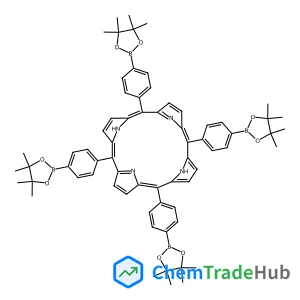
5,10,15,20-tetrakis(4-boronic acid pinacol ester phenyl) porphyrin
CAS Number:
1332748-00-1
Molecular Formula:
C68H74B4N4O8
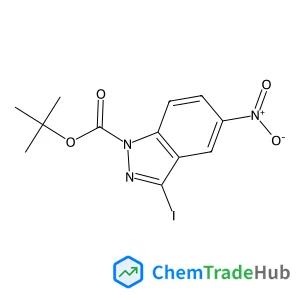
Tert-butyl 3-iodo-5-nitro-1H-indazole-1-carboxylate
CAS Number:
459133-69-8
Molecular Formula:
C12H12IN3O4
Recommended Suppliers





Disclaimer
This page provides academic journal information for reference and research purposes only. We are not affiliated with any journal publishers and do not handle publication submissions. For publication-related inquiries, please contact the respective journal publishers directly.
If you notice any inaccuracies in the information displayed, please contact us at support@chemtradehub.com. We will promptly review and address your concerns.