












Mixing ionic liquids – “simple mixtures” or “double salts”?
Literature Information
Publication Date
2014-01-21
DOI
10.1039/C3GC41389F
Impact Factor
10.182
Authors
Gregory Chatel, Jorge F. B. Pereira, Varun Debbeti, Hui Wang, Robin D. Rogers
View Original
Abstract
In the third issue of the then new journal Green Chemistry (2001, 3, 156–164), we published our first paper describing the physical properties of a few hydrophilic and hydrophobic ionic liquids (ILs) representing one of the first such studies to be published. To help celebrate the 15th anniversary of the Journal, we revisit the ‘design’ aspect of ILs by reviewing the growing area of what most are calling ‘ionic liquid mixtures’. In 2001, designing IL properties meant essentially independent variation or synthesis of the cations and anions and determining what physical or chemical properties these liquid salts possessed. Recently, however, the mixing of ILs has been proposed and investigated as a way to add increased scope to the accessible properties of IL media. In this review, we question whether the same thinking and approach used for organic solvent mixtures should be applied to ILs simply because of the way they were made. Unlike organic solvent mixtures, IL compositions of varied ions, do not retain their individual nature, need not be made by simple mixing of two-ion salts, and preferential interactions of a given cation for a given anion are possible in these 3-ion, 4-ion, or higher order liquids. When two ILs are mixed together, one can't identify which ion is from which IL, and the chemistry is simply not based on the identity of the individual ILs, but on the ions comprising them and the interactions of each individual ion, independently of the counterion. Thus, we ask if it would not be better to consider these as unique ion combinations whose solvent properties are derived from the specific choice and abundance of each ion in the system. Through this review of the available literature, we support the concept of Double Salt Ionic Liquids (DSILs) and discuss the interactions involved in these systems, by examining their physicochemical properties and the novel applications they offer.
Related Literature
Theoretical study on thermal curing mechanism of arylethynyl-containing resins
Zuowei Chen, Liquan Wang, Jiaping Lin, Lei Du
2020-03-02
Paper
DOI: 10.1039/C9CP06892A
Triplet fusion upconversion using sterically protected 9,10-diphenylanthracene as the emitter
Can Gao, Bolong Zhang, Christopher R. Hall, Li Li, Yeqin Chen, Yi Zeng, Trevor A. Smith, Wallace W. H. Wong
2020-02-26
Paper
DOI: 10.1039/C9CP06311K
Large scale indium tin oxide (ITO) one dimensional gratings for ultrafast signal modulation in the visible spectral region
Michele Guizzardi, Silvio Bonfadini, Ilka Kriegel, Luigino Criante
2020-03-05
Paper
DOI: 10.1039/C9CP06839B
How flexible is the water molecule structure? Analysis of crystal structures and the potential energy surface
Milan R. Milovanović, Jelena M. Živković, Dragan B. Ninković, Ivana M. Stanković
2020-01-28
Paper
DOI: 10.1039/C9CP07042G
Halogen⋯halogen interactions in decahalo-closo-carboranes: CSD analysis and theoretical study
Maria de las Nieves Piña, Antonio Bauzá, Antonio Frontera
2020-02-21
Paper
DOI: 10.1039/D0CP00114G
Phase transition and mechanical properties of cesium bismuth silver halide double perovskites (Cs2AgBiX6, X = Cl, Br, I): a DFT approach
Javad Beheshtian
2020-02-05
Paper
DOI: 10.1039/C9CP05342E
First principles study on hydrogen doping induced metal-to-insulator transition in rare earth nickelates RNiO3 (R = Pr, Nd, Sm, Eu, Gd, Tb, Dy, Yb)
Pilsun Yoo, Peilin Liao
2020-03-10
Paper
DOI: 10.1039/C9CP06522A
Quantification of the amount of mobile components in intact stratum corneum with natural-abundance 13C solid-state NMR
Göran Carlström, Emma Sparr, Daniel Topgaard
2020-03-04
Paper
DOI: 10.1039/D0CP00079E
Terpenoids: shape and non-covalent interactions. The rotational spectrum of cis-verbenol and its 1 : 1 water complex
Susana Blanco, Juan Carlos López, Assimo Maris
2020-02-18
Paper
DOI: 10.1039/D0CP00086H
Deterministic control of surface mounted metal–organic framework growth orientation on metallic and insulating surfaces
Mathias Strauss, Carlos Alberto Rodrigues Costa, Cátia Crispilho Corrêa
2020-02-17
Paper
DOI: 10.1039/C9CP05717J
You might also like
Compound Q&A
What is the market or research trend for N-(4-Methoxybenzyl)-2-pyridinamine (CAS: 52818-63-0)?
N-(4-Methoxybenzyl)-2-pyridinamine (CAS: 52818-63-0) is increasingly being used ...
52818-63-0N-(4-Methoxybenzyl)-...
Compound Q&A
What precautions should be taken when handling Ethyl 4-(2-chlorophenyl)-1,3-thiazole-2-carboxylate (CAS: 1050507-06-6)?
When handling Ethyl 4-(2-chlorophenyl)-1,3-thiazole-2-carboxylate, appropriate p...
1050507-06-6Ethyl 4-(2-chlorophe...
Compound Q&A
What regulatory guidelines apply to diethyldiselane (CAS: 628-39-7)?
Diethyldiselane (CAS: 628-39-7) is classified under the Globally Harmonized Syst...
628-39-7Diethyldiselane
Compound Q&A
What is the market or research trend for oxocopper (CAS: 12053-18-8)?
The market for oxocopper (CAS: 12053-18-8) is primarily driven by its use in cat...
12053-18-8oxocopper; oxo-(oxoc...
Compound Q&A
What is the market or research trend for 5-{[(2-Methyl-2-propanyl)oxy]carbonyl}-5-azaspiro[2.4]heptane-7-carboxylic acid?
The market for 5-{[(2-Methyl-2-propanyl)oxy]carbonyl}-5-azaspiro[2.4]heptane-7-c...
1268519-54-55-{[(2-Methyl-2-prop...
Compound Q&A
What is 2-(1-Pyrrolidinyl)-4-pyridinamine (CAS: 35981-63-6)?
2-(1-Pyrrolidinyl)-4-pyridinamine is a chemical compound with the CAS number 359...
35981-63-62-(1-Pyrrolidinyl)-4...
Compound Q&A
What are the physical and chemical properties of 2-(3-Pyridinyl)-1-azabicyclo[2.2.2]octane (CAS: 91556-75-1)?
2-(3-Pyridinyl)-1-azabicyclo[2.2.2]octane (CAS: 91556-75-1) is a crystalline sol...
91556-75-12-(3-Pyridinyl)-1-az...
Compound Q&A
How is (S)-Alpha-allyl-proline hydrochloride (CAS: 129704-91-2) typically synthesized?
(S)-Alpha-allyl-proline hydrochloride is usually synthesized via a Wittig reacti...
129704-91-2(S)-Alpha-allyl-prol...
Compound Q&A
What is 3-Methyl-1,2-oxazole-5-carboxylic acid (CAS: 4857-42-5)?
3-Methyl-1,2-oxazole-5-carboxylic acid (CAS: 4857-42-5) is an organic compound w...
4857-42-53-Methyl-1,2-oxazole...
Compound Q&A
How is Lys-SMCC-DM1 (CAS: 1281816-04-3) typically synthesized?
Lys-SMCC-DM1 is synthesized via a multi-step process involving the coupling of S...
1281816-04-3Lys-SMCC-DM1
Source Journal
Green Chemistry

CiteScore:
16.1
Self-citation Rate:
7.5%
Articles per Year:
944
Green Chemistry provides a unique forum for the publication of innovative research on the development of alternative green and sustainable technologies. The scope of Green Chemistry is based on, but not limited to, the definition proposed by Anastas and Warner (Green Chemistry: Theory and Practice, P T Anastas and J C Warner, Oxford University Press, Oxford, 1998). Green chemistry is the utilisation of a set of principles that reduces or eliminates the use or generation of hazardous substances in the design, manufacture and application of chemical products. Green Chemistry is at the frontiers of this continuously-evolving interdisciplinary science and publishes research that attempts to reduce the environmental impact of the chemical enterprise by developing a technology base that is inherently non-toxic to living things and the environment. Submissions on all aspects of research relating to the endeavour are welcome. The journal publishes original and significant cutting-edge research that is likely to be of wide general appeal. To be published, work must present a significant advance in green chemistry. Papers must contain a comparison with existing methods and demonstrate advantages over those methods before publication can be considered. For more information please see this Editorial. Coverage includes the following, but is not limited to: Design (e.g. biomimicry, design for degradation/recycling/reduced toxicity…) Reagents & Feedstocks (e.g. renewables, CO2, solvents, auxiliary agents, waste utilization…) Synthesis (e.g. organic, inorganic, synthetic biology…) Catalysis (e.g. homogeneous, heterogeneous, enzyme, whole cell…) Process (e.g. process design, intensification, separations, recycling, efficiency…) Energy (e.g. renewable energy, fuels, photovoltaics, fuel cells, energy storage, energy carriers…) Applications (e.g. electronics, dyes, consumer products, coatings, pharmaceuticals, preservatives, building materials, chemicals for industry/agriculture/mining…) Impact (e.g. safety, metrics, LCA, sustainability, (eco)toxicology…) Green chemistry is, by definition, a continuously-evolving frontier. Therefore, the inclusion of a particular material or technology does not, of itself, guarantee that a paper is suitable for the journal. To be suitable, the novel advance should have the potential for reduced environmental impact relative to the state of the art. Green Chemistry does not normally deal with research associated with 'end-of-pipe' or remediation issues.
Recommended Compounds
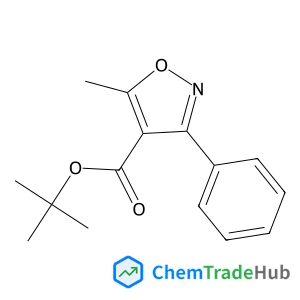
2-Methyl-2-propanyl 5-methyl-3-phenyl-1,2-oxazole-4-carboxylate
CAS Number:
211429-79-7
Molecular Formula:
C15H17NO3
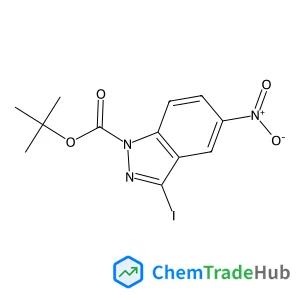
Tert-butyl 3-iodo-5-nitro-1H-indazole-1-carboxylate
CAS Number:
459133-69-8
Molecular Formula:
C12H12IN3O4
Recommended Suppliers





Disclaimer
This page provides academic journal information for reference and research purposes only. We are not affiliated with any journal publishers and do not handle publication submissions. For publication-related inquiries, please contact the respective journal publishers directly.
If you notice any inaccuracies in the information displayed, please contact us at support@chemtradehub.com. We will promptly review and address your concerns.