












Hard magnetism in structurally engineered silica nanocomposite
Literature Information
Publication Date
2016-08-02
DOI
10.1039/C6CP04843A
Impact Factor
3.676
Authors
Jeffrey I. Zink
View Original
Abstract
Creation of structural complexity by simple experimental control will be an attractive approach for the preparation of nanomaterials, as a classical bottom-up method is supplemented by a more efficient and more direct artificial engineering method. In this study, structural manipulation of MCM-41 type mesoporous silica is investigated by generating and imbedding hard magnetic CoFe2O4 nanoparticles into mesoporous silica. Depending on the heating rate and target temperature, mesoporous silica undergoes a transformation in shape to form hollow silica, framed silica with interior voids, or melted silica with intact mesostructures. Magnetism is governed by the major CoFe2O4 phase, and it is affected by antiferromagnetic hematite (α-Fe2O3) and olivine-type cobalt silicate (Co2SiO4), as seen in its paramagnetic behavior at the annealing temperature of 430 °C. The early formation of Co2SiO4 than what is usually observed implies the effect of the partial substitution of Fe in the sites of Co. Under slow heating (2.5 °C min−1) mesostructures are preserved, but with significantly smaller mesopores (d100 = 1.5 nm). In addition, nonstoichiometric CoxFe1−xO with metal vacancies at 600 °C, and spinel Co3O4 at 700 °C accompany major CoFe2O4. The amorphous nature of silica matrix is thought to contribute significantly to these structurally diverse and rich phases, enabled by off-stoichiometry between Si and O, and accelerated by the diffusion of metal cations into SiO4 polyhedra at an elevated temperature.
Related Literature
A comprehensive review on isochoric freezing: a recent technology for preservation of food and non-food items
Dhanya R., Abhirami Panoth, N. Venkatachalapathy
2023-10-12
Review Article
DOI: 10.1039/D3FB00146F
Bias switchable narrowband/broadband NIR organic photodetector fabricated with a scalable technique
Lai-Hung Lai, Wei-Hsiang Lin, Chin-Chuan Hsieh, Maria Antonietta Loi
2023-09-11
Paper
DOI: 10.1039/D3LF00089C
Al(iii)-based MOF for the selective adsorption of phosphate and arsenate from aqueous solutions
Herlys Viltres, Valeria B. López-Cervantes, Camilo Serrano-Fuentes, Amin Reza Rajabzadeh, Seshasai Srinivasan, Ricardo A. Peralta, Carolina Leyva
2023-09-25
Paper
DOI: 10.1039/D3LF00061C
Mycoprotein: production and nutritional aspects: a review
Reshab Majumder, Saptadip Miatur, Akash Saha, Shamim Hossain
2023-11-17
Review Article
DOI: 10.1039/D3FB00169E
Recovery of anthocyanins from Eugenia spp. fruit peels: a comparison between heat- and ultrasound-assisted extraction
M. Beatriz P. P. Oliveira
2023-10-30
Paper
DOI: 10.1039/D3FB00115F
Insects as a sustainable source of emerging proteins and their processing to obtain bioactive compounds: an updated review
Francielle Miranda de Matos, Gabriela Boscariol Rasera, Ruann Janser Soares de Castro
2023-11-07
Review Article
DOI: 10.1039/D3FB00097D
Understanding improved capacity retention at 4.3 V in modified single crystal Ni-rich NMC//graphite pouch cells at elevated temperature
Satish Bolloju, Eleni Fiamegkou, Nickil Shah, Mateusz Jan Zuba, Tien-Lin Lee, Pardeep K. Thakur, Melanie J. Loveridge
2023-09-21
Paper
DOI: 10.1039/D3LF00093A
Simultaneous production of proteases and antioxidant biopeptides by solid-state fermentation
Luciane Maria Colla, Christian Oliveira Reinehr, Paola Gouvêa Manfredini, Vítor Augusto Farina Cavanhi, Jorge Alberto Vieira Costa
2023-08-29
Paper
DOI: 10.1039/D3FB00077J
You might also like
Compound Q&A
Is 2-(2-chloroacetamido)-3-phenylpropanoic acid (CAS: 7765-11-9) safe?
2-(2-Chloroacetamido)-3-phenylpropanoic acid (CAS: 7765-11-9) is generally consi...
7765-11-92-(2-chloroacetamido...
Compound Q&A
Is 2-(Benzyloxy)-5-bromobenzoic acid (CAS: 62176-31-2) safe?
2-(Benzyloxy)-5-bromobenzoic acid can be handled safely if appropriate precautio...
62176-31-22-(Benzyloxy)-5-brom...
Compound Q&A
What is (4-Methyl-1,2,5-oxadiazol-3-yl)methanamine hydrochloride (CAS: 1159825-48-5)?
(4-Methyl-1,2,5-oxadiazol-3-yl)methanamine hydrochloride is a chemical compound ...
1159825-48-5(4-Methyl-1,2,5-oxad...
Compound Q&A
What is 2-(5-Hexylthiophen-2-yl)-4,4,5,5-tetramethyl-1,3,2-dioxaborolane (CAS: 917985-54-7)?
2-(5-Hexylthiophen-2-yl)-4,4,5,5-tetramethyl-1,3,2-dioxaborolane (CAS: 917985-54...
917985-54-72-(5-Hexylthiophen-2...
Compound Q&A
Are there alternatives to 4-(8-Methyl-9H-1,3-dioxolo[4,5-h][2,3]benzodiazepin-5-yl)benzenamine (CAS: 102771-26-6) in synthesis?
While 4-(8-Methyl-9H-1,3-dioxolo[4,5-h][2,3]benzodiazepin-5-yl)benzenamine (CAS:...
102771-26-64-(8-Methyl-9H-1,3-d...
Compound Q&A
What is the market or research trend for tert-butyl 3-hydroxy-4,5,7,8-tetrahydro-2H-pyrazolo[3,4-d]azepine-6-carboxylate (CAS: 851376-80-2)?
The market for tert-butyl 3-hydroxy-4,5,7,8-tetrahydro-2H-pyrazolo[3,4-d]azepine...
851376-80-2tert-butyl 3-hydroxy...
Compound Q&A
How should waste containing 3,5-Diamino-1H-pyrazole-4-carbonitrile (CAS: 6844-58-2) be handled?
Waste containing 3,5-Diamino-1H-pyrazole-4-carbonitrile (CAS: 6844-58-2) should ...
6844-58-23,5-Diamino-1H-pyraz...
Compound Q&A
How is (6-Fluoro-3-pyridinyl)boronic acid (CAS: 351019-18-6) typically synthesized?
(6-Fluoro-3-pyridinyl)boronic acid can be synthesized through the reaction of 6-...
351019-18-6(6-Fluoro-3-pyridiny...
Compound Q&A
What industries use Dibenzyl carbonimidoylbiscarbamate (CAS: 10065-79-9)?
Dibenzyl carbonimidoylbiscarbamate (CAS: 10065-79-9) finds applications in vario...
10065-79-9Dibenzyl carbonimido...
Compound Q&A
What is the market or research trend for (beta,beta,2,3,4,5,6-~2~H_7_)Phenylalanine (CAS: 74228-83-4)?
The market for (beta,beta,2,3,4,5,6-~2~H_7_)Phenylalanine (CAS: 74228-83-4) is g...
74228-83-4(beta,beta,2,3,4,5,6...
Source Journal
Physical Chemistry Chemical Physics

CiteScore:
5.5
Self-citation Rate:
10.3%
Articles per Year:
3036
Physical Chemistry Chemical Physics (PCCP) is an international journal co-owned by 19 physical chemistry and physics societies from around the world. This journal publishes original, cutting-edge research in physical chemistry, chemical physics and biophysical chemistry. To be suitable for publication in PCCP, articles must include significant innovation and/or insight into physical chemistry; this is the most important criterion that reviewers and Editors will judge against when evaluating submissions. The journal has a broad scope and welcomes contributions spanning experiment, theory, computation and data science. Topical coverage includes spectroscopy, dynamics, kinetics, statistical mechanics, thermodynamics, electrochemistry, catalysis, surface science, quantum mechanics, quantum computing and machine learning. Interdisciplinary research areas such as polymers and soft matter, materials, nanoscience, energy, surfaces/interfaces, and biophysical chemistry are welcomed if they demonstrate significant innovation and/or insight into physical chemistry. Joined experimental/theoretical studies are particularly appreciated when complementary and based on up-to-date approaches.
Recommended Compounds
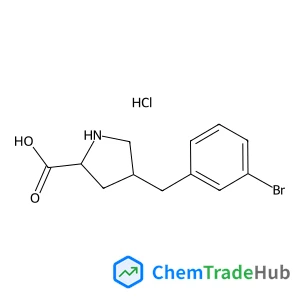
(2S,4R)-4-(3-Bromobenzyl)pyrrolidine-2-carboxylic acid hydrochloride
CAS Number:
1049734-10-2
Molecular Formula:
C12H15BrClNO2
![Ethyl ({[(2-methyl-2-propanyl)oxy]carbonyl}amino)(2-pyridinyl)acetate structure](https://static.chemtradehub.com/structs/313/313490-90-3-dd15.webp "Ethyl ({[(2-methyl-2-propanyl)oxy]carbonyl}amino)(2-pyridinyl)acetate structure")
Ethyl ({[(2-methyl-2-propanyl)oxy]carbonyl}amino)(2-pyridinyl)acetate
CAS Number:
313490-90-3
Molecular Formula:
C14H20N2O4

Recommended Suppliers




Disclaimer
This page provides academic journal information for reference and research purposes only. We are not affiliated with any journal publishers and do not handle publication submissions. For publication-related inquiries, please contact the respective journal publishers directly.
If you notice any inaccuracies in the information displayed, please contact us at support@chemtradehub.com. We will promptly review and address your concerns.