![N-[2-(4-Hydroxyphenoxy)-4-nitrophenyl]methanesulfonamide structure](https://static.chemtradehub.com/structs/109/109032-22-6-7c88.webp "N-[2-(4-Hydroxyphenoxy)-4-nitrophenyl]methanesulfonamide structure")
N-[2-(4-Hydroxyphenoxy)-4-nitrophenyl]methanesulfonamide
CAS Number:
109032-22-6
Molecular Formula:
C13H12N2O6S
Chang Liu, J. C. Yves Le Blanc, Jefry Shields, John S. Janiszewski, Christian Ieritano, Gene F. Ye, Gillian F. Hawes, W. Scott Hopkins, J. Larry Campbell
Understanding the mechanisms and energetics of ion solvation is critical in many scientific areas. Here, we present a methodlogy for studying ion solvation using differential mobility spectrometry (DMS) coupled to mass spectrometry. While in the DMS cell, ions experience electric fields established by a high frequency asymmetric waveform in the presence of a desired pressure of water vapor. By observing how a specific ion's behavior changes between the high- and low-field parts of the waveform, we gain knowledge about the aqueous microsolvation of that ion. In this study, we applied DMS to investigate the aqueous microsolvation of protonated quinoline-based drug candidates. Owing to their low binding energies with water, the clustering propensity of 8-substituted quinolinium ions was less than that of the 6- or 7-substituted analogues. We attribute these differences to the steric hinderance presented by subtituents in the 8-position. In addition, these experimental DMS results were complemented by extensive computational studies that determined cluster structures and relative thermodynamic stabilities.
Kennosuke Itoh, Mukund P. Sibi
DOI: 10.1039/C8OB01010B
Dan Zhao, Jingyan Luo, Lu Liu
DOI: 10.1039/D1QO01184G
Yuan-Ye Jiang, Tian-Tian Liu, Xue Sun, Zhong-Yan Xu, Xia Fan, Ling Zhu, Siwei Bi
DOI: 10.1039/C8OB01338A
Adesh Kumar Singh, Jeyakumar Kandasamy
DOI: 10.1039/C8OB01393D
Ramón J. Zaragozá, María J. Aurell, Miguel A. González-Cardenete
DOI: 10.1039/C8OB01035H
N. Esmati, A. R. Maddirala, N. Hussein, H. Amawi, A. K. Tiwari, P. R. Andreana
DOI: 10.1039/C8OB00452H
Ligao Jiang, Qianming Zuo, Zhaojie Li, Yanzhu Liu, Zhenhong Wei, Hu Cai
DOI: 10.1039/C8OB01095A
Erik M. Larsen, Chia-Fu Chang, Tomoyo Sakata-Kato, Joseph W. Arico, Vince M. Lombardo, Dyann F. Wirth, Richard E. Taylor
DOI: 10.1039/C8OB01257A
Aidong Huang, Yishen Han, Peiqing Wu, Yang Gao, Yanping Huo, Qian Chen, Xianwei Li
DOI: 10.1039/D1QO01095F
4-Nitrophenyl phosphate disodium salt hexahydrate is primarily used as a substra...
2-(Trifluoromethyl)-1,3-oxazole-4-carboxylic Acid (CAS: 1060816-01-4) is widely ...
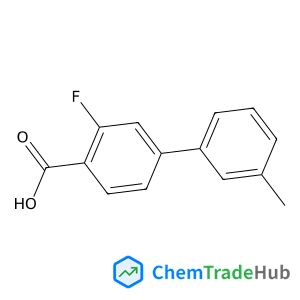
2-Fluoro-4-biphenylcarboxylic acid should be stored in a cool, dry place at room...
Prednisolone-21-Carboxylic Acid is primarily used in the pharmaceutical industry...
4-(Hydrazinomethyl)-1,2,3-benzenetriol (CAS: 3614-72-0) should be stored in a co...
4-Amino-1-methyl-1H-pyrazole-5-carboxylic acid hydrochloride (CAS: 92534-70-8) i...
Dehydropachymic acid (CAS: 77012-31-8) is regulated by various agencies. It fall...
The market and research trends for 6-[(2,2-Dimethylpropanoyl)amino]nicotinic aci...
1,10-Phenanthroline-2,9-dicarbaldehyde should be stored in a cool, dry place awa...
5-Carbamoyl-11-oxo-10,11-dihydro-5H-dibenzo[b,f]azepin-10-yl acetate can be synt...

Analyst publishes analytical and bioanalytical research that reports premier fundamental discoveries and inventions, and the applications of those discoveries, unconfined by traditional discipline barriers.