












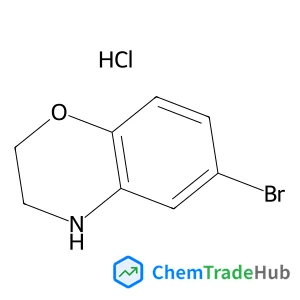
6-Bromo-3,4-dihydro-2H-1,4-benzoxazine hydrochloride (1:1)
CAS Number:
1260803-10-8
Molecular Formula:
C8H9BrClNO
Ramón J. Zaragozá, María J. Aurell, Miguel A. González-Cardenete
NHC-catalysed enantioselective cycloaddition of ketenes to 3-aroylcoumarins to yield dihydrocoumarin-fused dihydropyranones has been investigated using DFT methods at the B3LYP/6-31G* and MPWB1K/6-311G** computational levels. Two plausible mechanisms have been studied: the “ketene-first” mechanism A and the “coumarin-first” mechanism B. An analysis of the activation Gibbs free energies involved in the two competitive pathways makes it possible to rule out the pathway associated with the “coumarin-first” mechanism B. The first step of the “ketene-first” mechanism A is the formation of zwitterionic intermediate IN1-Zvia a nucleophilic attack of NHC 1 on ketene 2. A [4 + 2] cycloaddition through the nucleophilic attack of enolate IN1-Z on the conjugated double bond of the benzoyl group of coumarin 3, viaTS3-SS-a2 or TS3-RR-a2, yields IN3. Finally, the extrusion of the catalyst through TS5 leads to the final products, either 4-SS or 4-RR. Enantioselectivity observed in the experimental results is determined in the transition states TS3-SS-a2/TS3-RR-a2. In this pathway, the intramolecular hydrogen-bonding between the hydroxyl group of the IN1-Z adduct and the carbonyl oxygen of the original ketene group directs the final stereochemistry throughout the entire process.
Takanori Matsuda, Sho Kadowaki, Yoshiyuki Yamaguchi, Masahiro Murakami
DOI: 10.1039/B804721A
Russell A. Taylor, David J. Law, Glenn J. Sunley, Andrew J. P. White, George J. P. Britovsek
DOI: 10.1039/B803370F
Cédric R. Mayer, Eddy Dumas, Aude Michel, Francis Sécheresse
DOI: 10.1039/B610631E
Hisashi Shimakoshi, Tatsushi Baba, Yusuke Iseki, Isao Aritome, Ayataka Endo, Chihaya Adachi, Yoshio Hisaeda
DOI: 10.1039/B802730G
Guohua Liu, Yan Gao, Xiaoquan Lu, Mouming Liu, Fang Zhang, Hexing Li
DOI: 10.1039/B803111H
Jorge Echeverría, David Casanova, Miquel Llunell, Pere Alemany, Santiago Alvarez
DOI: 10.1039/B719615F
Marc A. Gauthier, Harm-Anton Klok
DOI: 10.1039/B719689J
Sang-Wook Woo, Keiji Sasajima, Takashi Takei
DOI: 10.1039/B607196A
Satoshi Tominaka, Chia-Wen Wu, Toshiyuki Momma, Kazuyuki Kuroda, Tetsuya Osaka
DOI: 10.1039/B803225D
4-Nitrophenyl phosphate disodium salt hexahydrate is primarily used as a substra...
2-(Trifluoromethyl)-1,3-oxazole-4-carboxylic Acid (CAS: 1060816-01-4) is widely ...
2-Fluoro-4-biphenylcarboxylic acid should be stored in a cool, dry place at room...
Prednisolone-21-Carboxylic Acid is primarily used in the pharmaceutical industry...
4-(Hydrazinomethyl)-1,2,3-benzenetriol (CAS: 3614-72-0) should be stored in a co...
4-Amino-1-methyl-1H-pyrazole-5-carboxylic acid hydrochloride (CAS: 92534-70-8) i...
Dehydropachymic acid (CAS: 77012-31-8) is regulated by various agencies. It fall...
The market and research trends for 6-[(2,2-Dimethylpropanoyl)amino]nicotinic aci...
1,10-Phenanthroline-2,9-dicarbaldehyde should be stored in a cool, dry place awa...
5-Carbamoyl-11-oxo-10,11-dihydro-5H-dibenzo[b,f]azepin-10-yl acetate can be synt...

Organic & Biomolecular Chemistry (OBC) publishes original and high impact research and reviews in organic chemistry. We welcome research that shows new or significantly improved protocols or methodologies in total synthesis, synthetic methodology or physical and theoretical organic chemistry as well as research that shows a significant advance in the organic chemistry or molecular design aspects of chemical biology, catalysis, supramolecular and macromolecular chemistry, theoretical chemistry, mechanism-oriented physical organic chemistry, medicinal chemistry or natural products. Articles published in the journal should report new work which makes a highly-significant impact in the field. Routine and incremental work is generally not suitable for publication in the journal. More details about key areas of our scope are below. In all cases authors should include in their article clear rationale for why their research has been carried out.
![1-[(4-Methylphenyl)sulfonyl]-3-(4,4,5,5-tetramethyl-1,3,2-dioxaborolan-2-yl)-1H-pyrrolo[2,3-b]pyridine-5-carbonitrile structure](https://static.chemtradehub.com/structs/143/1434747-57-5-fc0d.webp "1-[(4-Methylphenyl)sulfonyl]-3-(4,4,5,5-tetramethyl-1,3,2-dioxaborolan-2-yl)-1H-pyrrolo[2,3-b]pyridine-5-carbonitrile structure")

![(3R,5R)-1-[(Benzyloxy)carbonyl]-5-methyl-3-piperidinecarboxylic acid structure](https://static.chemtradehub.com/structs/126/1269757-29-0-c552.webp "(3R,5R)-1-[(Benzyloxy)carbonyl]-5-methyl-3-piperidinecarboxylic acid structure")






