


Computational study of the mechanism of amide bond formation via CS2-releasing 1,3-acyl transfer
Literature Information
Publication Date
2018-07-25
DOI
10.1039/C8OB01338A
Impact Factor
3.876
Authors
Yuan-Ye Jiang, Tian-Tian Liu, Xue Sun, Zhong-Yan Xu, Xia Fan, Ling Zhu, Siwei Bi
View Original
Abstract
Reactions of thiocarboxylic acids and dithiocarbamate-terminal amines provide a linker-traceless method for amide bond formation under mild conditions, whereas the reaction mechanism is not clear. A systematic study was performed herein with density functional theory (DFT) calculations to elucidate the detailed mechanism, the substitution effect on the proposed CS2-releasing 1,3-acyl transfer and the differences between CS2- and CO2-releasing 1,3-acyl transfer. Relevant results indicate that this type of reaction proceeds via the nucleophilic addition of an in situ generated dithiocarbamic acid on thiocarboxylic acid, H2S elimination, rate-determining 1,3-acyl transfer and CS2 release. For the generation of secondary amides via the 1,3-acyl transfer, a thiocarboxylic acid- or dithiocarbamic acid-assisted pathway, in which both the carbonyl group and amide nitrogen are activated, is the most favored. For the generation of tertiary amides, MeOH-assisted carbonyl-activation is the most favorable pathway. N,N-Dialkyl substitution of the mixed anhydride intermediate promotes the 1,3-acyl transfer by the steric effect. In contrast, N-phenyl substitution and using thiobenzoic acid as a substrate slow down 1,3-acyl transfer by both the conjugation effect and steric effect. Furthermore, CS2-releasing 1,3-acyl transfer was found to be favored over CO2-releasing 1,3-acyl transfer in the aspects of both kinetics and thermodynamics mainly because the S–COR bond is weaker than the O–COR bond.
Recommended Journals

Organic Preparations and Procedures International

Pure and Applied Chemistry

Fibre Chemistry

Proceedings of the National Academy of Sciences of the United States of America

Journal of Medicinal Chemistry

European Journal of Wood and Wood Products

Journal of Physics and Chemistry of Solids

Pharmacological Reviews

Nature

Kinetics and Catalysis
Related Literature
Hierarchically organized materials with ordered mesopores: adsorption isotherm and adsorption-induced deformation from small-angle scattering
Lukas Ludescher, Roland Morak, Stephan Braxmeier, Florian Putz, Nicola Hüsing, Gudrun Reichenauer, Oskar Paris
2020-05-28
Paper
DOI: 10.1039/D0CP01026J
Photon-mediated charge exchange reactions between 39K atoms and 40Ca+ ions in a hybrid trap
Hui Li, S. Jyothi, Ming Li, Kenneth R Brown, Svetlana Kotochigova
2020-04-22
Paper
DOI: 10.1039/D0CP01131B
Quantifying anisotropic dielectric response properties of nanoconfined water within graphene slit pores
Sergi Ruiz-Barragan, Saskia Körning, Dominik Marx
2020-04-27
Communication
DOI: 10.1039/D0CP00916D
Temperature effects on the ionic conductivity in concentrated alkaline electrolyte solutions
Yunqi Shao, Are Yllö, Jonas Mindemark, Kersti Hermansson, Jörg Behler, Chao Zhang
2019-12-19
Communication
DOI: 10.1039/C9CP06479F
Bi-stimuli assisted engineering and control of magnetic phase in monolayer CrOCl
A. K. Nair, S. Rani, M. Venkata Kamalakar, S. J. Ray
2020-04-17
Paper
DOI: 10.1039/D0CP01204A
Tunable relativistic quasiparticle electronic and excitonic behavior of the FAPb(I1−xBrx)3 alloy
Peitao Liu, Saeid Jalali Asadabadi, Cesare Franchini
2020-05-01
Paper
DOI: 10.1039/D0CP00496K
You might also like
Compound Q&A
What are the main uses of 4-Nitrophenyl phosphate disodium salt hexahydrate (CAS: 333338-18-4)?
4-Nitrophenyl phosphate disodium salt hexahydrate is primarily used as a substra...
333338-18-44-Nitrophenyl phosph...
Compound Q&A
What are the main uses of 2-(Trifluoromethyl)-1,3-oxazole-4-carboxylic Acid (CAS: 1060816-01-4)?
2-(Trifluoromethyl)-1,3-oxazole-4-carboxylic Acid (CAS: 1060816-01-4) is widely ...
1060816-01-42-(Trifluoromethyl)-...
Compound Q&A
How should 2-Fluoro-4-biphenylcarboxylic acid (CAS: 137045-30-8) be stored?
2-Fluoro-4-biphenylcarboxylic acid should be stored in a cool, dry place at room...
137045-30-82-Fluoro-4-biphenylc...
Compound Q&A
What industries use Prednisolone-21-Carboxylic Acid (CAS: 61549-70-0)?
Prednisolone-21-Carboxylic Acid is primarily used in the pharmaceutical industry...
61549-70-0Prednisolone-21-Carb...
Compound Q&A
How should 4-(Hydrazinomethyl)-1,2,3-benzenetriol (CAS: 3614-72-0) be stored?
4-(Hydrazinomethyl)-1,2,3-benzenetriol (CAS: 3614-72-0) should be stored in a co...
3614-72-04-(Hydrazinomethyl)-...
Compound Q&A
What industries use 4-Amino-1-methyl-1H-pyrazole-5-carboxylic acid hydrochloride (CAS: 92534-70-8)?
4-Amino-1-methyl-1H-pyrazole-5-carboxylic acid hydrochloride (CAS: 92534-70-8) i...
92534-70-84-Amino-1-methyl-1H-...
Compound Q&A
What regulatory guidelines apply to dehydropachymic acid (CAS: 77012-31-8)?
Dehydropachymic acid (CAS: 77012-31-8) is regulated by various agencies. It fall...
77012-31-8Dehydropachymic acid
Compound Q&A
What is the market or research trend for 6-[(2,2-Dimethylpropanoyl)amino]nicotinic acid (CAS: 898561-66-5)?
The market and research trends for 6-[(2,2-Dimethylpropanoyl)amino]nicotinic aci...
898561-66-56-[(2,2-Dimethylprop...
Compound Q&A
How should 1,10-Phenanthroline-2,9-dicarbaldehyde (CAS: 57709-62-3) be stored?
1,10-Phenanthroline-2,9-dicarbaldehyde should be stored in a cool, dry place awa...
57709-62-31,10-Phenanthroline-...
Compound Q&A
How is 5-Carbamoyl-11-oxo-10,11-dihydro-5H-dibenzo[b,f]azepin-10-yl acetate (CAS: 113952-21-9) typically synthesized?
5-Carbamoyl-11-oxo-10,11-dihydro-5H-dibenzo[b,f]azepin-10-yl acetate can be synt...
113952-21-95-Carbamoyl-11-oxo-1...
Source Journal
Organic & Biomolecular Chemistry

CiteScore:
3.4
Self-citation Rate:
10.3%
Articles per Year:
1041
Organic & Biomolecular Chemistry (OBC) publishes original and high impact research and reviews in organic chemistry. We welcome research that shows new or significantly improved protocols or methodologies in total synthesis, synthetic methodology or physical and theoretical organic chemistry as well as research that shows a significant advance in the organic chemistry or molecular design aspects of chemical biology, catalysis, supramolecular and macromolecular chemistry, theoretical chemistry, mechanism-oriented physical organic chemistry, medicinal chemistry or natural products. Articles published in the journal should report new work which makes a highly-significant impact in the field. Routine and incremental work is generally not suitable for publication in the journal. More details about key areas of our scope are below. In all cases authors should include in their article clear rationale for why their research has been carried out.
Recommended Compounds
![(3R,5R)-1-[(Benzyloxy)carbonyl]-5-methyl-3-piperidinecarboxylic acid structure](https://static.chemtradehub.com/structs/126/1269757-29-0-c552.webp "(3R,5R)-1-[(Benzyloxy)carbonyl]-5-methyl-3-piperidinecarboxylic acid structure")
(3R,5R)-1-[(Benzyloxy)carbonyl]-5-methyl-3-piperidinecarboxylic acid
CAS Number:
1269757-29-0
Molecular Formula:
C15H19NO4
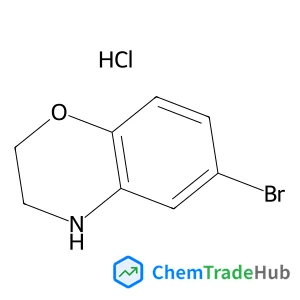
6-Bromo-3,4-dihydro-2H-1,4-benzoxazine hydrochloride (1:1)
CAS Number:
1260803-10-8
Molecular Formula:
C8H9BrClNO
Recommended Suppliers





Disclaimer
This page provides academic journal information for reference and research purposes only. We are not affiliated with any journal publishers and do not handle publication submissions. For publication-related inquiries, please contact the respective journal publishers directly.
If you notice any inaccuracies in the information displayed, please contact us at support@chemtradehub.com. We will promptly review and address your concerns.