


Efficient syntheses and anti-cancer activity of xenortides A–D including ent/epi-stereoisomers
Literature Information
Publication Date
2018-07-05
DOI
10.1039/C8OB00452H
Impact Factor
3.876
Authors
N. Esmati, A. R. Maddirala, N. Hussein, H. Amawi, A. K. Tiwari, P. R. Andreana
View Original
Abstract
A one-pot, two-step, total synthesis of naturally occurring xenortides A, B, C and D, (Xens A–D) isolated from the bacterium Xenorhabdus nematophila, and an entire complementary set of stereoisomers, has been achieved. Compounds were synthesized utilizing an isocyanide-based Ugi 4-CR followed by facile N-Boc deprotection. The reaction sequence took advantage of the chiral pool of N-Boc protected amino acids (L-Leu/Val and D-Leu/Val) with aryl isocyanides, phenyl acetaldehyde and methylamine giving the desired Xens A–D (A and B >98% ee) and all subsequent stereoisomers in reasonable yields upon deprotection followed by separation of diastereomers. Also, detailed mechanistic insights for diastereoselectivity of (−)-Xen A, as a model in the Ugi 4-CR, has been described. Moreover, for the first time, this focused library was screened for cytotoxicity against a panel of epithelial cancer cell lines as well as normal cell lines with an MTT proliferation assay. The structure–activity relationship (SAR) study demonstrated that tryptamides Xen B and D were more active than phenylethylamides Xen A and C. Furthermore, (−)-Xen B (IC50 = 19–25 μM) and ent-(+)-Xen D (IC50 = 21–26 μM) gave the highest cytotoxicity and they were also found to be non-toxic toward normal cells. Importantly, the SAR results indicate that the stereochemistry at C8 and C11 in (−)-Xen B and ent-(+)-Xen D play a critical role in cytotoxic activity.
Recommended Journals

European Journal of Wood and Wood Products

Helvetica Chimica Acta

Molecular Pharmacology

Planta Medica

Journal of Catalysis

Proceedings of the National Academy of Sciences of the United States of America

Science

Organic Preparations and Procedures International

Russian Chemical Reviews

Pharmacological Reviews
Related Literature
Theoretical free energy profile and benchmarking of functionals for amino-thiourea organocatalyzed nitro-Michael addition reaction
2020-05-05
Paper
DOI: 10.1039/D0CP00481B
Predicting the phase diagram of titanium dioxide with random search and pattern recognition
Aleks Reinhardt
2020-05-22
Paper
DOI: 10.1039/D0CP02513E
Influence of alkaline-earth metal substitution on structure, electrical conductivity and oxygen transport properties of perovskite-type oxides La0.6A0.4FeO3−δ (A = Ca, Sr and Ba)
Jia Song, De Ning, Henny J. M. Bouwmeester
2020-05-07
Paper
DOI: 10.1039/D0CP00247J
Introducing mesoscopic charge transfer rates into molecular electronics
Adriano Santos, Ushula M. Tefashe, Richard L. McCreery, Paulo R. Bueno
2020-04-27
Communication
DOI: 10.1039/D0CP01621G
Relativity or aromaticity? A first-principles perspective of chemical shifts in osmabenzene and osmapentalene derivatives
Jan Vícha, Abhik Ghosh
2020-05-05
Paper
DOI: 10.1039/D0CP01481H
New structural model of a chiral cubic liquid crystalline phase
Joanna Matraszek, Martin Vogrin, Damian Pociecha, Ewa Gorecka
2020-05-19
Paper
DOI: 10.1039/D0CP01579B
Elastic and electronic origins of strain stabilized photovoltaic γ-CsPbI3
Zhigang Li, Yan Qin, Liyuan Dong, Kai Li, Yang Qiao, Wei Li
2020-05-22
Paper
DOI: 10.1039/D0CP01649G
You might also like
Compound Q&A
What are the main uses of 4-Nitrophenyl phosphate disodium salt hexahydrate (CAS: 333338-18-4)?
4-Nitrophenyl phosphate disodium salt hexahydrate is primarily used as a substra...
333338-18-44-Nitrophenyl phosph...
Compound Q&A
What are the main uses of 2-(Trifluoromethyl)-1,3-oxazole-4-carboxylic Acid (CAS: 1060816-01-4)?
2-(Trifluoromethyl)-1,3-oxazole-4-carboxylic Acid (CAS: 1060816-01-4) is widely ...
1060816-01-42-(Trifluoromethyl)-...
Compound Q&A
How should 2-Fluoro-4-biphenylcarboxylic acid (CAS: 137045-30-8) be stored?
2-Fluoro-4-biphenylcarboxylic acid should be stored in a cool, dry place at room...
137045-30-82-Fluoro-4-biphenylc...
Compound Q&A
What industries use Prednisolone-21-Carboxylic Acid (CAS: 61549-70-0)?
Prednisolone-21-Carboxylic Acid is primarily used in the pharmaceutical industry...
61549-70-0Prednisolone-21-Carb...
Compound Q&A
How should 4-(Hydrazinomethyl)-1,2,3-benzenetriol (CAS: 3614-72-0) be stored?
4-(Hydrazinomethyl)-1,2,3-benzenetriol (CAS: 3614-72-0) should be stored in a co...
3614-72-04-(Hydrazinomethyl)-...
Compound Q&A
What industries use 4-Amino-1-methyl-1H-pyrazole-5-carboxylic acid hydrochloride (CAS: 92534-70-8)?
4-Amino-1-methyl-1H-pyrazole-5-carboxylic acid hydrochloride (CAS: 92534-70-8) i...
92534-70-84-Amino-1-methyl-1H-...
Compound Q&A
What regulatory guidelines apply to dehydropachymic acid (CAS: 77012-31-8)?
Dehydropachymic acid (CAS: 77012-31-8) is regulated by various agencies. It fall...
77012-31-8Dehydropachymic acid
Compound Q&A
What is the market or research trend for 6-[(2,2-Dimethylpropanoyl)amino]nicotinic acid (CAS: 898561-66-5)?
The market and research trends for 6-[(2,2-Dimethylpropanoyl)amino]nicotinic aci...
898561-66-56-[(2,2-Dimethylprop...
Compound Q&A
How should 1,10-Phenanthroline-2,9-dicarbaldehyde (CAS: 57709-62-3) be stored?
1,10-Phenanthroline-2,9-dicarbaldehyde should be stored in a cool, dry place awa...
57709-62-31,10-Phenanthroline-...
Compound Q&A
How is 5-Carbamoyl-11-oxo-10,11-dihydro-5H-dibenzo[b,f]azepin-10-yl acetate (CAS: 113952-21-9) typically synthesized?
5-Carbamoyl-11-oxo-10,11-dihydro-5H-dibenzo[b,f]azepin-10-yl acetate can be synt...
113952-21-95-Carbamoyl-11-oxo-1...
Source Journal
Organic & Biomolecular Chemistry

CiteScore:
3.4
Self-citation Rate:
10.3%
Articles per Year:
1041
Organic & Biomolecular Chemistry (OBC) publishes original and high impact research and reviews in organic chemistry. We welcome research that shows new or significantly improved protocols or methodologies in total synthesis, synthetic methodology or physical and theoretical organic chemistry as well as research that shows a significant advance in the organic chemistry or molecular design aspects of chemical biology, catalysis, supramolecular and macromolecular chemistry, theoretical chemistry, mechanism-oriented physical organic chemistry, medicinal chemistry or natural products. Articles published in the journal should report new work which makes a highly-significant impact in the field. Routine and incremental work is generally not suitable for publication in the journal. More details about key areas of our scope are below. In all cases authors should include in their article clear rationale for why their research has been carried out.
Recommended Compounds
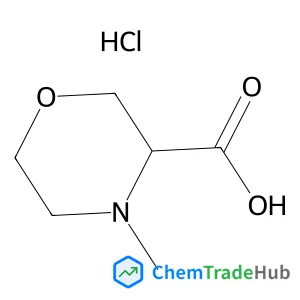
4-Methyl-3-morpholinecarboxylic acid hydrochloride (1:1)
CAS Number:
1240518-90-4
Molecular Formula:
C6H12ClNO3
Recommended Suppliers





Disclaimer
This page provides academic journal information for reference and research purposes only. We are not affiliated with any journal publishers and do not handle publication submissions. For publication-related inquiries, please contact the respective journal publishers directly.
If you notice any inaccuracies in the information displayed, please contact us at support@chemtradehub.com. We will promptly review and address your concerns.