











Investigating carbohydrate isomers by IMS-CID-IMS-MS: precursor and fragment ion cross-sections
Literature Information
Publication Date
2015-08-07
DOI
10.1039/C5AN00840A
Impact Factor
4.616
Authors
M. M. Gaye, R. Kurulugama, D. E. Clemmer
View Original
Abstract
Ion mobility spectrometry techniques (IMS and IMS-IMS) combined with collision-induced dissociation (CID) and mass spectrometry (MS) are used to investigate the structures of singly-lithiated carbohydrate isomers. With the exception of some favorable cases, IMS-MS analyses of underivatized carbohydrates reveal that most isobaric precursor ions have similar collision cross sections (ccs). In contrast, ccs values for isomeric fragment ions obtained by IMS-CID-IMS-MS analysis are often different, and thus appear to be useful as a means of distinguishing the isomeric precursors. We report values of ccs (in He) for precursor- and associated-fragment ions for three monosaccharide isomers (glucose, galactose and fructose), ten disaccharide isomers (sucrose, leucrose, palatinose, trehalose, cellobiose, β-gentiobiose, isomaltose, maltose, lactose and melibiose), and three trisaccharide isomers (raffinose, melezitose and maltotriose). These values are discussed as a means of differentiating precursor carbohydrates.
Related Literature
Phenolate anion-catalyzed direct activation of inert alkyl chlorides driven by visible light
Delian Wei, Xipan Li, Lei Shen, Yuzhen Ding, Kangjiang Liang, Chengfeng Xia
2021-09-17
Research Article
DOI: 10.1039/D1QO01128F
Copper-catalyzed [1,3]-alkoxy rearrangement for the selective synthesis of polycyclic ortho-aminoarenol derivatives
Itaru Nakamura, Satoru Nozawa, Yasuhiro Ishida, Ichiro Muranushi, Alexandra Mayerweg, Masahiro Terada
2021-09-18
Research Article
DOI: 10.1039/D1QO01189H
Asymmetric iodine catalysis-mediated enantioselective oxidative transformations
Aurélie Claraz, Géraldine Masson
2018-07-13
Review Article
DOI: 10.1039/C8OB01378K
Iron promoted C3–H nitration of 2H-indazole: direct access to 3-nitro-2H-indazoles
Arumugavel Murugan, Koteswar Rao Gorantla, Bhabani S. Mallik, Duddu S. Sharada
2018-07-06
Communication
DOI: 10.1039/C8OB00931G
Conformation-guided analogue design identifies potential antimalarial compounds through inhibition of mitochondrial respiration
Erik M. Larsen, Chia-Fu Chang, Tomoyo Sakata-Kato, Joseph W. Arico, Vince M. Lombardo, Dyann F. Wirth, Richard E. Taylor
2018-07-11
Communication
DOI: 10.1039/C8OB01257A
A theoretical study on NHC-catalysed enantioselective cycloaddition of ketenes and 3-aroylcoumarins: mechanism and enantioselectivity
Ramón J. Zaragozá, María J. Aurell, Miguel A. González-Cardenete
2018-07-11
Paper
DOI: 10.1039/C8OB01035H
A fluorescence-enhanced chemosensor based on multifarene[2,2] and its recognition of metal cations
Yin-Hui Huang, Yong-Yi Zhao, Hang Cong, Zhu Tao
2018-07-05
Paper
DOI: 10.1039/C8OB01315B
Zinc–Brønsted acid mediated practical hydrotrifluoromethylation of alkenes with CF3Br
Deqian Peng, Wu Fan, Xueqi Zhao, Wei Chen, Yuan Wen, Li Zhang
2021-09-13
Research Article
DOI: 10.1039/D1QO01073E
Regio- and stereoselective cobalt-catalyzed hydrosilylation of 1,3-diynes with primary and secondary silanes
Shaocong Shen, Zhijian Zong, Nan Sun, Baoxiang Hu, Zhenlu Shen, Xinquan Hu
2021-09-15
Research Article
DOI: 10.1039/D1QO00939G
Highly chemoselective hydrogenation of cyclic imides to ω-hydroxylactams or ω-hydroxyamides catalyzed by iridium catalysts
Jiang Wang, Xumu Zhang, Runtong Zhang, Baode Ma
2021-09-30
Research Article
DOI: 10.1039/D1QO01100F
You might also like
Compound Q&A
What are the main uses of 4-Nitrophenyl phosphate disodium salt hexahydrate (CAS: 333338-18-4)?
4-Nitrophenyl phosphate disodium salt hexahydrate is primarily used as a substra...
333338-18-44-Nitrophenyl phosph...
Compound Q&A
What are the main uses of 2-(Trifluoromethyl)-1,3-oxazole-4-carboxylic Acid (CAS: 1060816-01-4)?
2-(Trifluoromethyl)-1,3-oxazole-4-carboxylic Acid (CAS: 1060816-01-4) is widely ...
1060816-01-42-(Trifluoromethyl)-...
Compound Q&A
How should 2-Fluoro-4-biphenylcarboxylic acid (CAS: 137045-30-8) be stored?
2-Fluoro-4-biphenylcarboxylic acid should be stored in a cool, dry place at room...
137045-30-82-Fluoro-4-biphenylc...
Compound Q&A
What industries use Prednisolone-21-Carboxylic Acid (CAS: 61549-70-0)?
Prednisolone-21-Carboxylic Acid is primarily used in the pharmaceutical industry...
61549-70-0Prednisolone-21-Carb...
Compound Q&A
How should 4-(Hydrazinomethyl)-1,2,3-benzenetriol (CAS: 3614-72-0) be stored?
4-(Hydrazinomethyl)-1,2,3-benzenetriol (CAS: 3614-72-0) should be stored in a co...
3614-72-04-(Hydrazinomethyl)-...
Compound Q&A
What industries use 4-Amino-1-methyl-1H-pyrazole-5-carboxylic acid hydrochloride (CAS: 92534-70-8)?
4-Amino-1-methyl-1H-pyrazole-5-carboxylic acid hydrochloride (CAS: 92534-70-8) i...
92534-70-84-Amino-1-methyl-1H-...
Compound Q&A
What regulatory guidelines apply to dehydropachymic acid (CAS: 77012-31-8)?
Dehydropachymic acid (CAS: 77012-31-8) is regulated by various agencies. It fall...
77012-31-8Dehydropachymic acid
Compound Q&A
What is the market or research trend for 6-[(2,2-Dimethylpropanoyl)amino]nicotinic acid (CAS: 898561-66-5)?
The market and research trends for 6-[(2,2-Dimethylpropanoyl)amino]nicotinic aci...
898561-66-56-[(2,2-Dimethylprop...
Compound Q&A
How should 1,10-Phenanthroline-2,9-dicarbaldehyde (CAS: 57709-62-3) be stored?
1,10-Phenanthroline-2,9-dicarbaldehyde should be stored in a cool, dry place awa...
57709-62-31,10-Phenanthroline-...
Compound Q&A
How is 5-Carbamoyl-11-oxo-10,11-dihydro-5H-dibenzo[b,f]azepin-10-yl acetate (CAS: 113952-21-9) typically synthesized?
5-Carbamoyl-11-oxo-10,11-dihydro-5H-dibenzo[b,f]azepin-10-yl acetate can be synt...
113952-21-95-Carbamoyl-11-oxo-1...
Source Journal
Analyst

CiteScore:
7.8
Self-citation Rate:
5.6%
Articles per Year:
653
Analyst publishes analytical and bioanalytical research that reports premier fundamental discoveries and inventions, and the applications of those discoveries, unconfined by traditional discipline barriers.
Recommended Compounds
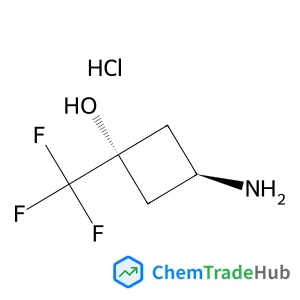
cis-3-Amino-1-(trifluoromethyl)cyclobutanol hydrochloride (1:1)
CAS Number:
1408075-16-0
Molecular Formula:
C5H9ClF3NO
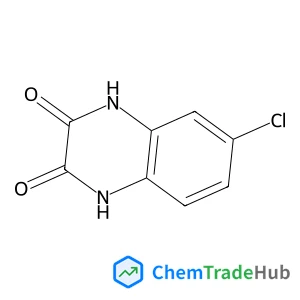
6-CHLORO-2,3-DIOXO-1,2,3,4-TETRAHYDROQUINOXALINE, 97
CAS Number:
169-14-2
Molecular Formula:
C8H5ClN2O2
Recommended Suppliers





Disclaimer
This page provides academic journal information for reference and research purposes only. We are not affiliated with any journal publishers and do not handle publication submissions. For publication-related inquiries, please contact the respective journal publishers directly.
If you notice any inaccuracies in the information displayed, please contact us at support@chemtradehub.com. We will promptly review and address your concerns.