


The inverted solvatochromism of protonated ferrocenylethenyl-pyrimidines: the first example of the solvatochromic reversal of a hybrid organic/inorganic dye
Literature Information
Publication Date
2019-09-30
DOI
10.1039/C9QO01043B
Impact Factor
5.281
Authors
Matías Vidal, Marcos Caroli Rezende, Moisés Domínguez
View Original
Abstract
Five new solvatochromic 2,6-diaryl-4-ferrocenylethenylpyrimidines were synthesized and their spectral variations in solution investigated in twenty-seven solvents of variable polarity. Their observed positive solvatochromism in HBD- and non-HBD-solvents changed to an inverted behavior upon protonation of the pyrimidine ring by the addition of trifluoroacetic acid. Multiparametric analysis of the solvatochromic band of the protonated dyes showed that the solvent acidity and polarizability were mainly responsible for their inverted behavior, which arose from an internal charge-transfer from the ferrocene fragment to the pyrimidinium acceptor, confirmed by theoretical calculations.
Recommended Journals

Russian Journal of Coordination Chemistry

Crystallography Reports

Current Opinion in Solid State & Materials Science

Chemistry Education Research and Practice

Organic Process Research & Development

Russian Journal of Bioorganic Chemistry

Journal of Peptide Science

Chemical Communications

Russian Journal of Organic Chemistry

Drug Discovery Today
Related Literature
A ReaxFF molecular dynamics study of molecular-level interactions during binder jetting 3D-printing
Yawei Gao, Yun Kyung Shin, Daniel Martinez, Guha Manogharan, Adri C. T. van Duin
2019-09-10
Paper
DOI: 10.1039/C9CP03585K
The binding mode of vilazodone in the human serotonin transporter elucidated by ligand docking and molecular dynamics simulations
Guoxun Zheng, Tingting Fu, Jiajun Hong, Fengcheng Li, Xiaojun Yao, Weiwei Xue
2020-01-23
Paper
DOI: 10.1039/C9CP05764A
Probing molecular interactions of PEGylated chitosan in aqueous solutions using a surface force apparatus
Li Xiang, Lu Gong, Jiawen Zhang, Ling Zhang, Wenjihao Hu, Wenda Wang, Qingye Lu, Hongbo Zeng
2019-07-22
Paper
DOI: 10.1039/C9CP03189H
Using computed infrared intensities for the reduction of vibrational configuration interaction bases
Vincent Le Bris, Marc Odunlami, Didier Bégué, Isabelle Baraille, Olivier Coulaud
2020-03-11
Paper
DOI: 10.1039/D0CP00593B
Coalescence and wetting mechanism of Al droplets on different types of carbon for developing wettable cathodes: a molecular dynamics simulation
Xiaojun Lv, Chaohong Guan, Zexun Han, Chang Chen, Qidong Sun
2019-09-06
Paper
DOI: 10.1039/C9CP03673C
Molecular dynamics simulation of thermo-mechanical behaviour of elastomer cross-linked via multifunctional zwitterions
Naveed Athir, Ling Shi, Sayyed Asim Ali Shah, Zhiyu Zhang, Jue Cheng, Jun Liu, Junying Zhang
2019-09-08
Paper
DOI: 10.1039/C9CP03221E
Intercalation, decomposition, entrapment – a new route to graphene nanobubbles
Adriana Alieva, Cinzia Casiraghi
2020-03-17
Paper
DOI: 10.1039/D0CP00592D
First-principles investigation of the hydrogen evolution reaction on different surfaces of pyrites MnS2, FeS2, CoS2, NiS2
Ming-Hsiu Wu, Wan-Jou Chou, Jian-Syun Huang, Darwin Barayang Putungan, Shi-Hsin Lin
2019-08-28
Paper
DOI: 10.1039/C9CP03893K
Quantitative analysis of the coupling between proton and electron transport in peptide/manganese oxide hybrid films
Misong Ju, Ouk Hyun Cho, Jaehun Lee, Mani Balamurugan, Ki Tae Nam
2020-03-10
Paper
DOI: 10.1039/C9CP05581A
You might also like
Compound Q&A
Is 6-(3-Fluorophenyl)picolinic acid (CAS: 887982-40-3) safe?
6-(3-Fluorophenyl)picolinic acid is generally considered safe for laboratory use...
887982-40-36-(3-Fluorophenyl)pi...
Compound Q&A
What industries use (3R)-3-Pyrrolidinol (CAS: 2799-21-5)?
(3R)-3-Pyrrolidinol is used in the pharmaceutical industry as a precursor for dr...
2799-21-5(3R)-3-Pyrrolidinol
Compound Q&A
What precautions should be taken when handling (4R,5R)-4,5-Diethoxycarbonyl-2,2-dimethyldioxolane (CAS: 59779-75-8)?
When handling (4R,5R)-4,5-Diethoxycarbonyl-2,2-dimethyldioxolane (CAS: 59779-75-...
59779-75-8(4R,5R)-4,5-Diethoxy...
Compound Q&A
How is 1-(6-Chloroimidazo[1,2-b]pyridazin-3-yl)ethanone (CAS: 90734-71-7) typically synthesized?
1-(6-Chloroimidazo[1,2-b]pyridazin-3-yl)ethanone is often synthesized via a mult...
90734-71-71-(6-Chloroimidazo[1...
Compound Q&A
What is the market or research trend for N-Ethyl-3,4-dimethylbenzylamine (CAS: 39180-83-1)?
The market for N-Ethyl-3,4-dimethylbenzylamine (CAS: 39180-83-1) remains steady,...
39180-83-1N-Ethyl-3,4-dimethyl...
Compound Q&A
What is Tert-butyl 3-(pyrrolidin-1-yl)azetidine-1-carboxylate (CAS: 1019008-21-9)?
Tert-butyl 3-(pyrrolidin-1-yl)azetidine-1-carboxylate is a chemical compound wit...
1019008-21-9Tert-butyl 3-(pyrrol...
Compound Q&A
What regulatory guidelines apply to 1-Bromo-3-chloro-2,4-dimethoxybenzene (CAS: 1228956-93-1)?
1-Bromo-3-chloro-2,4-dimethoxybenzene (CAS: 1228956-93-1) falls under the classi...
1228956-93-11-Bromo-3-chloro-2,4...
Compound Q&A
Is 8-Bromo-2-methyl-3,4-dihydroisoquinolin-1(2H)-one (CAS: 1368622-07-4) safe?
The safety of 8-Bromo-2-methyl-3,4-dihydroisoquinolin-1(2H)-one (CAS: 1368622-07...
1368622-07-48-Bromo-2-methyl-3,4...
Compound Q&A
Is Benzyl [(3S)-2,6-dioxo-3-piperidinyl]carbamate (CAS: 22785-43-9) safe?
Benzyl [(3S)-2,6-dioxo-3-piperidinyl]carbamate is generally safe when handled wi...
22785-43-9Benzyl [(3S)-2,6-dio...
Compound Q&A
How should 1-{[4-(4,4,5,5-Tetramethyl-1,3,2-dioxaborolan-2-yl)phenyl]sulfonyl}pyrrolidine (CAS: 928657-21-0) be stored?
1-{[4-(4,4,5,5-Tetramethyl-1,3,2-dioxaborolan-2-yl)phenyl]sulfonyl}pyrrolidine s...
928657-21-01-{[4-(4,4,5,5-Tetra...
Source Journal
Organic Chemistry Frontiers

CiteScore:
7.8
Self-citation Rate:
8.7%
Articles per Year:
724
Organic Chemistry Frontiers publishes high-quality research from across organic chemistry. Emphases are placed on studies that make significant contributions to the field of organic chemistry by reporting either new or significantly improved protocols or methodologies. Topics include, but are not limited to the following: Organic synthesis Development of synthetic methodologies Catalysis Natural products Functional organic materials Supramolecular and macromolecular chemistry Physical and computational organic chemistry
Recommended Compounds
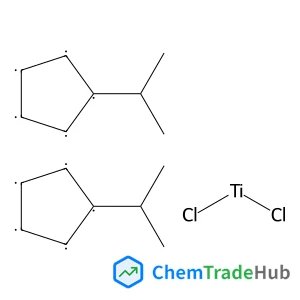
BIS(I-PROPYLCYCLOPENTADIENYL)TITANIUM DICHLORIDE
CAS Number:
12130-65-3
Molecular Formula:
C16H22Cl2Ti
![(1R,6R)-6-({[(2-Methyl-2-propanyl)oxy]carbonyl}amino)-3-cyclohexene-1-carboxylic acid structure](https://static.chemtradehub.com/structs/865/865689-24-3-5fef.webp "(1R,6R)-6-({[(2-Methyl-2-propanyl)oxy]carbonyl}amino)-3-cyclohexene-1-carboxylic acid structure")
(1R,6R)-6-({[(2-Methyl-2-propanyl)oxy]carbonyl}amino)-3-cyclohexene-1-carboxylic acid
CAS Number:
865689-24-3
Molecular Formula:
C12H19NO4
Recommended Suppliers



Disclaimer
This page provides academic journal information for reference and research purposes only. We are not affiliated with any journal publishers and do not handle publication submissions. For publication-related inquiries, please contact the respective journal publishers directly.
If you notice any inaccuracies in the information displayed, please contact us at support@chemtradehub.com. We will promptly review and address your concerns.