












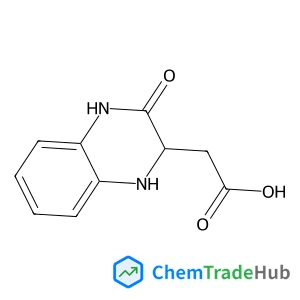
(3-Oxo-1,2,3,4-tetrahydro-2-quinoxalinyl)acetic acid
CAS Number:
136584-14-0
Molecular Formula:
C10H10N2O3
Young Hwan Min, Won-Hwa Park
We report that Raman enhancements of a graphene monolayer sandwiched at the Au nanoparticle–Au thin film junction are different and can be attributed to the influence of a z-polarized incident field. Closer to the center of the junction, radial breathing like-mode (RBLM) shows dramatic Raman enhancement in terms of the coincidence between the z-polarized incident field formed at the junction and the RBLM phonon axis. The appearance of an additional D* peak can be identified and is attributed to the additional out-of-plane sp3 type defect signal. Correlating I(D*)/I(D) with RBLM intensity variation further substantiates that the observed D* peak is ascribed to another out-of-plane structural defect signal.
Wenhui Zhong, Jinxia Liang, Wei Hu, Xinrui Cao, Chuanyi Jia, Jun Jiang
DOI: 10.1039/C6CP00336B
Juliano Katrib, Paula A. Palade, Neil R. Champness, Samuel W. Kingman
DOI: 10.1039/C5CP05426E
Hong-Dan Peng, Jia-Mei Yang, Jing-Hui Yan, Ge-Bo Pan
DOI: 10.1039/C5CP05507E
Susmita Maiti, Somashree Kundu, Debasmita Ghosh, Somrita Mondal, Chandra Nath Roy, Abhijit Saha
DOI: 10.1039/C5CP05799J
Steven H. Overbury
DOI: 10.1039/C6CP00151C
B. Eggers, M. Metzler, D. Künzel, A. Groß, T. Jacob, U. Ziener
DOI: 10.1039/C5CP07853A
Takeshi Miki, Tiago Buckup, Marie S. Krause, June Southall, Richard J. Cogdell, Marcus Motzkus
DOI: 10.1039/C5CP07542D
Lanju Mei, Tzung-Han Chou, Yu-Shen Cheng, Ming-Jiang Huang, Li-Hsien Yeh, Shizhi Qian
DOI: 10.1039/C5CP05728K
Avanish Mishra, Pooja Srivastava, Hiroshi Mizuseki, Kwang-Ryeol Lee, Abhishek K. Singh
DOI: 10.1039/C5CP07609A
This compound is mainly used as an intermediate in the synthesis of antipsychoti...
Waste containing 1-(D-Ribofuranosyl)-1,4-dihydro-3-pyridinecarboxamide (CAS: 191...
2-Methyl-2-propanyl 3-bromo-3-(hydroxymethyl)-1-azetidinecarboxylate (CAS: 20079...
N-(4-Chloro-2-pyridinyl)acetamide (CAS: 245056-66-0) is a chemical compound with...
5-Chloro-2-hydroxybenzoic acid, also known as 5-chlorosalicylic acid, is an arom...
When handling 1,1-Dichloro-1-fluoroethane (CAS: 1717-00-6), it is important to u...
Fmoc-(2S,3R)-3-phenylpyrrolidine-2-carboxylic acid is a white crystalline solid ...
4-Amino-5-bromo-2-pyridinecarboxylic acid is primarily used as a precursor in th...
Handling this compound should be done with personal protective equipment (PPE) i...
When handling 8-bromo-2,2-dimethyl-3,4-dihydro-2H-1,4-benzoxazin-3-one, use prop...

Physical Chemistry Chemical Physics (PCCP) is an international journal co-owned by 19 physical chemistry and physics societies from around the world. This journal publishes original, cutting-edge research in physical chemistry, chemical physics and biophysical chemistry. To be suitable for publication in PCCP, articles must include significant innovation and/or insight into physical chemistry; this is the most important criterion that reviewers and Editors will judge against when evaluating submissions. The journal has a broad scope and welcomes contributions spanning experiment, theory, computation and data science. Topical coverage includes spectroscopy, dynamics, kinetics, statistical mechanics, thermodynamics, electrochemistry, catalysis, surface science, quantum mechanics, quantum computing and machine learning. Interdisciplinary research areas such as polymers and soft matter, materials, nanoscience, energy, surfaces/interfaces, and biophysical chemistry are welcomed if they demonstrate significant innovation and/or insight into physical chemistry. Joined experimental/theoretical studies are particularly appreciated when complementary and based on up-to-date approaches.

![1-[3-(4-Morpholinylsulfonyl)phenyl]methanamine structure](https://static.chemtradehub.com/structs/933/933989-32-3-51af.webp "1-[3-(4-Morpholinylsulfonyl)phenyl]methanamine structure")



