


Electrophoresis of pH-regulated nanoparticles: impact of the Stern layer
Literature Information
Publication Date
2015-10-14
DOI
10.1039/C5CP05728K
Impact Factor
3.676
Authors
Lanju Mei, Tzung-Han Chou, Yu-Shen Cheng, Ming-Jiang Huang, Li-Hsien Yeh, Shizhi Qian
View Original
Abstract
A multi-ion model taking into account the Stern layer effect and the surface chemistry reactions is developed for the first time to investigate the surface charge properties and electrophoresis of pH-regulated silica nanoparticles (NPs). The applicability of the model is validated by comparing its prediction to the experimental data of the electrophoretic mobility of silica NPs available from the literature. Results show that if the particle size is fixed, the Stern layer effect on the surface charge properties of the NP is notable at high pH and background salt concentration; however, that effect on the particle mobility is significant when pH is around neutrality and the salt concentration is medium high (ca. 0.07 M) because of the double-layer polarization effect. Moreover, if pH and the background salt concentration are fixed, the Stern layer effect on the zeta potential and electrophoretic mobility of the NP becomes more significant for smaller particle size. Neglecting the Stern layer effect could result in the overestimation of the zeta potential, surface charge density, and electrophoretic mobility of a NP on the order of several times.
Recommended Journals

Nature Reviews Drug Discovery

Foundations of Chemistry

Coloration Technology

Environmental Toxicology and Pharmacology

Molecular Diversity

Journal of Enzyme inhibition and Medicinal Chemistry

Current Pharmaceutical Biotechnology

Mini-Reviews in Medicinal Chemistry

Photochemical & Photobiological Sciences

Faraday Discussions
Related Literature
Continuous flow nanocatalysis: reaction pathways in the conversion of levulinic acid to valuable chemicals
J. Angel Menéndez, Antonio A. Romero, Elena Serrano, Javier Garcia-Martinez, Rafael Luque
2013-07-31
Paper
DOI: 10.1039/C3GC41022F
An extremely stable and highly active periodic mesoporous Lewis acid catalyst in water-medium Mukaiyama-aldol reaction
Fang Zhang, Chao Liang, Mingzheng Chen, Haibing Guo, Huangyong Jiang, Hexing Li
2013-07-16
Paper
DOI: 10.1039/C3GC41020J
An effective, cost-efficient extraction method of biomass from wet microalgae with a functional polymeric membrane
Gursong Yoo, Youngmin Yoo, Jong-Hee Kwon, Cornelius Darpito, Sanjiv K. Mishra, Kwanyong Pak
2013-10-02
Paper
DOI: 10.1039/C3GC41695J
GAP chemistry for pyrrolyl coumarin derivatives: a highly efficient one-pot synthesis under catalyst-free conditions
Xuecheng Liu, Xian Feng, Zhibin Huang, Daqing Shi
2013-09-25
Communication
DOI: 10.1039/C3GC41799A
Continuous catalyst-free aromatization of γ-terpinene using air as an oxidant
Martta Asikainen, Olli Jauhiainen, Olli Aaltonen, Ali Harlin
2013-08-27
Paper
DOI: 10.1039/C3GC41224E
Extraction desulfurization process of fuels with ammonium-based deep eutectic solvents
Changping Li, Dan Li, Shuangshuang Zou, Jingmei Yin, Ailing Wang, Yingna Cui, Zhilong Yao, Qi Zhao
2013-07-31
Paper
DOI: 10.1039/C3GC41067F
N-Chlorosuccinimide-promoted synthesis of thiophosphates from thiols and phosphonates under mild conditions
Yi-Chen Liu, Chin-Fa Lee
2013-10-28
Paper
DOI: 10.1039/C3GC41839A
Evaluation of O/W microemulsions to penetrate the capillary structure of woody biomass: interplay between composition and formulation in green processing
Daniel Saloni
2013-09-09
Paper
DOI: 10.1039/C3GC41325J
Depolymerisation of condensed tannins in ethanol as a gateway to biosourced phenolic synthons
Chahinez Aouf, Eric Dubreucq, Hélène Fulcrand
2013-08-23
Paper
DOI: 10.1039/C3GC41281D
You might also like
Compound Q&A
What are the main uses of 1-(3-Aminophenyl)-3-[(3R)-1-(3,3-dimethyl-2-oxobutyl)-2-oxo-5-(2-pyridinyl)-2,3-dihydro-1H-1,4-benzodiazepin-3-yl]urea (CAS: 155412-88-7)?
This compound is mainly used as an intermediate in the synthesis of antipsychoti...
155412-88-71-(3-Aminophenyl)-3-...
Compound Q&A
How should waste containing 1-(D-Ribofuranosyl)-1,4-dihydro-3-pyridinecarboxamide (CAS: 19132-12-8) be handled?
Waste containing 1-(D-Ribofuranosyl)-1,4-dihydro-3-pyridinecarboxamide (CAS: 191...
19132-12-81-(D-Ribofuranosyl)-...
Compound Q&A
What regulatory guidelines apply to 2-Methyl-2-propanyl 3-bromo-3-(hydroxymethyl)-1-azetidinecarboxylate (CAS: 2007919-81-3)?
2-Methyl-2-propanyl 3-bromo-3-(hydroxymethyl)-1-azetidinecarboxylate (CAS: 20079...
2007919-81-32-Methyl-2-propanyl ...
Compound Q&A
What is N-(4-Chloro-2-pyridinyl)acetamide (CAS: 245056-66-0)?
N-(4-Chloro-2-pyridinyl)acetamide (CAS: 245056-66-0) is a chemical compound with...
245056-66-0N-(4-Chloro-2-pyridi...
Compound Q&A
What is 5-Chloro-2-hydroxybenzoic acid (CAS: 321-14-2)?
5-Chloro-2-hydroxybenzoic acid, also known as 5-chlorosalicylic acid, is an arom...
321-14-25-Chloro-2-hydroxybe...
Compound Q&A
What precautions should be taken when handling 1,1-Dichloro-1-fluoroethane (CAS: 1717-00-6)?
When handling 1,1-Dichloro-1-fluoroethane (CAS: 1717-00-6), it is important to u...
1717-00-61,1-Dichloro-1-fluor...
Compound Q&A
What are the physical and chemical properties of Fmoc-(2S,3R)-3-phenylpyrrolidine-2-carboxylic acid (CAS: 281655-32-1)?
Fmoc-(2S,3R)-3-phenylpyrrolidine-2-carboxylic acid is a white crystalline solid ...
281655-32-1Fmoc-(2S,3R)-3-pheny...
Compound Q&A
What are the main uses of 4-Amino-5-bromo-2-pyridinecarboxylic acid (CAS: 1363381-01-4)?
4-Amino-5-bromo-2-pyridinecarboxylic acid is primarily used as a precursor in th...
1363381-01-44-Amino-5-bromo-2-py...
Compound Q&A
What precautions should be taken when handling (S)-tert-butyl 2-((2-(4-bromophenyl)-2-oxoethyl)carbamoyl)pyrrolidine-1-carboxylate (CAS: 1007881-98-2)?
Handling this compound should be done with personal protective equipment (PPE) i...
1007881-98-2(S)-tert-butyl 2-((2...
Compound Q&A
What precautions should be taken when handling 8-bromo-2,2-dimethyl-3,4-dihydro-2H-1,4-benzoxazin-3-one (CAS: 688363-73-7)?
When handling 8-bromo-2,2-dimethyl-3,4-dihydro-2H-1,4-benzoxazin-3-one, use prop...
688363-73-78-bromo-2,2-dimethyl...
Source Journal
Physical Chemistry Chemical Physics

CiteScore:
5.5
Self-citation Rate:
10.3%
Articles per Year:
3036
Physical Chemistry Chemical Physics (PCCP) is an international journal co-owned by 19 physical chemistry and physics societies from around the world. This journal publishes original, cutting-edge research in physical chemistry, chemical physics and biophysical chemistry. To be suitable for publication in PCCP, articles must include significant innovation and/or insight into physical chemistry; this is the most important criterion that reviewers and Editors will judge against when evaluating submissions. The journal has a broad scope and welcomes contributions spanning experiment, theory, computation and data science. Topical coverage includes spectroscopy, dynamics, kinetics, statistical mechanics, thermodynamics, electrochemistry, catalysis, surface science, quantum mechanics, quantum computing and machine learning. Interdisciplinary research areas such as polymers and soft matter, materials, nanoscience, energy, surfaces/interfaces, and biophysical chemistry are welcomed if they demonstrate significant innovation and/or insight into physical chemistry. Joined experimental/theoretical studies are particularly appreciated when complementary and based on up-to-date approaches.
Recommended Compounds
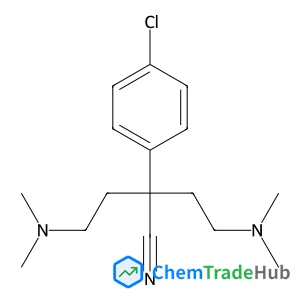
2-(4-Chlorophenyl)-4-(dimethylamino)-2-(2-(dimethylamino)ethyl)butanenitrile
CAS Number:
1246816-57-8
Molecular Formula:
C16H24ClN3
![1-[3-(4-Morpholinylsulfonyl)phenyl]methanamine structure](https://static.chemtradehub.com/structs/933/933989-32-3-51af.webp "1-[3-(4-Morpholinylsulfonyl)phenyl]methanamine structure")

Recommended Suppliers





Disclaimer
This page provides academic journal information for reference and research purposes only. We are not affiliated with any journal publishers and do not handle publication submissions. For publication-related inquiries, please contact the respective journal publishers directly.
If you notice any inaccuracies in the information displayed, please contact us at support@chemtradehub.com. We will promptly review and address your concerns.