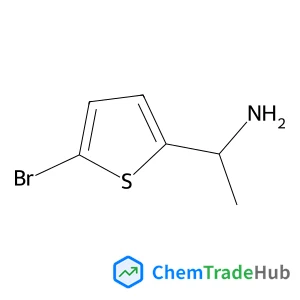
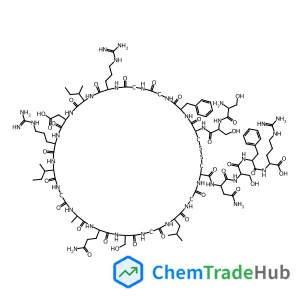
![5-Methyl-4,5,6,7-tetrahydropyrazolo[1,5-a]pyrazin-2-amine structure](https://static.chemtradehub.com/structs/122/1227210-33-4-8d64.webp "5-Methyl-4,5,6,7-tetrahydropyrazolo[1,5-a]pyrazin-2-amine structure")
5-Methyl-4,5,6,7-tetrahydropyrazolo[1,5-a]pyrazin-2-amine
CAS Number:
1227210-33-4
Molecular Formula:
C7H12N4
Wenhui Zhong, Jinxia Liang, Wei Hu, Xinrui Cao, Chuanyi Jia, Jun Jiang
Using density functional theory (DFT) calculations, we performed a thorough theoretical investigation on the catalytic mechanism of oxidative self-coupling of methanol with molecular oxygen on Au–Ag catalysts. It is found that molecular oxygen can be activated via a hydroperoxyl (OOH) intermediate by taking a hydrogen atom from co-adsorbed methanol with an energy barrier of 0.51 eV, which is actually the rate determining step for the overall reaction. The O, OH and OOH oxidant formation proceeds via two channels of I and II with low barriers. We demonstrated that the oxidative coupling of methanol by OOH, atomic oxygen, and hydroxyl is much more favorable than the total oxidation of methanol, and is responsible for the high selectivity of Au–Ag catalysts in methanol oxidation. The revealed activation mechanism provides an efficient pathway for optimizing the selective coupling of methanol with dioxygen.
J. Angel Menéndez, Antonio A. Romero, Elena Serrano, Javier Garcia-Martinez, Rafael Luque
DOI: 10.1039/C3GC41022F
Kun Zhao, Feifei Cui, Fangfang Kong, Qiangqiang Liu
DOI: 10.1039/C3GC41231H
Ginam Park, Sanghee Lee, Sang Jun Son, Seunghoon Shin
DOI: 10.1039/C3GC41672K
Yin Ngai Sum, Dingyi Yu, Yugen Zhang
DOI: 10.1039/C3GC41269E
Pieter Van Wouwe, Michiel Dusselier, Aurelie Basiç, Bert F. Sels
DOI: 10.1039/C3GC41457D
Sarina Sarina, Sagala Bai, Yiming Huang, Chao Chen, Jianfeng Jia, Esa Jaatinen, Godwin A. Ayoko, Zhaorigetu Bao, Huaiyong Zhu
DOI: 10.1039/C3GC41866A
W. Graham Forsythe, Mark D. Garrett, Christopher Hardacre, Mark Nieuwenhuyzen, Gary N. Sheldrake
DOI: 10.1039/C3GC41110A
Dinesh Kumar, Mukesh Sonawane, Brahmam Pujala, Varun K. Jain, Srikant Bhagat, Asit K. Chakraborti
DOI: 10.1039/C3GC41218K
Amol M. Hengne, Sumit B. Kamble, Chandrashekhar V. Rode
DOI: 10.1039/C3GC41098F
This compound is mainly used as an intermediate in the synthesis of antipsychoti...
Waste containing 1-(D-Ribofuranosyl)-1,4-dihydro-3-pyridinecarboxamide (CAS: 191...
2-Methyl-2-propanyl 3-bromo-3-(hydroxymethyl)-1-azetidinecarboxylate (CAS: 20079...
N-(4-Chloro-2-pyridinyl)acetamide (CAS: 245056-66-0) is a chemical compound with...
5-Chloro-2-hydroxybenzoic acid, also known as 5-chlorosalicylic acid, is an arom...
When handling 1,1-Dichloro-1-fluoroethane (CAS: 1717-00-6), it is important to u...
Fmoc-(2S,3R)-3-phenylpyrrolidine-2-carboxylic acid is a white crystalline solid ...
4-Amino-5-bromo-2-pyridinecarboxylic acid is primarily used as a precursor in th...
Handling this compound should be done with personal protective equipment (PPE) i...
When handling 8-bromo-2,2-dimethyl-3,4-dihydro-2H-1,4-benzoxazin-3-one, use prop...

Physical Chemistry Chemical Physics (PCCP) is an international journal co-owned by 19 physical chemistry and physics societies from around the world. This journal publishes original, cutting-edge research in physical chemistry, chemical physics and biophysical chemistry. To be suitable for publication in PCCP, articles must include significant innovation and/or insight into physical chemistry; this is the most important criterion that reviewers and Editors will judge against when evaluating submissions. The journal has a broad scope and welcomes contributions spanning experiment, theory, computation and data science. Topical coverage includes spectroscopy, dynamics, kinetics, statistical mechanics, thermodynamics, electrochemistry, catalysis, surface science, quantum mechanics, quantum computing and machine learning. Interdisciplinary research areas such as polymers and soft matter, materials, nanoscience, energy, surfaces/interfaces, and biophysical chemistry are welcomed if they demonstrate significant innovation and/or insight into physical chemistry. Joined experimental/theoretical studies are particularly appreciated when complementary and based on up-to-date approaches.
![tert-Butyl N-[(2-chloropyridin-4-yl)methyl]carbamate structure](https://static.chemtradehub.com/structs/916/916210-27-0-9f95.webp "tert-Butyl N-[(2-chloropyridin-4-yl)methyl]carbamate structure")
![4-Chloro-3-(trifluoromethyl)-1H-pyrrolo[2,3-b]pyridine structure](https://static.chemtradehub.com/structs/869/869335-75-1-a9d0.webp "4-Chloro-3-(trifluoromethyl)-1H-pyrrolo[2,3-b]pyridine structure")