













Pyrene based conjugated materials: synthesis, characterization and electroluminescent properties
Literature Information
Publication Date
2014-09-26
DOI
10.1039/C4CP03693J
Impact Factor
3.676
Authors
Jagadish K. Salunke, Prashant Sonar, F. L. Wong, V. A. L. Roy, C. S. Lee, Prakash P. Wadgaonkar
View Original
Abstract
In this work, three novel pyrene cored small conjugated molecules, namely 1,3,6,8-tetrakis(6-(octyloxy)naphthalene-2-yl)pyrene (PY-1), 1,3,6,8-tetrakis((E)-2-(6-(n-octyloxy)naphthalene-2-yl)vinyl)pyrene (PY-2) and 1,3,6,8-tetrakis((6-(n-octyloxy)naphthalene-2-yl)ethynyl)pyrene (PY-3) have been synthesized by Suzuki, heck and Sonogashira organometallic coupling reactions, respectively. The effects of single, double and triple bonds on their optical, electrochemical, and thermal properties are studied in detail. These are all materials fluorescent and they have been used in organic light-emitting diodes (OLEDs) and their electroluminescent properties have been studied.
Related Literature
Photoinduced production of NAD(P)H from an activated fluorescein–DNA monolayer
Heinz-Bernhard Kraatz, Jeremy S. Lee
2004-08-10
Communication
DOI: 10.1039/B406689H
Isolation and structural characterization of an optically active intermediate in the oxidative addition of methyl iodide on a rhodium(i) centre
Angelino Doppiu, Ulli Englert, Albrecht Salzer
2004-08-25
Communication
DOI: 10.1039/B409134E
A facile synthesis of single-crystal mullite nanobelts
Chuanbao Cao, Xu Xiang, Hesun Zhu
2004-09-24
Communication
DOI: 10.1039/B409087J
Chiral amplification by polypeptides and its relevance to prebiotic catalysis
David R. Kelly, Alastair Meek, Stanley M. Roberts
2004-08-25
Communication
DOI: 10.1039/B404379K
Racemic d,l-asparagine causes enantiomeric excess of other coexisting racemic d,l-amino acids during recrystallization: a hypothesis accounting for the origin of l-amino acids in the biosphere
Shosuke Kojo, Hiromi Uchino, Mayu Yoshimura, Kyoko Tanaka
2004-09-07
Communication
DOI: 10.1039/B409941A
Photo-reversible Pb2+-complexation of thermosensitive poly(N-isopropyl acrylamide-co-spiropyran acrylate) in water
Takayuki Suzuki, Tatsuya Kato, Hiraku Shinozaki
2004-08-13
Communication
DOI: 10.1039/B407342H
Synthesis of core–shell polyurethane–ureananoparticles containing 4,4′-methylenedi-p-phenyl diisocyanate and isophorone diisocyanate by self-assembled neutralization emulsification
In Woo Cheong, Jung Hyun Kim
2004-09-14
Communication
DOI: 10.1039/B409755F
Novel Pt/CeO2/C catalysts for electrooxidation of alcohols in alkaline media
Changwei Xu, Pei Kang Shen
2004-08-25
Communication
DOI: 10.1039/B408589B
An unprecedented intramolecular coupling of o-carboranyl and cyclopentadienyl. Synthesis and structural characterization of a ruthenium complex containing a novel doubly-bridged cyclopentadienyl-carboranyl ligand
Yi Sun, Hoi-Shan Chan, Pierre H. Dixneuf, Zuowei Xie
2004-09-30
Communication
DOI: 10.1039/B409772F
A samarium cyclooctatetraene complex as catalyst for hydroamination/cyclisation catalysis
Agustino Zulys, Tarun K. Panda, Michael T. Gamer, Peter W. Roesky
2004-09-30
Communication
DOI: 10.1039/B410918J
You might also like
Compound Q&A
What is the market or research trend for N-(4-Methoxybenzyl)-2-pyridinamine (CAS: 52818-63-0)?
N-(4-Methoxybenzyl)-2-pyridinamine (CAS: 52818-63-0) is increasingly being used ...
52818-63-0N-(4-Methoxybenzyl)-...
Compound Q&A
What precautions should be taken when handling Ethyl 4-(2-chlorophenyl)-1,3-thiazole-2-carboxylate (CAS: 1050507-06-6)?
When handling Ethyl 4-(2-chlorophenyl)-1,3-thiazole-2-carboxylate, appropriate p...
1050507-06-6Ethyl 4-(2-chlorophe...
Compound Q&A
What regulatory guidelines apply to diethyldiselane (CAS: 628-39-7)?
Diethyldiselane (CAS: 628-39-7) is classified under the Globally Harmonized Syst...
628-39-7Diethyldiselane
Compound Q&A
What is the market or research trend for oxocopper (CAS: 12053-18-8)?
The market for oxocopper (CAS: 12053-18-8) is primarily driven by its use in cat...
12053-18-8oxocopper; oxo-(oxoc...
Compound Q&A
What is the market or research trend for 5-{[(2-Methyl-2-propanyl)oxy]carbonyl}-5-azaspiro[2.4]heptane-7-carboxylic acid?
The market for 5-{[(2-Methyl-2-propanyl)oxy]carbonyl}-5-azaspiro[2.4]heptane-7-c...
1268519-54-55-{[(2-Methyl-2-prop...
Compound Q&A
What is 2-(1-Pyrrolidinyl)-4-pyridinamine (CAS: 35981-63-6)?
2-(1-Pyrrolidinyl)-4-pyridinamine is a chemical compound with the CAS number 359...
35981-63-62-(1-Pyrrolidinyl)-4...
Compound Q&A
What are the physical and chemical properties of 2-(3-Pyridinyl)-1-azabicyclo[2.2.2]octane (CAS: 91556-75-1)?
2-(3-Pyridinyl)-1-azabicyclo[2.2.2]octane (CAS: 91556-75-1) is a crystalline sol...
91556-75-12-(3-Pyridinyl)-1-az...
Compound Q&A
How is (S)-Alpha-allyl-proline hydrochloride (CAS: 129704-91-2) typically synthesized?
(S)-Alpha-allyl-proline hydrochloride is usually synthesized via a Wittig reacti...
129704-91-2(S)-Alpha-allyl-prol...
Compound Q&A
What is 3-Methyl-1,2-oxazole-5-carboxylic acid (CAS: 4857-42-5)?
3-Methyl-1,2-oxazole-5-carboxylic acid (CAS: 4857-42-5) is an organic compound w...
4857-42-53-Methyl-1,2-oxazole...
Compound Q&A
How is Lys-SMCC-DM1 (CAS: 1281816-04-3) typically synthesized?
Lys-SMCC-DM1 is synthesized via a multi-step process involving the coupling of S...
1281816-04-3Lys-SMCC-DM1
Source Journal
Physical Chemistry Chemical Physics

CiteScore:
5.5
Self-citation Rate:
10.3%
Articles per Year:
3036
Physical Chemistry Chemical Physics (PCCP) is an international journal co-owned by 19 physical chemistry and physics societies from around the world. This journal publishes original, cutting-edge research in physical chemistry, chemical physics and biophysical chemistry. To be suitable for publication in PCCP, articles must include significant innovation and/or insight into physical chemistry; this is the most important criterion that reviewers and Editors will judge against when evaluating submissions. The journal has a broad scope and welcomes contributions spanning experiment, theory, computation and data science. Topical coverage includes spectroscopy, dynamics, kinetics, statistical mechanics, thermodynamics, electrochemistry, catalysis, surface science, quantum mechanics, quantum computing and machine learning. Interdisciplinary research areas such as polymers and soft matter, materials, nanoscience, energy, surfaces/interfaces, and biophysical chemistry are welcomed if they demonstrate significant innovation and/or insight into physical chemistry. Joined experimental/theoretical studies are particularly appreciated when complementary and based on up-to-date approaches.
Recommended Compounds
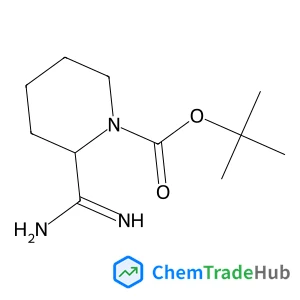
2-Methyl-2-propanyl 2-carbamimidoyl-1-piperidinecarboxylate
CAS Number:
1258640-98-0
Molecular Formula:
C11H21N3O2
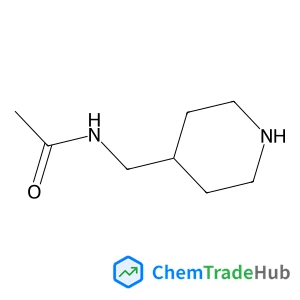
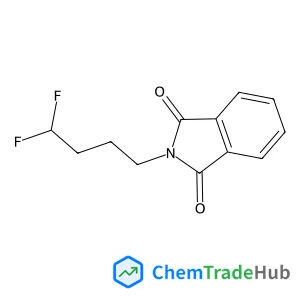
2-(4,4-Difluorobutyl)-1H-isoindole-1,3(2H)-dione
CAS Number:
1265341-14-7
Molecular Formula:
C12H11F2NO2
![5'-Fluoro-[2,3'-biindolinylidene]-2',3-dione structure](https://static.chemtradehub.com/structs/251/251903-00-1-9cb1.webp "5'-Fluoro-[2,3'-biindolinylidene]-2',3-dione structure")
Recommended Suppliers





Disclaimer
This page provides academic journal information for reference and research purposes only. We are not affiliated with any journal publishers and do not handle publication submissions. For publication-related inquiries, please contact the respective journal publishers directly.
If you notice any inaccuracies in the information displayed, please contact us at support@chemtradehub.com. We will promptly review and address your concerns.