












Remarkable changes in the photoluminescent properties of Y2Ce2O7:Eu3+ red phosphors through modification of the cerium oxidation states and oxygen vacancy ordering
Literature Information
Publication Date
2014-09-17
DOI
10.1039/C4CP03311F
Impact Factor
3.676
Authors
Athira K. V. Raj, P. Prabhakar Rao, T. S. Sreena, S. Sameera, Vineetha James, U. A. Renju
View Original
Abstract
A new series of red phosphors based on Eu3+-doped yttrium cerate [Y1.9Ce2O7:0.1Eu3+, Y2Ce1.9O7:0.1Eu3+ and Y2Ce2−xO7:xEu3+ (x = 0.05, 0.10, 0.15, 0.20, 0.25 and 0.50)] was prepared via a conventional solid-state method. The influence of the substitution of Eu3+ at the aliovalent site on the photoluminescent properties was determined by powder X-ray diffraction, FT Raman spectroscopy, X-ray photoelectron spectroscopy, transmission electron microscopy, scanning electron microscopy with energy-dispersive spectroscopy, UV-visible absorption spectroscopy, photoluminescence spectroscopy and lifetime measurements. The substitution of Eu3+ at the Ce4+ site induces a structural transition from a defect fluorite to a C-type structure, which increases the oxygen vacancy ordering and the distortion of the Eu3+ environment, and decreases the formation of Ce3+ states. In contrast, phosphors with isovalent substitution at the Y3+ site exhibit the biphasic nature of defect fluorite and a C-type structure, thereby increasing the number of Ce3+ oxidation states. These modifications resulted in remarkable changes in the photoluminescent properties of Y2Ce1.9O7:0.1Eu3+ red phosphors, with emission intensities 3.8 times greater than those of the Ce0.9O2:0.1Eu3+ and Y1.9Ce2O7:0.1Eu3+. The photoluminescent properties of Y2Ce2−xO7:xEu3+ were studied at different Eu3+ concentrations under excitation with blue light. These phosphors emit intense red light due to the 5D0–7F2 transition under excitation at 466 nm and no concentration quenching is observed with up to 50 mol% Eu3+. They show increased lifetimes in the range 0.62–0.72 ms at Eu3+ concentrations. The cation ordering linked to the oxygen vacancy ordering led to the uniform distribution of Eu3+ ions in the lattice, thus allowing higher doping concentrations without quenching and consequently increasing the lifetime of the 5D0 states. Our results demonstrate that significant improvements in the photoluminescence properties can be achieved by the structural alteration of a fluorite CeO2 to a C-type lattice.
Recommended Journals
Related Literature
Aminooxazolinate; a chiral amidinate analogue
Ian J. Munslow, Andrew R. Wade, Robert J. Deeth, Peter Scott
2004-09-30
Communication
DOI: 10.1039/B409113B
Photochemical polymerization of thiophene derivatives in aqueous solution
Sergey A. Piletsky, Elena V. Piletska, Kal Karim, Frank Davis, Seamus P. J. Higson, Anthony P. F. Turner
2004-08-20
Communication
DOI: 10.1039/B408387C
An unprecedented intramolecular coupling of o-carboranyl and cyclopentadienyl. Synthesis and structural characterization of a ruthenium complex containing a novel doubly-bridged cyclopentadienyl-carboranyl ligand
Yi Sun, Hoi-Shan Chan, Pierre H. Dixneuf, Zuowei Xie
2004-09-30
Communication
DOI: 10.1039/B409772F
Electrophilicity parameters for σ-complexation by uncharged electron-deficient aromatic and heteroaromatic structures
François Terrier, Régis Goumont, Taoufik Boubaker, Erwin Buncel
2004-09-30
Communication
DOI: 10.1039/B410356D
Biomimetic thermo-responsive star diblock gelators
Yuting Li, Ravin Narain, Yinghua Ma, Andrew L. Lewis, Steven P. Armes
2004-10-18
Communication
DOI: 10.1039/B410150B
Role of pore curvature on the thermal stability of gold nanoparticles in mesoporous silica
Mangesh T. Bore, Hien N. Pham, Timothy L. Ward, Abhaya K. Datye
2004-10-04
Communication
DOI: 10.1039/B407575G
A metallo-capped polyrotaxane containing calix[4]arenes and cyclodextrins and its highly selective binding for Ca2+
Yu Liu, Hao Wang, Heng-Yi Zhang, Peng Liang
2004-09-06
Communication
DOI: 10.1039/B409356A
Synthesis of the ABCD and ABCDE ring systems of azaspiracid-1‡
Xiao-Ti Zhou, Rich G. Carter
2004-09-20
Communication
DOI: 10.1039/B410092A
Ionic hydrogenation of C-20, 22-ketene dithioacetal: stereoselective synthesis of steroidal C (20R) aldehydes
Bapurao B. Shingate, Braja G. Hazra, Vandana S. Pore, Rajesh G. Gonnade, Mohan M. Bhadbhade
2004-08-19
Communication
DOI: 10.1039/B407952C
A thermally stable nanoporous nickel 5-sulfoisophthalate; crystal structure and adsorption properties
Dae Sung Kim, Paul M. Forster, Ronan Le Toquin, Anthony K. Cheetham
2004-08-17
Communication
DOI: 10.1039/B408535C
You might also like
Compound Q&A
What is the market or research trend for N-(4-Methoxybenzyl)-2-pyridinamine (CAS: 52818-63-0)?
N-(4-Methoxybenzyl)-2-pyridinamine (CAS: 52818-63-0) is increasingly being used ...
52818-63-0N-(4-Methoxybenzyl)-...
Compound Q&A
What precautions should be taken when handling Ethyl 4-(2-chlorophenyl)-1,3-thiazole-2-carboxylate (CAS: 1050507-06-6)?
When handling Ethyl 4-(2-chlorophenyl)-1,3-thiazole-2-carboxylate, appropriate p...
1050507-06-6Ethyl 4-(2-chlorophe...
Compound Q&A
What regulatory guidelines apply to diethyldiselane (CAS: 628-39-7)?
Diethyldiselane (CAS: 628-39-7) is classified under the Globally Harmonized Syst...
628-39-7Diethyldiselane
Compound Q&A
What is the market or research trend for oxocopper (CAS: 12053-18-8)?
The market for oxocopper (CAS: 12053-18-8) is primarily driven by its use in cat...
12053-18-8oxocopper; oxo-(oxoc...
Compound Q&A
What is the market or research trend for 5-{[(2-Methyl-2-propanyl)oxy]carbonyl}-5-azaspiro[2.4]heptane-7-carboxylic acid?
The market for 5-{[(2-Methyl-2-propanyl)oxy]carbonyl}-5-azaspiro[2.4]heptane-7-c...
1268519-54-55-{[(2-Methyl-2-prop...
Compound Q&A
What is 2-(1-Pyrrolidinyl)-4-pyridinamine (CAS: 35981-63-6)?
2-(1-Pyrrolidinyl)-4-pyridinamine is a chemical compound with the CAS number 359...
35981-63-62-(1-Pyrrolidinyl)-4...
Compound Q&A
What are the physical and chemical properties of 2-(3-Pyridinyl)-1-azabicyclo[2.2.2]octane (CAS: 91556-75-1)?
2-(3-Pyridinyl)-1-azabicyclo[2.2.2]octane (CAS: 91556-75-1) is a crystalline sol...
91556-75-12-(3-Pyridinyl)-1-az...
Compound Q&A
How is (S)-Alpha-allyl-proline hydrochloride (CAS: 129704-91-2) typically synthesized?
(S)-Alpha-allyl-proline hydrochloride is usually synthesized via a Wittig reacti...
129704-91-2(S)-Alpha-allyl-prol...
Compound Q&A
What is 3-Methyl-1,2-oxazole-5-carboxylic acid (CAS: 4857-42-5)?
3-Methyl-1,2-oxazole-5-carboxylic acid (CAS: 4857-42-5) is an organic compound w...
4857-42-53-Methyl-1,2-oxazole...
Compound Q&A
How is Lys-SMCC-DM1 (CAS: 1281816-04-3) typically synthesized?
Lys-SMCC-DM1 is synthesized via a multi-step process involving the coupling of S...
1281816-04-3Lys-SMCC-DM1
Source Journal
Physical Chemistry Chemical Physics

CiteScore:
5.5
Self-citation Rate:
10.3%
Articles per Year:
3036
Physical Chemistry Chemical Physics (PCCP) is an international journal co-owned by 19 physical chemistry and physics societies from around the world. This journal publishes original, cutting-edge research in physical chemistry, chemical physics and biophysical chemistry. To be suitable for publication in PCCP, articles must include significant innovation and/or insight into physical chemistry; this is the most important criterion that reviewers and Editors will judge against when evaluating submissions. The journal has a broad scope and welcomes contributions spanning experiment, theory, computation and data science. Topical coverage includes spectroscopy, dynamics, kinetics, statistical mechanics, thermodynamics, electrochemistry, catalysis, surface science, quantum mechanics, quantum computing and machine learning. Interdisciplinary research areas such as polymers and soft matter, materials, nanoscience, energy, surfaces/interfaces, and biophysical chemistry are welcomed if they demonstrate significant innovation and/or insight into physical chemistry. Joined experimental/theoretical studies are particularly appreciated when complementary and based on up-to-date approaches.
Recommended Compounds
![1-(1-Benzyl-1,2,3,6-tetrahydropyridin-4-yl)-1H-benzo[d]imidazol-2(3H)-one structure](https://static.chemtradehub.com/structs/603/60373-71-9-7dfb.webp "1-(1-Benzyl-1,2,3,6-tetrahydropyridin-4-yl)-1H-benzo[d]imidazol-2(3H)-one structure")
1-(1-Benzyl-1,2,3,6-tetrahydropyridin-4-yl)-1H-benzo[d]imidazol-2(3H)-one
CAS Number:
60373-71-9
Molecular Formula:
C19H19N3O

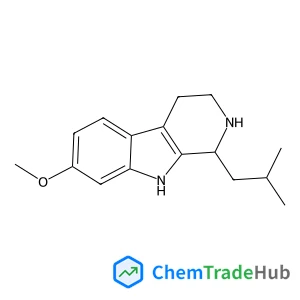
1-Isobutyl-7-methoxy-2,3,4,9-tetrahydro-1H-beta-carboline
CAS Number:
175975-76-5
Molecular Formula:
C16H22N2O
Recommended Suppliers





Disclaimer
This page provides academic journal information for reference and research purposes only. We are not affiliated with any journal publishers and do not handle publication submissions. For publication-related inquiries, please contact the respective journal publishers directly.
If you notice any inaccuracies in the information displayed, please contact us at support@chemtradehub.com. We will promptly review and address your concerns.