


![N-[(9H-Fluoren-9-ylmethoxy)carbonyl]serine structure](https://static.chemtradehub.com/structs/737/73724-45-5-b0dc.webp "N-[(9H-Fluoren-9-ylmethoxy)carbonyl]serine structure")
A designed bithiopheneimide-based conjugated polymer for organic photovoltaic with ultrafast charge transfer at donor/PC71BM interface: theoretical study and characterization
Literature Information
Publication Date
2014-09-03
DOI
10.1039/C4CP03022B
Impact Factor
3.676
Authors
Shuang-Bao Li, Yu-Ai Duan, Yun Geng, Hai-Bin Li, Jian-Zhao Zhang, Hong-Liang Xu, Min Zhang, Zhong-Min Su
View Original
Abstract
In the current work, a series of bithiopheneimide (BTI)-based D–A copolymers were investigated based on the reported PDTSBTI (1) to screen excellent molecules toward organic photovoltaic (OPV) donor materials. It is found that the PCE based on the proposed derivative 4, where the silicon atom is replaced with vinyl and cyano groups on the DTS unit, shows a 70 percent improvement by Scharber diagrams compared with its prototype 1. Then, the charge transfer dynamics of 1/PC71BM and 4/PC71BM were investigated, including the intermolecular charge transfer (inter-CT) and recombination (inter-CR) rates. The theoretical data demonstrate that the ratio kinter-CT/kinter-CR of 4/PC71BM heterojunction is about 1 × 10⁵ times higher than that of 1/PC71BM. These results clearly reveal that the designed donor molecule 4 will be a promising candidate for high-performance OPV device. We expect that this work from electron processing at the D/A interface may provide a theoretical guideline for further optimization and design of organic copolymer donor materials.
Recommended Journals

Critical Reviews in Solid State and Materials Sciences

NDT & E International

Biocatalysis and Biotransformation

Bioorganic & Medicinal Chemistry

Polycyclic Aromatic Compounds

Chinese Journal of Chemistry

Topics in Catalysis

Medicinal Chemistry Research

Acta Metallurgica Sinica-English Letters

Main Group Chemistry
Related Literature
Nanoassembly of biocompatible microcapsules for urease encapsulation and their use as biomimetic reactors
Aimin Yu, Ian Gentle, Gaoqing Lu, Frank Caruso
2006-04-13
Communication
DOI: 10.1039/B601490A
Metal complexes of selenophosphinates from reactions with (R2PSe)2Se: [M(R2PSe2)n] (M = ZnII, CdII, PbII, InIII, GaIII, CuI, BiIII, NiII; R = iPr, Ph) and [MoV2O2Se2(Se2PiPr2)2]
Chinh Q. Nguyen, Adekunle Adeogun, Mohammad Afzaal, Mohammad A. Malik, Paul O'Brien
2006-04-21
Communication
DOI: 10.1039/B603198F
Bergman cyclopolymerization within the channels of functional hybrid nanocomposites formed by co-assembly of silica and polymerizable surfactant monomer
Chetan Jagdish Bhongale, Chung-He Yang, Chain-Shu Hsu
2006-04-26
Communication
DOI: 10.1039/B603195A
Ferrimagnetic Mn2SnO4nanowires
Chan Woong Na, Doo Suk Han, Jeunghee Park, Younghun Jo, Myung-Hwa Jung
2006-04-25
Communication
DOI: 10.1039/B601404F
Rapid stereocontrolled assembly of the fully substituted C-aryl glycoside of kendomycin with a Prins cyclization: a formal synthesis
Kevin B. Bahnck, Scott D. Rychnovsky
2006-05-02
Communication
DOI: 10.1039/B602937J
Assembled bright green fluorescent zinc coordination polymer
Ruibiao Fu, Shengchang Xiang, Shengmin Hu, Longsheng Wang, Yaming Li, Xihe Huang, Xintao Wu
2005-09-22
Communication
DOI: 10.1039/B509695B
A new alternative to Stryker's reagent in hydrosilylation: synthesis, structure, and reactivity of a well-defined carbene–copper(ii) acetate complex
Jaesook Yun, Daesung Kim, Hoseop Yun
2005-09-22
Communication
DOI: 10.1039/B509964A
Enantioselective conjugate addition of phenylboronic acid to enones catalysed by a chiral tropos/atropos rhodium complex at the coalescence temperature
Chiara Monti, Cesare Gennari, Umberto Piarulli
2005-09-21
Communication
DOI: 10.1039/B508832A
High energy density materials from azido cyclophosphazenes
K. Muralidharan, Bamidele A. Omotowa, Brendan Twamley, Crystal Piekarski, Jean′ne M. Shreeve
2005-09-20
Communication
DOI: 10.1039/B510924H
You might also like
Compound Q&A
What are the main uses of 1H-Indazole-6-carbonitrile (CAS: 141290-59-7)?
1H-Indazole-6-carbonitrile finds applications in pharmaceuticals, where it serve...
141290-59-71H-Indazole-6-carbon...
Compound Q&A
How should waste containing Dioctyl (2E)-2-butenedioate (CAS: 2997-85-5) be handled?
Waste containing Dioctyl (2E)-2-butenedioate (CAS: 2997-85-5) should be collecte...
2997-85-5Dioctyl (2E)-2-buten...
Compound Q&A
What industries use Sodium [(1,2-benzoxazol-3-ylmethyl)sulfonyl]azanide (CAS: 68291-98-5)?
Sodium [(1,2-benzoxazol-3-ylmethyl)sulfonyl]azanide is primarily used in pharmac...
68291-98-5Sodium [(1,2-benzoxa...
Compound Q&A
Are there alternatives to Dimethyl 4-(4,4,5,5-tetramethyl-1,3,2-dioxaborolan-2-yl)-2,6-pyridinedicarboxylate (CAS: 741709-66-0) in synthesis?
Dimethyl 4-(4,4,5,5-tetramethyl-1,3,2-dioxaborolan-2-yl)-2,6-pyridinedicarboxyla...
741709-66-0Dimethyl 4-(4,4,5,5-...
Compound Q&A
How should waste containing 2-Fluoro-6-hydrazinopyridine (CAS: 80714-39-2) be handled?
Waste containing 2-Fluoro-6-hydrazinopyridine (CAS: 80714-39-2) should be manage...
80714-39-22-Fluoro-6-hydrazino...
Compound Q&A
What is 6-Formyl-2-pyridinecarboxylic acid (CAS: 499214-11-8)?
6-Formyl-2-pyridinecarboxylic acid is an organic compound with the molecular for...
499214-11-86-Formyl-2-pyridinec...
Compound Q&A
What is the market or research trend for 3-(3,4-dimethoxyphenyl)-2,5-dimethyl-N-(2-morpholin-4-ylethyl)pyrazolo[1,5-a]pyrimidin-7-amine (CAS: 900874-91-1)?
Research trends for this compound indicate a focus on its potential applications...
900874-91-13-(3,4-dimethoxyphen...
Compound Q&A
How is 9H-Tribenzo[b,d,f]azepine (CAS: 29875-73-8) typically synthesized?
9H-Tribenzo[b,d,f]azepine is typically synthesized via a multi-step process invo...
29875-73-89H-Tribenzo[b,d,f]az...
Compound Q&A
How is 1-Cyclopropyl-7-ethoxy-6-fluoro-8-methoxy-4-oxo-1,4-dihydro-3-quinolinecarboxylic acid (CAS: 1797982-51-4) typically synthesized?
1-Cyclopropyl-7-ethoxy-6-fluoro-8-methoxy-4-oxo-1,4-dihydro-3-quinolinecarboxyli...
1797982-51-41-Cyclopropyl-7-etho...
Compound Q&A
How should waste containing Methyl 3-oxo-1,2,3,4-tetrahydro-6-quinoxalinecarboxylate (CAS: 671820-52-3) be handled?
Waste containing Methyl 3-oxo-1,2,3,4-tetrahydro-6-quinoxalinecarboxylate (CAS: ...
671820-52-3Methyl 3-oxo-1,2,3,4...
Source Journal
Physical Chemistry Chemical Physics

CiteScore:
5.5
Self-citation Rate:
10.3%
Articles per Year:
3036
Physical Chemistry Chemical Physics (PCCP) is an international journal co-owned by 19 physical chemistry and physics societies from around the world. This journal publishes original, cutting-edge research in physical chemistry, chemical physics and biophysical chemistry. To be suitable for publication in PCCP, articles must include significant innovation and/or insight into physical chemistry; this is the most important criterion that reviewers and Editors will judge against when evaluating submissions. The journal has a broad scope and welcomes contributions spanning experiment, theory, computation and data science. Topical coverage includes spectroscopy, dynamics, kinetics, statistical mechanics, thermodynamics, electrochemistry, catalysis, surface science, quantum mechanics, quantum computing and machine learning. Interdisciplinary research areas such as polymers and soft matter, materials, nanoscience, energy, surfaces/interfaces, and biophysical chemistry are welcomed if they demonstrate significant innovation and/or insight into physical chemistry. Joined experimental/theoretical studies are particularly appreciated when complementary and based on up-to-date approaches.
Recommended Compounds

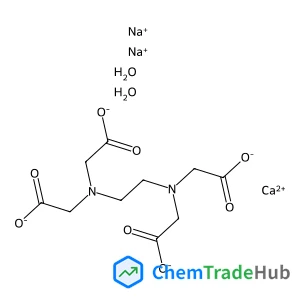
EthylenediaminetetraaceticacidcalciumDisodiumsalthydrate
CAS Number:
23411-34-9
Molecular Formula:
C10H16CaN2Na2O10

Recommended Suppliers






Disclaimer
This page provides academic journal information for reference and research purposes only. We are not affiliated with any journal publishers and do not handle publication submissions. For publication-related inquiries, please contact the respective journal publishers directly.
If you notice any inaccuracies in the information displayed, please contact us at support@chemtradehub.com. We will promptly review and address your concerns.