












Enantioselective conjugate addition of phenylboronic acid to enones catalysed by a chiral tropos/atropos rhodium complex at the coalescence temperature
Literature Information
Publication Date
2005-09-21
DOI
10.1039/B508832A
Impact Factor
6.222
Authors
Chiara Monti, Cesare Gennari, Umberto Piarulli
View Original
Abstract
A highly enantioselective rhodium-catalysed conjugate addition of phenylboronic acid to cyclic enones has been achieved using a dynamic library of chiral phosphorus ligands; the tropos/atropos nature of the ligands in the rhodium complex has been characterised via31P-NMR.
Related Literature
Oxygen transport and surface exchange mechanisms in LSCrF–ScCeSZ dual-phase ceramics
Zonghao Shen, Stephen J. Skinner, John A. Kilner
2019-05-24
Paper
DOI: 10.1039/C9CP02175B
Cation diffusion patterns across the magneto-structural transition in Fe7S8
Peter G. Weidler, Michalis Charilaou, Jörg F. Löffler, Andreas U. Gehring
2019-05-30
Paper
DOI: 10.1039/C9CP01387C
Equations of the state of hard sphere fluids based on recent accurate virial coefficients B5–B12
Hua Jiang, A. Mulero
2019-05-20
Paper
DOI: 10.1039/C9CP02116G
Dynamical fluxionality, multiplicity of structural forms, and electronic properties of the B3Si11 cluster: anion photoelectron spectroscopy and theoretical calculations
Sheng-Jie Lu, Li-Shun Wu, Bao-Hua Yin, Feng Lin, Ming-Yong Chao
2019-05-10
Paper
DOI: 10.1039/C9CP01752F
Critical fracture properties of puckered and buckled arsenenes by molecular dynamics simulations
Bo Yang, Maodong Li, Jiye Wang, Jingchao Zhang, Dongmei Liao, Yanan Yue
2019-05-14
Paper
DOI: 10.1039/C9CP01605H
Structures and dynamic properties of the LiPF6 electrolytic solution under electric fields – a theoretical study
Man Liu, Peter J. Chimtali, Xue-bin Huang, Ru-bo Zhang
2019-05-23
Paper
DOI: 10.1039/C9CP00561G
Single Pt atom supported on penta-graphene as an efficient catalyst for CO oxidation
Ranganathan Krishnan, Shiuan-Yau Wu, Hsin-Tsung Chen
2019-05-20
Paper
DOI: 10.1039/C9CP02306B
On-surface synthesis of 2D COFs on Cu(111) via the formation of thermodynamically stable organometallic networks as the template
Cheng-Xin Wang, Jian-Le Chen, Chen-Hui Shu, Ke-Ji Shi, Pei-Nian Liu
2019-05-31
Paper
DOI: 10.1039/C9CP01843C
Role of the hydrogen bond lifetimes and rotations at the water/amorphous silica interface on proton transport
Jesse Lentz, Stephen H. Garofalini
2019-05-23
Paper
DOI: 10.1039/C9CP01994D
You might also like
Compound Q&A
What are the main uses of 1H-Indazole-6-carbonitrile (CAS: 141290-59-7)?
1H-Indazole-6-carbonitrile finds applications in pharmaceuticals, where it serve...
141290-59-71H-Indazole-6-carbon...
Compound Q&A
How should waste containing Dioctyl (2E)-2-butenedioate (CAS: 2997-85-5) be handled?
Waste containing Dioctyl (2E)-2-butenedioate (CAS: 2997-85-5) should be collecte...
2997-85-5Dioctyl (2E)-2-buten...
Compound Q&A
What industries use Sodium [(1,2-benzoxazol-3-ylmethyl)sulfonyl]azanide (CAS: 68291-98-5)?
Sodium [(1,2-benzoxazol-3-ylmethyl)sulfonyl]azanide is primarily used in pharmac...
68291-98-5Sodium [(1,2-benzoxa...
Compound Q&A
Are there alternatives to Dimethyl 4-(4,4,5,5-tetramethyl-1,3,2-dioxaborolan-2-yl)-2,6-pyridinedicarboxylate (CAS: 741709-66-0) in synthesis?
Dimethyl 4-(4,4,5,5-tetramethyl-1,3,2-dioxaborolan-2-yl)-2,6-pyridinedicarboxyla...
741709-66-0Dimethyl 4-(4,4,5,5-...
Compound Q&A
How should waste containing 2-Fluoro-6-hydrazinopyridine (CAS: 80714-39-2) be handled?
Waste containing 2-Fluoro-6-hydrazinopyridine (CAS: 80714-39-2) should be manage...
80714-39-22-Fluoro-6-hydrazino...
Compound Q&A
What is 6-Formyl-2-pyridinecarboxylic acid (CAS: 499214-11-8)?
6-Formyl-2-pyridinecarboxylic acid is an organic compound with the molecular for...
499214-11-86-Formyl-2-pyridinec...
Compound Q&A
What is the market or research trend for 3-(3,4-dimethoxyphenyl)-2,5-dimethyl-N-(2-morpholin-4-ylethyl)pyrazolo[1,5-a]pyrimidin-7-amine (CAS: 900874-91-1)?
Research trends for this compound indicate a focus on its potential applications...
900874-91-13-(3,4-dimethoxyphen...
Compound Q&A
How is 9H-Tribenzo[b,d,f]azepine (CAS: 29875-73-8) typically synthesized?
9H-Tribenzo[b,d,f]azepine is typically synthesized via a multi-step process invo...
29875-73-89H-Tribenzo[b,d,f]az...
Compound Q&A
How is 1-Cyclopropyl-7-ethoxy-6-fluoro-8-methoxy-4-oxo-1,4-dihydro-3-quinolinecarboxylic acid (CAS: 1797982-51-4) typically synthesized?
1-Cyclopropyl-7-ethoxy-6-fluoro-8-methoxy-4-oxo-1,4-dihydro-3-quinolinecarboxyli...
1797982-51-41-Cyclopropyl-7-etho...
Compound Q&A
How should waste containing Methyl 3-oxo-1,2,3,4-tetrahydro-6-quinoxalinecarboxylate (CAS: 671820-52-3) be handled?
Waste containing Methyl 3-oxo-1,2,3,4-tetrahydro-6-quinoxalinecarboxylate (CAS: ...
671820-52-3Methyl 3-oxo-1,2,3,4...
Source Journal
Chemical Communications

CiteScore:
8.6
Self-citation Rate:
4.7%
Articles per Year:
2458
ChemComm publishes urgent research which is of outstanding significance and interest to experts in the field, while also appealing to the journal’s broad chemistry readership. Our communication format is ideally suited to short, urgent studies that are of such importance that they require accelerated publication. Our scope covers all topics in chemistry, and research at the interface of chemistry and other disciplines (such as materials science, nanoscience, physics, engineering and biology) where there is a significant novelty in the chemistry aspects. Major topic areas covered include: Analytical Chemistry Catalysis Chemical Biology and medicinal chemistry Computational Chemistry and Machine Learning Energy and sustainable chemistry Environmental Chemistry Green Chemistry Inorganic Chemistry Materials Chemistry Nanoscience Organic Chemistry Physical Chemistry Polymer Chemistry Supramolecular Chemistry
Recommended Compounds
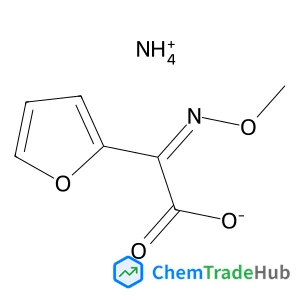
Ammonium (Z)-2-(furan-2-yl)-2-(methoxyimino)acetate
CAS Number:
97148-39-5
Molecular Formula:
C7H10N2O4
Recommended Suppliers




Disclaimer
This page provides academic journal information for reference and research purposes only. We are not affiliated with any journal publishers and do not handle publication submissions. For publication-related inquiries, please contact the respective journal publishers directly.
If you notice any inaccuracies in the information displayed, please contact us at support@chemtradehub.com. We will promptly review and address your concerns.