












Ab initio metadynamics study on hydronium ion dynamics at acid-functionalized interfaces: effect of surface group density
Literature Information
Publication Date
2014-09-29
DOI
10.1039/C4CP02937B
Impact Factor
3.676
Authors
Swati Vartak, Anatoly Golovnev, Ata Roudgar, Michael Eikerling
View Original
Abstract
This article presents an ab initio metadynamics study of elementary hydronium ion transitions at dense arrays of surface groups with sulfonic acid head groups. Calculations simulate minimally hydrated conditions of the interfacial ionic system. The specific focus is on the influence of the surface group density on hydronium ion transport. Results reveal a high sensitivity of the activation free energy of hydronium translocations to the surface group density. A spontaneous concerted transition with low activation barrier is found at a surface group separation of 6.8 Å. When hydroniums translocate concertedly, the activation barrier of the transition drops by more than a factor of two to the value of 0.25 eV. An approach is presented to determine interaction constants of hydronium ions and anionic surface groups as well as the surface group flexibility from the analysis of frequency spectra. These properties are discussed in the context of a recently developed soliton theory of interfacial proton transport.
Related Literature
Hierarchical self-assembly in polymeric complexes: Towards functional materials
Olli Ikkala, Gerrit ten Brinke
2004-09-16
Feature Article
DOI: 10.1039/B403983A
Facile deposition of copper-doped diamond-like carbon nanocomposite films by a liquid-phase electrochemical route
Heqing Jiang, Lina Huang, Zhijun Zhang, Tao Xu, Weimin Liu
2004-08-19
Communication
DOI: 10.1039/B408497G
Secondary coordination sphere controlled reversible geometry reorganisations in copper(ii) complexes
John Fielden, De-Liang Long, Leroy Cronin
2004-08-20
Communication
DOI: 10.1039/B407229D
An unprecedented intramolecular coupling of o-carboranyl and cyclopentadienyl. Synthesis and structural characterization of a ruthenium complex containing a novel doubly-bridged cyclopentadienyl-carboranyl ligand
Yi Sun, Hoi-Shan Chan, Pierre H. Dixneuf, Zuowei Xie
2004-09-30
Communication
DOI: 10.1039/B409772F
A robust, porous, cationic silver(i) 3,5-diphenyl-1,2,4-triazolate framework with a uninodal 49.66 net
Guang Yang, Raphael G. Raptis
2004-08-13
Communication
DOI: 10.1039/B404269G
Bundles of identical double-walled carbon nanotubes
J.-F. Colomer, L. Henrard, P. Launois, G. Van Tendeloo, A. A. Lucas, Ph. Lambin
2004-09-30
Communication
DOI: 10.1039/B410930A
A new packing motif for para-sulfonatocalix[4]arene: the solid state structure of the para-sulfonatocalix[4]arene d-arginine complex
Adina Lazar, Eric Da Silva, Alda Navaza, Carole Barbey, Anthony W. Coleman
2004-08-20
Communication
DOI: 10.1039/B408863H
Structurally diverse Rh(i) and Mn(i) complexes derived from the new ambidentate indeneligand, (1-{iPr2P(S)}-2-{NMe2})C9H6
Dominik Wechsler, Robert McDonald, Michael J. Ferguson, Mark Stradiotto
2004-09-21
Communication
DOI: 10.1039/B410328A
First lanthanide dipolar complexes for second-order nonlinear optics
Katell Sénéchal, Loïc Toupet, Isabelle Ledoux, Joseph Zyss, Hubert Le Bozec, Olivier Maury
2004-09-08
Communication
DOI: 10.1039/B407073A
Assembly of large simple 1D and rare polycatenated 3D molecular ladders from T-shaped building blocks containing a new, long N,N′-bidentate ligand
Cheng-Yong Su, Andrea M. Goforth, Mark D. Smith, Hans-Conrad zur Loye
2004-08-20
Communication
DOI: 10.1039/B406126H
You might also like
Compound Q&A
How should waste containing 6-Chloro-5-(2'-hydroxy-3'-methoxy-4-biphenylyl)-3-(3-methoxyphenyl)-1H-pyrrolo[3,2-d]pyrimidine-2,4(3H,5H)-dione (CAS: 1346607-05-3) be handled?
Waste containing 6-Chloro-5-(2'-hydroxy-3'-methoxy-4-biphenylyl)-3-(3-methoxyphe...
1346607-05-36-Chloro-5-(2'-hydro...
Compound Q&A
What are the main uses of (3alpha,5alpha)-3-Hydroxypregnane-11,20-dione (CAS: 23930-19-0)?
(3alpha,5alpha)-3-Hydroxypregnane-11,20-dione is primarily used in the pharmaceu...
23930-19-0(3alpha,5alpha)-3-Hy...
Compound Q&A
What is the market or research trend for 4-Amino-6-chloro-2-pyridinecarboxylic acid (CAS: 546141-56-4)?
The market for 4-Amino-6-chloro-2-pyridinecarboxylic acid (CAS: 546141-56-4) is ...
546141-56-44-Amino-6-chloro-2-p...
Compound Q&A
Are there alternatives to (2-Benzoylethyl)trimethylammonium chloride (CAS: 24472-88-6) in synthesis?
Alternatives to (2-Benzoylethyl)trimethylammonium chloride (CAS: 24472-88-6) in ...
24472-88-6(2-Benzoylethyl)trim...
Compound Q&A
Is N-[4-Nitro-3-(trifluoromethyl)phenyl]acetamide (CAS: 393-12-4) safe?
N-[4-Nitro-3-(trifluoromethyl)phenyl]acetamide (CAS: 393-12-4) is generally safe...
393-12-4N-[4-Nitro-3-(triflu...
Compound Q&A
Are there alternatives to [(4R,5R,6S)-5-hydroxy-10-imino-3,7-dioxa-1,9-diazatricyclo[6.4.0.02,6]dodeca-8,11-dien-4-yl]methyl dihydrogen phosphate (CAS: 39679-56-6) in synthesis?
Alternative reagents such as other phosphates or similar functional groups can b...
39679-56-6[(4R,5R,6S)-5-hydrox...
Compound Q&A
Are there alternatives to N,N'-Bis(3-aminopropyl)-1,3-propanediamine (CAS: 4605-14-5) in synthesis?
There are alternatives to N,N'-Bis(3-aminopropyl)-1,3-propanediamine (CAS: 4605-...
4605-14-5N,N'-Bis(3-aminoprop...
Compound Q&A
What precautions should be taken when handling Aluminium trihexadecanoate (CAS: 555-35-1)?
When handling Aluminium trihexadecanoate, it is important to use appropriate per...
555-35-1Aluminium trihexadec...
Compound Q&A
What is (1,1-Dioxido-3-oxo-1,2-benzothiazol-2(3H)-yl)acetic acid (CAS: 52188-11-1)?
(1,1-Dioxido-3-oxo-1,2-benzothiazol-2(3H)-yl)acetic acid is a chemical compound ...
52188-11-1(1,1-Dioxido-3-oxo-1...
Compound Q&A
Are there alternatives to 5,5-dimethyloxolan-2-one (CAS: 3123-97-5) in synthesis?
Several alternatives to 5,5-dimethyloxolan-2-one (CAS: 3123-97-5) can be used in...
3123-97-55,5-dimethyloxolan-2...
Source Journal
Physical Chemistry Chemical Physics

CiteScore:
5.5
Self-citation Rate:
10.3%
Articles per Year:
3036
Physical Chemistry Chemical Physics (PCCP) is an international journal co-owned by 19 physical chemistry and physics societies from around the world. This journal publishes original, cutting-edge research in physical chemistry, chemical physics and biophysical chemistry. To be suitable for publication in PCCP, articles must include significant innovation and/or insight into physical chemistry; this is the most important criterion that reviewers and Editors will judge against when evaluating submissions. The journal has a broad scope and welcomes contributions spanning experiment, theory, computation and data science. Topical coverage includes spectroscopy, dynamics, kinetics, statistical mechanics, thermodynamics, electrochemistry, catalysis, surface science, quantum mechanics, quantum computing and machine learning. Interdisciplinary research areas such as polymers and soft matter, materials, nanoscience, energy, surfaces/interfaces, and biophysical chemistry are welcomed if they demonstrate significant innovation and/or insight into physical chemistry. Joined experimental/theoretical studies are particularly appreciated when complementary and based on up-to-date approaches.
Recommended Compounds
![N-{[(2-Methyl-2-propanyl)oxy]carbonyl}-L-methionylglycine structure](https://static.chemtradehub.com/structs/234/23446-03-9-e1e5.webp "N-{[(2-Methyl-2-propanyl)oxy]carbonyl}-L-methionylglycine structure")
N-{[(2-Methyl-2-propanyl)oxy]carbonyl}-L-methionylglycine
CAS Number:
23446-03-9
Molecular Formula:
C12H22N2O5S
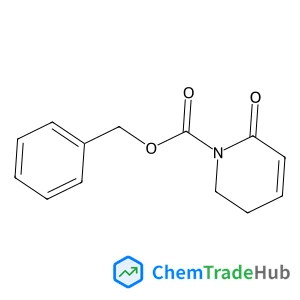
Benzyl 6-oxo-3,6-dihydro-1(2H)-pyridinecarboxylate
CAS Number:
725746-35-0
Molecular Formula:
C13H13NO3
Recommended Suppliers





Disclaimer
This page provides academic journal information for reference and research purposes only. We are not affiliated with any journal publishers and do not handle publication submissions. For publication-related inquiries, please contact the respective journal publishers directly.
If you notice any inaccuracies in the information displayed, please contact us at support@chemtradehub.com. We will promptly review and address your concerns.