












Platinum–hydrogen vibrations and low energy electronic excitations of 13-atom Pt nanoclusters
Literature Information
Publication Date
2014-08-28
DOI
10.1039/C4CP02052A
Impact Factor
3.676
Authors
Melanie Keppeler
View Original
Abstract
Two Pt−H vibrational bands at 1679 cm−1 and 1392 cm−1 observed with 13-atom Pt clusters supported in LTL zeolite by Fourier Transform Infrared (FTIR) spectroscopy confirms that H atoms bridge two Pt atoms across the edges of the metal cluster. An additional broad absorption band centred near 2200 cm−1 which exhibits some substructure is assigned to low energy electronic excitations across the HOMO–LUMO gap of the developing band structure of the nanocluster.
Related Literature
Selective functionalization of imidazolesvia an iodine–copper exchange reaction
Xiaoyin Yang, Paul Knochel
2006-04-20
Communication
DOI: 10.1039/B603419E
Simple transformation of crystalline chiral natural anions to liquid medium and their use to induce chirality
Luís C. Branco, Pedro M. P. Gois, Nuno M. T. Lourenço, Vanya B. Kurteva, Carlos A. M. Afonso
2006-05-10
Communication
DOI: 10.1039/B600816J
Well-controlled reversible addition–fragmentation chain transfer radical polymerisation under ultraviolet radiation at ambient temperature
Lican Lu, Nianfa Yang, Yuanli Cai
2005-10-10
Communication
DOI: 10.1039/B512057H
Cyclopolymerization of dimethyl dipropargylmalonate in supercritical carbon dioxide to give a highly regular polyene containing predominantly five-membered rings
Ji Won Pack, Young-Jae Hur, Hwayong Kim, Youn-Woo Lee
2005-09-21
Communication
DOI: 10.1039/B510046A
Hemiaminals as substrates for sulfur ylides: Direct asymmetric syntheses of functionalised pyrrolidines and piperidines
Christoforos G. Kokotos, Varinder K. Aggarwal
2006-04-13
Communication
DOI: 10.1039/B602226J
Achiral benzophenoneligand–rhodium complex with chiral diamine activator for high enantiocontrol in asymmetric transfer hydrogenation
Koichi Mikami, Kazuki Wakabayashi, Yukinori Yusa, Kohsuke Aikawa
2006-05-03
Communication
DOI: 10.1039/B517585B
Fluorescence based strategies for genetic analysis
Rohan T. Ranasinghe, Tom Brown
2005-09-30
Feature Article
DOI: 10.1039/B509522K
Smart amphiphiles: hydro/organogelators for in situreduction of gold
Praveen Kumar Vemula, George John
2006-02-23
Communication
DOI: 10.1039/B518289A
You might also like
Compound Q&A
What are the main uses of 1H-Indazole-6-carbonitrile (CAS: 141290-59-7)?
1H-Indazole-6-carbonitrile finds applications in pharmaceuticals, where it serve...
141290-59-71H-Indazole-6-carbon...
Compound Q&A
How should waste containing Dioctyl (2E)-2-butenedioate (CAS: 2997-85-5) be handled?
Waste containing Dioctyl (2E)-2-butenedioate (CAS: 2997-85-5) should be collecte...
2997-85-5Dioctyl (2E)-2-buten...
Compound Q&A
What industries use Sodium [(1,2-benzoxazol-3-ylmethyl)sulfonyl]azanide (CAS: 68291-98-5)?
Sodium [(1,2-benzoxazol-3-ylmethyl)sulfonyl]azanide is primarily used in pharmac...
68291-98-5Sodium [(1,2-benzoxa...
Compound Q&A
Are there alternatives to Dimethyl 4-(4,4,5,5-tetramethyl-1,3,2-dioxaborolan-2-yl)-2,6-pyridinedicarboxylate (CAS: 741709-66-0) in synthesis?
Dimethyl 4-(4,4,5,5-tetramethyl-1,3,2-dioxaborolan-2-yl)-2,6-pyridinedicarboxyla...
741709-66-0Dimethyl 4-(4,4,5,5-...
Compound Q&A
How should waste containing 2-Fluoro-6-hydrazinopyridine (CAS: 80714-39-2) be handled?
Waste containing 2-Fluoro-6-hydrazinopyridine (CAS: 80714-39-2) should be manage...
80714-39-22-Fluoro-6-hydrazino...
Compound Q&A
What is 6-Formyl-2-pyridinecarboxylic acid (CAS: 499214-11-8)?
6-Formyl-2-pyridinecarboxylic acid is an organic compound with the molecular for...
499214-11-86-Formyl-2-pyridinec...
Compound Q&A
What is the market or research trend for 3-(3,4-dimethoxyphenyl)-2,5-dimethyl-N-(2-morpholin-4-ylethyl)pyrazolo[1,5-a]pyrimidin-7-amine (CAS: 900874-91-1)?
Research trends for this compound indicate a focus on its potential applications...
900874-91-13-(3,4-dimethoxyphen...
Compound Q&A
How is 9H-Tribenzo[b,d,f]azepine (CAS: 29875-73-8) typically synthesized?
9H-Tribenzo[b,d,f]azepine is typically synthesized via a multi-step process invo...
29875-73-89H-Tribenzo[b,d,f]az...
Compound Q&A
How is 1-Cyclopropyl-7-ethoxy-6-fluoro-8-methoxy-4-oxo-1,4-dihydro-3-quinolinecarboxylic acid (CAS: 1797982-51-4) typically synthesized?
1-Cyclopropyl-7-ethoxy-6-fluoro-8-methoxy-4-oxo-1,4-dihydro-3-quinolinecarboxyli...
1797982-51-41-Cyclopropyl-7-etho...
Compound Q&A
How should waste containing Methyl 3-oxo-1,2,3,4-tetrahydro-6-quinoxalinecarboxylate (CAS: 671820-52-3) be handled?
Waste containing Methyl 3-oxo-1,2,3,4-tetrahydro-6-quinoxalinecarboxylate (CAS: ...
671820-52-3Methyl 3-oxo-1,2,3,4...
Source Journal
Physical Chemistry Chemical Physics

CiteScore:
5.5
Self-citation Rate:
10.3%
Articles per Year:
3036
Physical Chemistry Chemical Physics (PCCP) is an international journal co-owned by 19 physical chemistry and physics societies from around the world. This journal publishes original, cutting-edge research in physical chemistry, chemical physics and biophysical chemistry. To be suitable for publication in PCCP, articles must include significant innovation and/or insight into physical chemistry; this is the most important criterion that reviewers and Editors will judge against when evaluating submissions. The journal has a broad scope and welcomes contributions spanning experiment, theory, computation and data science. Topical coverage includes spectroscopy, dynamics, kinetics, statistical mechanics, thermodynamics, electrochemistry, catalysis, surface science, quantum mechanics, quantum computing and machine learning. Interdisciplinary research areas such as polymers and soft matter, materials, nanoscience, energy, surfaces/interfaces, and biophysical chemistry are welcomed if they demonstrate significant innovation and/or insight into physical chemistry. Joined experimental/theoretical studies are particularly appreciated when complementary and based on up-to-date approaches.
Recommended Compounds

![(1S)-1,5-Anhydro-1-[3-(1-benzothiophen-2-ylmethyl)-4-fluorophenyl]-D-glucitol structure](https://static.chemtradehub.com/structs/761/761423-87-4-dbeb.webp "(1S)-1,5-Anhydro-1-[3-(1-benzothiophen-2-ylmethyl)-4-fluorophenyl]-D-glucitol structure")
(1S)-1,5-Anhydro-1-[3-(1-benzothiophen-2-ylmethyl)-4-fluorophenyl]-D-glucitol
CAS Number:
761423-87-4
Molecular Formula:
C21H21FO5S
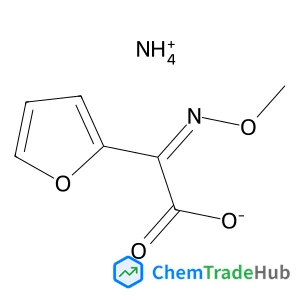
Ammonium (Z)-2-(furan-2-yl)-2-(methoxyimino)acetate
CAS Number:
97148-39-5
Molecular Formula:
C7H10N2O4
Recommended Suppliers






Disclaimer
This page provides academic journal information for reference and research purposes only. We are not affiliated with any journal publishers and do not handle publication submissions. For publication-related inquiries, please contact the respective journal publishers directly.
If you notice any inaccuracies in the information displayed, please contact us at support@chemtradehub.com. We will promptly review and address your concerns.