











FTO-free counter electrodes for dye-sensitized solar cells using carbon nanosheets synthesised from a polymeric carbon source
Literature Information
Publication Date
2014-06-25
DOI
10.1039/C4CP01913J
Impact Factor
3.676
Authors
Zico Alaia Akbar, Jinhyeon Kang, Han-Ik Joh, Sung-Yeon Jang
View Original
Abstract
Highly conductive carbon nanosheets (CNSs) are fabricated using a polymeric carbon source and subsequently applied as the counter electrodes (CNS-CEs) for dye-sensitized solar cells (DSSCs). The CNSs have a similar structure to multilayered graphene, and their high electrical conductivity and electrocatalytic activity enable them to have a dual-function as both CEs and charge supporting electrodes. CNSs form a unique CE material that functions successfully while being metal- and fluorine doped tin oxide (FTO)-free and allowing DSSCs to achieve ∼5% power conversion efficiency. The chemical structure, electrical properties, electrocatalytic activity, and work function of the CNS-CEs prepared under various conditions of carbonization are investigated, and their effects on the performance of the corresponding DSSCs are discussed. Carbonization temperature is shown to have influenced the size of graphitic domains and the presence of heteroatoms and functional groups in CNS-CEs. The change in the graphitic domain size has a marginal influence on the work function of the CNS-CEs and the overpotential for the reduction of the redox couples (I−/I3−). However, the electrical conductivity of CNS-CEs and the charge transfer resistance at CE/electrolyte interfaces in the DSSCs are considerably influenced by the carbonization condition. Our study shows that CNSs serve as efficient, FTO-free CE materials for DSSCs, and they are appropriate materials with which the effects of the chemical/physical properties of graphene-based materials on the electrode performance of various electrochemical devices may be studied.
Related Literature
Exotic species with explicit noble metal–noble gas–noble metal linkages
Norberto Moreno, Albeiro Restrepo, C. Z. Hadad
2018-01-18
Paper
DOI: 10.1039/C7CP08085A
H-Abstraction reactions by OH, HO2, O, O2 and benzyl radical addition to O2 and their implications for kinetic modelling of toluene oxidation
M. Pelucchi, C. Cavallotti, T. Faravelli, S. J. Klippenstein
2018-01-25
Paper
DOI: 10.1039/C7CP07779C
Understanding the hydrogen transfer mechanism for the biodegradation of 2,4,6-trinitrotoluene catalyzed by pentaerythritol tetranitrate reductase: molecular dynamics simulations
Zhilin Yang, Yang Zhou, Hui Huang, Dingguo Xu, Chaoyang Zhang
2018-04-06
Paper
DOI: 10.1039/C8CP00345A
Dynamical modes of two almost identical chemical oscillators connected via both pulsatile and diffusive coupling
2018-04-03
Paper
DOI: 10.1039/C7CP08032H
Electron-stimulated reactions in nanoscale water films adsorbed on α-Al2O3(0001)
Nikolay G. Petrik, Greg A. Kimmel
2018-04-11
Paper
DOI: 10.1039/C8CP01284A
Ultrafast stimulated emission of nitrophenolates in organic and aqueous solutions
N. C. Michenfelder, H. A. Ernst, C. Schweigert, M. Olzmann, A.-N. Unterreiner
2018-01-10
Paper
DOI: 10.1039/C7CP07774B
Conformationally-restricted bicarbazoles with phenylene bridges displaying deep-blue emission and high triplet energies: systematic structure–property relationships
Andrei S. Batsanov, Andrew P. Monkman, Martin R. Bryce
2018-04-17
Paper
DOI: 10.1039/C8CP01636D
How changes in interfacial pH lead to new voltammetric features: the case of the electrochemical oxidation of hydrazine
Antony Cyril Arulrajan, Christophe Renault, Stanley C. S. Lai
2018-04-06
Paper
DOI: 10.1039/C8CP01835A
Vibrational spectroscopy of hydrogens in diamond: a quantum mechanical treatment
Francesco Silvio Gentile, Simone Salustro, Anna Maria Ferrari, Philippe D'Arco, Roberto Dovesi
2018-04-04
Paper
DOI: 10.1039/C8CP00596F
Ab initio calculations and kinetic modeling of thermal conversion of methyl chloride: implications for gasification of biomass
Morten Lund Rasmussen, Hamid Hashemi, Hao Wu, Peter Glarborg, Matteo Pelucchi, Tiziano Faravelli, Paul Marshall
2018-01-18
Paper
DOI: 10.1039/C7CP07552A
You might also like
Compound Q&A
What are the main uses of 1-(3-Aminophenyl)-3-[(3R)-1-(3,3-dimethyl-2-oxobutyl)-2-oxo-5-(2-pyridinyl)-2,3-dihydro-1H-1,4-benzodiazepin-3-yl]urea (CAS: 155412-88-7)?
This compound is mainly used as an intermediate in the synthesis of antipsychoti...
155412-88-71-(3-Aminophenyl)-3-...
Compound Q&A
How should waste containing 1-(D-Ribofuranosyl)-1,4-dihydro-3-pyridinecarboxamide (CAS: 19132-12-8) be handled?
Waste containing 1-(D-Ribofuranosyl)-1,4-dihydro-3-pyridinecarboxamide (CAS: 191...
19132-12-81-(D-Ribofuranosyl)-...
Compound Q&A
What regulatory guidelines apply to 2-Methyl-2-propanyl 3-bromo-3-(hydroxymethyl)-1-azetidinecarboxylate (CAS: 2007919-81-3)?
2-Methyl-2-propanyl 3-bromo-3-(hydroxymethyl)-1-azetidinecarboxylate (CAS: 20079...
2007919-81-32-Methyl-2-propanyl ...
Compound Q&A
What is N-(4-Chloro-2-pyridinyl)acetamide (CAS: 245056-66-0)?
N-(4-Chloro-2-pyridinyl)acetamide (CAS: 245056-66-0) is a chemical compound with...
245056-66-0N-(4-Chloro-2-pyridi...
Compound Q&A
What is 5-Chloro-2-hydroxybenzoic acid (CAS: 321-14-2)?
5-Chloro-2-hydroxybenzoic acid, also known as 5-chlorosalicylic acid, is an arom...
321-14-25-Chloro-2-hydroxybe...
Compound Q&A
What precautions should be taken when handling 1,1-Dichloro-1-fluoroethane (CAS: 1717-00-6)?
When handling 1,1-Dichloro-1-fluoroethane (CAS: 1717-00-6), it is important to u...
1717-00-61,1-Dichloro-1-fluor...
Compound Q&A
What are the physical and chemical properties of Fmoc-(2S,3R)-3-phenylpyrrolidine-2-carboxylic acid (CAS: 281655-32-1)?
Fmoc-(2S,3R)-3-phenylpyrrolidine-2-carboxylic acid is a white crystalline solid ...
281655-32-1Fmoc-(2S,3R)-3-pheny...
Compound Q&A
What are the main uses of 4-Amino-5-bromo-2-pyridinecarboxylic acid (CAS: 1363381-01-4)?
4-Amino-5-bromo-2-pyridinecarboxylic acid is primarily used as a precursor in th...
1363381-01-44-Amino-5-bromo-2-py...
Compound Q&A
What precautions should be taken when handling (S)-tert-butyl 2-((2-(4-bromophenyl)-2-oxoethyl)carbamoyl)pyrrolidine-1-carboxylate (CAS: 1007881-98-2)?
Handling this compound should be done with personal protective equipment (PPE) i...
1007881-98-2(S)-tert-butyl 2-((2...
Compound Q&A
What precautions should be taken when handling 8-bromo-2,2-dimethyl-3,4-dihydro-2H-1,4-benzoxazin-3-one (CAS: 688363-73-7)?
When handling 8-bromo-2,2-dimethyl-3,4-dihydro-2H-1,4-benzoxazin-3-one, use prop...
688363-73-78-bromo-2,2-dimethyl...
Source Journal
Physical Chemistry Chemical Physics

CiteScore:
5.5
Self-citation Rate:
10.3%
Articles per Year:
3036
Physical Chemistry Chemical Physics (PCCP) is an international journal co-owned by 19 physical chemistry and physics societies from around the world. This journal publishes original, cutting-edge research in physical chemistry, chemical physics and biophysical chemistry. To be suitable for publication in PCCP, articles must include significant innovation and/or insight into physical chemistry; this is the most important criterion that reviewers and Editors will judge against when evaluating submissions. The journal has a broad scope and welcomes contributions spanning experiment, theory, computation and data science. Topical coverage includes spectroscopy, dynamics, kinetics, statistical mechanics, thermodynamics, electrochemistry, catalysis, surface science, quantum mechanics, quantum computing and machine learning. Interdisciplinary research areas such as polymers and soft matter, materials, nanoscience, energy, surfaces/interfaces, and biophysical chemistry are welcomed if they demonstrate significant innovation and/or insight into physical chemistry. Joined experimental/theoretical studies are particularly appreciated when complementary and based on up-to-date approaches.
Recommended Compounds
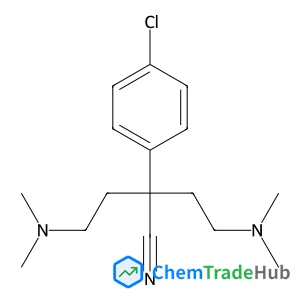
2-(4-Chlorophenyl)-4-(dimethylamino)-2-(2-(dimethylamino)ethyl)butanenitrile
CAS Number:
1246816-57-8
Molecular Formula:
C16H24ClN3
![6-Benzyl-4,5,6,7-tetrahydro-1H-pyrazolo[3,4-c]pyridin-3(2H)-one structure](https://static.chemtradehub.com/structs/909/909187-64-0-f54f.webp "6-Benzyl-4,5,6,7-tetrahydro-1H-pyrazolo[3,4-c]pyridin-3(2H)-one structure")
6-Benzyl-4,5,6,7-tetrahydro-1H-pyrazolo[3,4-c]pyridin-3(2H)-one
CAS Number:
909187-64-0
Molecular Formula:
C13H15N3O
![tert-Butyl N-[(2-chloropyridin-4-yl)methyl]carbamate structure](https://static.chemtradehub.com/structs/916/916210-27-0-9f95.webp "tert-Butyl N-[(2-chloropyridin-4-yl)methyl]carbamate structure")
tert-Butyl N-[(2-chloropyridin-4-yl)methyl]carbamate
CAS Number:
916210-27-0
Molecular Formula:
C11H15ClN2O2
Recommended Suppliers






Disclaimer
This page provides academic journal information for reference and research purposes only. We are not affiliated with any journal publishers and do not handle publication submissions. For publication-related inquiries, please contact the respective journal publishers directly.
If you notice any inaccuracies in the information displayed, please contact us at support@chemtradehub.com. We will promptly review and address your concerns.