













H-Abstraction reactions by OH, HO2, O, O2 and benzyl radical addition to O2 and their implications for kinetic modelling of toluene oxidation
Literature Information
Publication Date
2018-01-25
DOI
10.1039/C7CP07779C
Impact Factor
3.676
Authors
M. Pelucchi, C. Cavallotti, T. Faravelli, S. J. Klippenstein
View Original
Abstract
Alkylated aromatics constitute a significant fraction of the components commonly found in commercial fuels. Toluene is typically considered as a reference fuel. Together with n-heptane and iso-octane, it allows for realistic emulations of the behavior of real fuels by the means of surrogate mixture formulations. Moreover, it is a key precursor for the formation of poly-aromatic hydrocarbons, which are of relevance to understanding soot growth and oxidation mechanisms. In this study the POLIMI kinetic model is first updated based on the literature and on recent kinetic modelling studies of toluene pyrolysis and oxidation. Then, important reaction pathways are investigated by means of high-level theoretical methods, thereby advancing the present knowledge on toluene oxidation. H-Abstraction reactions by OH, HO2, O and O2, and the reactivity on the multi well benzyl-oxygen (C6H5CH2 + O2) potential energy surface (PES) were investigated using electronic structure calculations, transition state theory in its conventional, variational, and variable reaction coordinate forms (VRC-TST), and master equation calculations. Exploration of the effect on POLIMI model performance of literature rate constants and of the present calculations provides valuable guidelines for implementation of the new rate parameters in existing toluene kinetic models.
Related Literature
Organocatalysis and catalyst aggregation: a study using the asymmetric synthesis of benzofuranones as a test reaction
Luca Massaro, Antonio Puglisi, Lucrezia Angelini, Achille Antenucci, Simone Placidi, Fabio Sciubba, Luciano Galantini, Marco Bella
2018-09-12
Paper
DOI: 10.1039/C8OB01772G
Synthesis of N-arylsulfonamides through a Pd-catalyzed reduction coupling reaction of nitroarenes with sodium arylsulfinates
Bo Yang, Chang Lian, Guanglu Yue, Danyang Liu, Liyan Wei, Yi Ding, Xiancai Zheng, Kui Lu, Di Qiu, Xia Zhao
2018-10-15
Paper
DOI: 10.1039/C8OB02226G
Rh-Catalyzed aminative dearomatization of 2-naphthols
Hang-Fei Tu
2018-10-31
Communication
DOI: 10.1039/C8OB02592D
Synthesis of oxindoles through trifluoromethylation of N-aryl acrylamides by photoredox catalysis
Maojian Lu, Zhiji Liu, Jinwang Zhang, Yu Tian, Honggui Qin, Mingqiang Huang, Shirong Hu
2018-08-22
Paper
DOI: 10.1039/C8OB01922C
An experimental and computational study on isomerically pure, soluble azaphthalocyanines and their complexes and boron azasubphthalocyanines of a varying number of aza units
Martin Liebold, Eugen Sharikow, Elisabeth Seikel, Lukas Trombach, Klaus Harms, Petr Zimcik, Veronika Novakova, Ralf Tonner, Jörg Sundermeyer
2018-08-20
Paper
DOI: 10.1039/C8OB01705K
Correction: Development of oligonucleotide-based antagonists of Ebola virus protein 24 inhibiting its interaction with karyopherin alpha 1
Keisuke Tanaka, Yoichi Miyamoto, Takumi Okuda, Tatsuro Kasai, Kentaro Onodera, Masahiro Oka, Yoshihiro Yoneda
2018-10-04
Correction
DOI: 10.1039/C8OB90140F
Recent developments in functionalization of acyclic α-keto amides
Alagesan Muthukumar, Subramani Sangeetha, Govindasamy Sekar
2018-08-06
Review Article
DOI: 10.1039/C8OB01423J
tert-Butyl nitrite mediated nitrogen transfer reactions: synthesis of benzotriazoles and azides at room temperature
Sadaf Azeez, Priyanka Chaudhary, Popuri Sureshbabu, Shahulhameed Sabiah, Jeyakumar Kandasamy
2018-09-07
Paper
DOI: 10.1039/C8OB01950A
Transition metal-free coupling of terminal alkynes and hypervalent iodine-based alkyne-transfer reagents to access unsymmetrical 1,3-diynes
J. Schörgenhumer, M. Waser
2018-10-02
Communication
DOI: 10.1039/C8OB02375A
Palladium-catalyzed selective synthesis of 3,4-dihydroquinazolines from electron-rich arylamines, electron-poor arylamines and glyoxalates
Jie Wang, Xing-Yu Zhang, Guo-Kai Jia, Zhong Cao, Zilong Tang, Xianyong Yu, Xinhua Xu
2018-06-25
Paper
DOI: 10.1039/C8OB01005F
You might also like
Compound Q&A
What are the main uses of 1-(3-Aminophenyl)-3-[(3R)-1-(3,3-dimethyl-2-oxobutyl)-2-oxo-5-(2-pyridinyl)-2,3-dihydro-1H-1,4-benzodiazepin-3-yl]urea (CAS: 155412-88-7)?
This compound is mainly used as an intermediate in the synthesis of antipsychoti...
155412-88-71-(3-Aminophenyl)-3-...
Compound Q&A
How should waste containing 1-(D-Ribofuranosyl)-1,4-dihydro-3-pyridinecarboxamide (CAS: 19132-12-8) be handled?
Waste containing 1-(D-Ribofuranosyl)-1,4-dihydro-3-pyridinecarboxamide (CAS: 191...
19132-12-81-(D-Ribofuranosyl)-...
Compound Q&A
What regulatory guidelines apply to 2-Methyl-2-propanyl 3-bromo-3-(hydroxymethyl)-1-azetidinecarboxylate (CAS: 2007919-81-3)?
2-Methyl-2-propanyl 3-bromo-3-(hydroxymethyl)-1-azetidinecarboxylate (CAS: 20079...
2007919-81-32-Methyl-2-propanyl ...
Compound Q&A
What is N-(4-Chloro-2-pyridinyl)acetamide (CAS: 245056-66-0)?
N-(4-Chloro-2-pyridinyl)acetamide (CAS: 245056-66-0) is a chemical compound with...
245056-66-0N-(4-Chloro-2-pyridi...
Compound Q&A
What is 5-Chloro-2-hydroxybenzoic acid (CAS: 321-14-2)?
5-Chloro-2-hydroxybenzoic acid, also known as 5-chlorosalicylic acid, is an arom...
321-14-25-Chloro-2-hydroxybe...
Compound Q&A
What precautions should be taken when handling 1,1-Dichloro-1-fluoroethane (CAS: 1717-00-6)?
When handling 1,1-Dichloro-1-fluoroethane (CAS: 1717-00-6), it is important to u...
1717-00-61,1-Dichloro-1-fluor...
Compound Q&A
What are the physical and chemical properties of Fmoc-(2S,3R)-3-phenylpyrrolidine-2-carboxylic acid (CAS: 281655-32-1)?
Fmoc-(2S,3R)-3-phenylpyrrolidine-2-carboxylic acid is a white crystalline solid ...
281655-32-1Fmoc-(2S,3R)-3-pheny...
Compound Q&A
What are the main uses of 4-Amino-5-bromo-2-pyridinecarboxylic acid (CAS: 1363381-01-4)?
4-Amino-5-bromo-2-pyridinecarboxylic acid is primarily used as a precursor in th...
1363381-01-44-Amino-5-bromo-2-py...
Compound Q&A
What precautions should be taken when handling (S)-tert-butyl 2-((2-(4-bromophenyl)-2-oxoethyl)carbamoyl)pyrrolidine-1-carboxylate (CAS: 1007881-98-2)?
Handling this compound should be done with personal protective equipment (PPE) i...
1007881-98-2(S)-tert-butyl 2-((2...
Compound Q&A
What precautions should be taken when handling 8-bromo-2,2-dimethyl-3,4-dihydro-2H-1,4-benzoxazin-3-one (CAS: 688363-73-7)?
When handling 8-bromo-2,2-dimethyl-3,4-dihydro-2H-1,4-benzoxazin-3-one, use prop...
688363-73-78-bromo-2,2-dimethyl...
Source Journal
Physical Chemistry Chemical Physics

CiteScore:
5.5
Self-citation Rate:
10.3%
Articles per Year:
3036
Physical Chemistry Chemical Physics (PCCP) is an international journal co-owned by 19 physical chemistry and physics societies from around the world. This journal publishes original, cutting-edge research in physical chemistry, chemical physics and biophysical chemistry. To be suitable for publication in PCCP, articles must include significant innovation and/or insight into physical chemistry; this is the most important criterion that reviewers and Editors will judge against when evaluating submissions. The journal has a broad scope and welcomes contributions spanning experiment, theory, computation and data science. Topical coverage includes spectroscopy, dynamics, kinetics, statistical mechanics, thermodynamics, electrochemistry, catalysis, surface science, quantum mechanics, quantum computing and machine learning. Interdisciplinary research areas such as polymers and soft matter, materials, nanoscience, energy, surfaces/interfaces, and biophysical chemistry are welcomed if they demonstrate significant innovation and/or insight into physical chemistry. Joined experimental/theoretical studies are particularly appreciated when complementary and based on up-to-date approaches.
Recommended Compounds
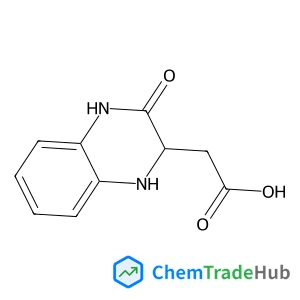
(3-Oxo-1,2,3,4-tetrahydro-2-quinoxalinyl)acetic acid
CAS Number:
136584-14-0
Molecular Formula:
C10H10N2O3
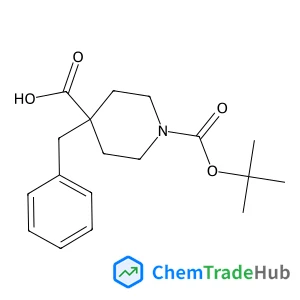
4-Benzyl-1-(tert-butoxycarbonyl)piperidine-4-carboxylic acid
CAS Number:
170838-87-6
Molecular Formula:
C18H25NO4
Recommended Suppliers





Disclaimer
This page provides academic journal information for reference and research purposes only. We are not affiliated with any journal publishers and do not handle publication submissions. For publication-related inquiries, please contact the respective journal publishers directly.
If you notice any inaccuracies in the information displayed, please contact us at support@chemtradehub.com. We will promptly review and address your concerns.