












Demixing and crystallization of DODAB in DPPC–DODAB binary mixtures
Literature Information
Publication Date
2014-06-09
DOI
10.1039/C4CP01707B
Impact Factor
3.676
Authors
Rui-Guang Wu, Hai-Yuan Sun, Yan-Zhen Zheng, Zhi-Wu Yu
View Original
Abstract
The crystallization mechanism of one lipid component within multicomponent lipid mixtures remains unclear. To shed light on this issue, we studied the demixing and crystallization behaviors of a binary lipid system using neutral dipalmitoylphosphatidylcholine (DPPC) and cationic dioctadecyldimethylammonium bromide (DODAB) as model molecules. The results indicate that when DODAB is no more than equimolar (e.g., DPPC/DODAB = 2/1 and 1/1), DPPC is miscible with DODAB and hinders the crystallization of DODAB, and the samples undergo reversible gel–fluid phase transitions upon heating and cooling. However, when DODAB is dominant in the mixture (DPPC/DODAB = 1/2), cooling of the mixed fluid phase results in the formation of a DODAB-rich gel domain and a DPPC–DODAB mixed gel domain. Such phase-separated mixed gels can undergo further demixing and crystallization, producing a DODAB-rich crystalline domain and a DPPC-rich tilted gel domain upon prolonged (or plus low-temperature) incubation. Besides, evidence has been given that the crystallized DODAB-rich domain remains in the same lipid bilayer as the DPPC-rich domain. All the three binary lipid mixtures can hold large amounts of water in the lipid interlamellar regions, allowing the incorporation of a large number of water-soluble substances such as DNA or proteins, which can be used for the fabrication of functional biofilms and biomaterials. Influences of water content and salt concentration on the phase structures (e.g., repeat distances) of the binary mixtures have also been studied.
Related Literature
Q-model of electrode reactions: altering force constants of intramolecular vibrations
Dmitry V. Matyushov, Marshall D. Newton
2018-08-31
Paper
DOI: 10.1039/C8CP03759K
Cyanide–isocyanide isomerization: stability and bonding in noble gas inserted metal cyanides (metal = Cu, Ag, Au)
Gourhari Jana, Sudip Pan, Edison Osorio, Lili Zhao, Gabriel Merino, Pratim K. Chattaraj
2018-06-07
Paper
DOI: 10.1039/C8CP02837K
Simultaneous activity and surface area measurements on single mesoporous nanoparticle aggregates
Xue Jiao, Christopher Batchelor-McAuley, Neil P. Young, Richard G. Compton
2018-09-10
Communication
DOI: 10.1039/C8CP04954H
Turn-off mode fluorescent norbornadiene-based photoswitches
Behabitu Ergette Tebikachew, Fredrik Edhborg, Nina Kann, Bo Albinsson, Kasper Moth-Poulsen
2018-08-16
Paper
DOI: 10.1039/C8CP04329A
Competition between salt bridge and non-zwitterionic structures in deprotonated amino acid dimers
Giel Berden, Evan R. Williams
2018-05-18
Paper
DOI: 10.1039/C8CP01458B
Time-dependent yield of the hydrated electron and the hydroxyl radical in D2O: a picosecond pulse radiolysis study
Furong Wang, Jean-Philippe Larbre, Zizhao Zong, Jean-Louis Marignier, Mehran Mostafavi
2018-05-10
Paper
DOI: 10.1039/C8CP02276C
Is ReO3 a mixed ionic–electronic conductor? A DFT study of defect formation and migration in a BVIO3 perovskite-type oxide
J. P. Parras, A. R. Genreith-Schriever, H. Zhang, T. Norby, R. A. De Souza
2018-02-27
Paper
DOI: 10.1039/C7CP08214B
Deep eutectic–water binary solvent associations investigated by vibrational spectroscopy and chemometrics
R. Ahmadi, A. Safavi, Z. Shojaeifard, A. Shahsavar, A. Mohajeri, M. Heydari Dokoohaki, A. R. Zolghadr
2018-06-04
Paper
DOI: 10.1039/C8CP00409A
You might also like
Compound Q&A
Is 2-(2-chloroacetamido)-3-phenylpropanoic acid (CAS: 7765-11-9) safe?
2-(2-Chloroacetamido)-3-phenylpropanoic acid (CAS: 7765-11-9) is generally consi...
7765-11-92-(2-chloroacetamido...
Compound Q&A
Is 2-(Benzyloxy)-5-bromobenzoic acid (CAS: 62176-31-2) safe?
2-(Benzyloxy)-5-bromobenzoic acid can be handled safely if appropriate precautio...
62176-31-22-(Benzyloxy)-5-brom...
Compound Q&A
What is (4-Methyl-1,2,5-oxadiazol-3-yl)methanamine hydrochloride (CAS: 1159825-48-5)?
(4-Methyl-1,2,5-oxadiazol-3-yl)methanamine hydrochloride is a chemical compound ...
1159825-48-5(4-Methyl-1,2,5-oxad...
Compound Q&A
What is 2-(5-Hexylthiophen-2-yl)-4,4,5,5-tetramethyl-1,3,2-dioxaborolane (CAS: 917985-54-7)?
2-(5-Hexylthiophen-2-yl)-4,4,5,5-tetramethyl-1,3,2-dioxaborolane (CAS: 917985-54...
917985-54-72-(5-Hexylthiophen-2...
Compound Q&A
Are there alternatives to 4-(8-Methyl-9H-1,3-dioxolo[4,5-h][2,3]benzodiazepin-5-yl)benzenamine (CAS: 102771-26-6) in synthesis?
While 4-(8-Methyl-9H-1,3-dioxolo[4,5-h][2,3]benzodiazepin-5-yl)benzenamine (CAS:...
102771-26-64-(8-Methyl-9H-1,3-d...
Compound Q&A
What is the market or research trend for tert-butyl 3-hydroxy-4,5,7,8-tetrahydro-2H-pyrazolo[3,4-d]azepine-6-carboxylate (CAS: 851376-80-2)?
The market for tert-butyl 3-hydroxy-4,5,7,8-tetrahydro-2H-pyrazolo[3,4-d]azepine...
851376-80-2tert-butyl 3-hydroxy...
Compound Q&A
How should waste containing 3,5-Diamino-1H-pyrazole-4-carbonitrile (CAS: 6844-58-2) be handled?
Waste containing 3,5-Diamino-1H-pyrazole-4-carbonitrile (CAS: 6844-58-2) should ...
6844-58-23,5-Diamino-1H-pyraz...
Compound Q&A
How is (6-Fluoro-3-pyridinyl)boronic acid (CAS: 351019-18-6) typically synthesized?
(6-Fluoro-3-pyridinyl)boronic acid can be synthesized through the reaction of 6-...
351019-18-6(6-Fluoro-3-pyridiny...
Compound Q&A
What industries use Dibenzyl carbonimidoylbiscarbamate (CAS: 10065-79-9)?
Dibenzyl carbonimidoylbiscarbamate (CAS: 10065-79-9) finds applications in vario...
10065-79-9Dibenzyl carbonimido...
Compound Q&A
What is the market or research trend for (beta,beta,2,3,4,5,6-~2~H_7_)Phenylalanine (CAS: 74228-83-4)?
The market for (beta,beta,2,3,4,5,6-~2~H_7_)Phenylalanine (CAS: 74228-83-4) is g...
74228-83-4(beta,beta,2,3,4,5,6...
Source Journal
Physical Chemistry Chemical Physics

CiteScore:
5.5
Self-citation Rate:
10.3%
Articles per Year:
3036
Physical Chemistry Chemical Physics (PCCP) is an international journal co-owned by 19 physical chemistry and physics societies from around the world. This journal publishes original, cutting-edge research in physical chemistry, chemical physics and biophysical chemistry. To be suitable for publication in PCCP, articles must include significant innovation and/or insight into physical chemistry; this is the most important criterion that reviewers and Editors will judge against when evaluating submissions. The journal has a broad scope and welcomes contributions spanning experiment, theory, computation and data science. Topical coverage includes spectroscopy, dynamics, kinetics, statistical mechanics, thermodynamics, electrochemistry, catalysis, surface science, quantum mechanics, quantum computing and machine learning. Interdisciplinary research areas such as polymers and soft matter, materials, nanoscience, energy, surfaces/interfaces, and biophysical chemistry are welcomed if they demonstrate significant innovation and/or insight into physical chemistry. Joined experimental/theoretical studies are particularly appreciated when complementary and based on up-to-date approaches.
Recommended Compounds
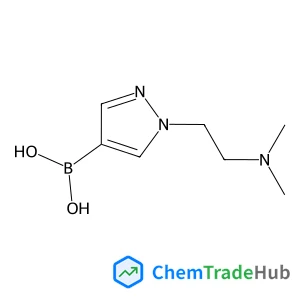
(1-(2-(Dimethylamino)ethyl)-1H-pyrazol-4-yl)boronic acid
CAS Number:
1086063-73-1
Molecular Formula:
C7H14BN3O2
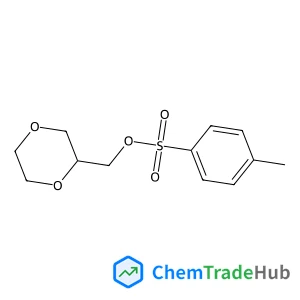
(S)-(1,4-Dioxan-2-yl)methyl 4-methylbenzenesulfonate
CAS Number:
917882-64-5
Molecular Formula:
C12H16O5S
Recommended Suppliers





Disclaimer
This page provides academic journal information for reference and research purposes only. We are not affiliated with any journal publishers and do not handle publication submissions. For publication-related inquiries, please contact the respective journal publishers directly.
If you notice any inaccuracies in the information displayed, please contact us at support@chemtradehub.com. We will promptly review and address your concerns.