











Cyanide–isocyanide isomerization: stability and bonding in noble gas inserted metal cyanides (metal = Cu, Ag, Au)
Literature Information
Publication Date
2018-06-07
DOI
10.1039/C8CP02837K
Impact Factor
3.676
Authors
Gourhari Jana, Sudip Pan, Edison Osorio, Lili Zhao, Gabriel Merino, Pratim K. Chattaraj
View Original
Abstract
The internal isomerization, MNC ↔ MCN (M = Cu, Ag, Au), is investigated through quantum chemical computations. CuNC and AgNC are shown to be neither thermochemically nor kinetically stable against transformation to MCN. The free energy barrier (ΔG‡) for AuNC is somewhat considerable (7.1 kcal mol−1), indicating its viability, particularly at low temperature. Further, the Ng inserted analogues, MNgCN (M = Cu, Ag, Au; Ng = Xe, Rn) turn out to be thermochemically stable with respect to all possible dissociation channels but for two two-body dissociation channels, viz., MNgCN → Ng + MCN and MNgCN → Ng + MNC, which are connected to the internal isomerization processes, MNgCN → NgMCN and MNgCN → NgMNC, respectively. However, they are kinetically protected by substantial ΔG‡ values (11.8–15.4 kcal mol−1 for Cu, 9.8–13.6 kcal mol−1 for Ag, and 19.7–24.7 kcal mol−1 for Au). The pathways for such internal conversion are explored in detail. A thorough inspection of the bonding situation of the studied molecules, employing natural bond order, electron density, adaptive natural density partitioning, and energy decomposition analyses indicates that the M–Ng bonds in MNgCN and Ng–C bonds in AuNgCN can be represented as an electron-shared covalent bond. For the other Ng–C bonds, although an ionic description is better suited, the degree of covalent character is also substantial therein.
Related Literature
A highly stereo-controlled protocol to prepare pipecolic acids based on Heck and cyclohydrocarbonylation reactions‡
Giada Arena, Elena Cini, Elena Petricci, Rosario Randino, Maurizio Taddei
2015-03-09
Research Article
DOI: 10.1039/C5QO00025D
Alkylation–peroxidation of α-carbonyl imines or ketones catalyzed by a copper salt via radical-mediated Csp3–H functionalization
Meng Lei, Yanjun Li, Shi Cao, Xinyi Hou, Lei Gong
2018-09-18
Research Article
DOI: 10.1039/C8QO00797G
Ring-opening and cyclization of aziridines with aryl azides: metal-free synthesis of 6-(triflyloxy)quinolines
Xincheng Li, Boshun Wan
2018-10-25
Research Article
DOI: 10.1039/C8QO00984H
Tandem dihetero-Diels–Alder and Huisgen cycloaddition reactions. Synthesis, crystal structure and hydrolysis of the novel cage phosphoranes
Ekaterina V. Mironova, Robert R. Fayzullin, Igor A. Litvinov, Sergey V. Efimov, Rashid Z. Musin, Vladimir V. Klochkov
2018-09-26
Research Article
DOI: 10.1039/C8QO00915E
Aromaticity control via modifications of a macrocyclic frame: 5,6-dimethoxyphenanthriporphyrin and 5,6-dioxophenanthriporphyrin
Kamil Kupietz, Michał J. Białek, Agata Białońska, Bartosz Szyszko, Lechosław Latos-Grażyński
2018-08-20
Research Article
DOI: 10.1039/C8QO00751A
Long distance unconjugated agostic-assisted 1,5-H shift in a Ru-mediated Alder-ene type reaction: mechanism and stereoselectivity
Chunhui Shan, Kangbao Zhong, Xiaotian Qi, Dongdong Xu, Ling-Bo Qu, Ruopeng Bai
2018-10-01
Research Article
DOI: 10.1039/C8QO00699G
Syntheses of 2-(2,2,2-trifluoroethylidene)/(2,2-difluoroethyl)-1,3-dicarbonyl compounds and their fungicidal activities
Yueji Chen, Yi You, Zhiqiang Weng
2018-12-07
Research Article
DOI: 10.1039/C8QO01118D
Construction and heterogeneous photooxidization reactivity of a cyclodextrin/porphyrin polyrotaxane network
Wei-Lei Zhou, Xuan Zhao, Yong Chen
2018-09-27
Research Article
DOI: 10.1039/C8QO00790J
You might also like
Compound Q&A
Is 2-(2-chloroacetamido)-3-phenylpropanoic acid (CAS: 7765-11-9) safe?
2-(2-Chloroacetamido)-3-phenylpropanoic acid (CAS: 7765-11-9) is generally consi...
7765-11-92-(2-chloroacetamido...
Compound Q&A
Is 2-(Benzyloxy)-5-bromobenzoic acid (CAS: 62176-31-2) safe?
2-(Benzyloxy)-5-bromobenzoic acid can be handled safely if appropriate precautio...
62176-31-22-(Benzyloxy)-5-brom...
Compound Q&A
What is (4-Methyl-1,2,5-oxadiazol-3-yl)methanamine hydrochloride (CAS: 1159825-48-5)?
(4-Methyl-1,2,5-oxadiazol-3-yl)methanamine hydrochloride is a chemical compound ...
1159825-48-5(4-Methyl-1,2,5-oxad...
Compound Q&A
What is 2-(5-Hexylthiophen-2-yl)-4,4,5,5-tetramethyl-1,3,2-dioxaborolane (CAS: 917985-54-7)?
2-(5-Hexylthiophen-2-yl)-4,4,5,5-tetramethyl-1,3,2-dioxaborolane (CAS: 917985-54...
917985-54-72-(5-Hexylthiophen-2...
Compound Q&A
Are there alternatives to 4-(8-Methyl-9H-1,3-dioxolo[4,5-h][2,3]benzodiazepin-5-yl)benzenamine (CAS: 102771-26-6) in synthesis?
While 4-(8-Methyl-9H-1,3-dioxolo[4,5-h][2,3]benzodiazepin-5-yl)benzenamine (CAS:...
102771-26-64-(8-Methyl-9H-1,3-d...
Compound Q&A
What is the market or research trend for tert-butyl 3-hydroxy-4,5,7,8-tetrahydro-2H-pyrazolo[3,4-d]azepine-6-carboxylate (CAS: 851376-80-2)?
The market for tert-butyl 3-hydroxy-4,5,7,8-tetrahydro-2H-pyrazolo[3,4-d]azepine...
851376-80-2tert-butyl 3-hydroxy...
Compound Q&A
How should waste containing 3,5-Diamino-1H-pyrazole-4-carbonitrile (CAS: 6844-58-2) be handled?
Waste containing 3,5-Diamino-1H-pyrazole-4-carbonitrile (CAS: 6844-58-2) should ...
6844-58-23,5-Diamino-1H-pyraz...
Compound Q&A
How is (6-Fluoro-3-pyridinyl)boronic acid (CAS: 351019-18-6) typically synthesized?
(6-Fluoro-3-pyridinyl)boronic acid can be synthesized through the reaction of 6-...
351019-18-6(6-Fluoro-3-pyridiny...
Compound Q&A
What industries use Dibenzyl carbonimidoylbiscarbamate (CAS: 10065-79-9)?
Dibenzyl carbonimidoylbiscarbamate (CAS: 10065-79-9) finds applications in vario...
10065-79-9Dibenzyl carbonimido...
Compound Q&A
What is the market or research trend for (beta,beta,2,3,4,5,6-~2~H_7_)Phenylalanine (CAS: 74228-83-4)?
The market for (beta,beta,2,3,4,5,6-~2~H_7_)Phenylalanine (CAS: 74228-83-4) is g...
74228-83-4(beta,beta,2,3,4,5,6...
Source Journal
Physical Chemistry Chemical Physics

CiteScore:
5.5
Self-citation Rate:
10.3%
Articles per Year:
3036
Physical Chemistry Chemical Physics (PCCP) is an international journal co-owned by 19 physical chemistry and physics societies from around the world. This journal publishes original, cutting-edge research in physical chemistry, chemical physics and biophysical chemistry. To be suitable for publication in PCCP, articles must include significant innovation and/or insight into physical chemistry; this is the most important criterion that reviewers and Editors will judge against when evaluating submissions. The journal has a broad scope and welcomes contributions spanning experiment, theory, computation and data science. Topical coverage includes spectroscopy, dynamics, kinetics, statistical mechanics, thermodynamics, electrochemistry, catalysis, surface science, quantum mechanics, quantum computing and machine learning. Interdisciplinary research areas such as polymers and soft matter, materials, nanoscience, energy, surfaces/interfaces, and biophysical chemistry are welcomed if they demonstrate significant innovation and/or insight into physical chemistry. Joined experimental/theoretical studies are particularly appreciated when complementary and based on up-to-date approaches.
Recommended Compounds
![3-[4-(difluoromethoxy)phenyl]-2-({[(9H-fluoren-9-yl)methoxy]carbonyl}amino)propanoic acid structure](https://static.chemtradehub.com/structs/149/1496564-27-2-952e.webp "3-[4-(difluoromethoxy)phenyl]-2-({[(9H-fluoren-9-yl)methoxy]carbonyl}amino)propanoic acid structure")
3-[4-(difluoromethoxy)phenyl]-2-({[(9H-fluoren-9-yl)methoxy]carbonyl}amino)propanoic acid
CAS Number:
1496564-27-2
Molecular Formula:
C25H21F2NO5
![Ethyl ({[(2-methyl-2-propanyl)oxy]carbonyl}amino)(2-pyridinyl)acetate structure](https://static.chemtradehub.com/structs/313/313490-90-3-dd15.webp "Ethyl ({[(2-methyl-2-propanyl)oxy]carbonyl}amino)(2-pyridinyl)acetate structure")
Ethyl ({[(2-methyl-2-propanyl)oxy]carbonyl}amino)(2-pyridinyl)acetate
CAS Number:
313490-90-3
Molecular Formula:
C14H20N2O4
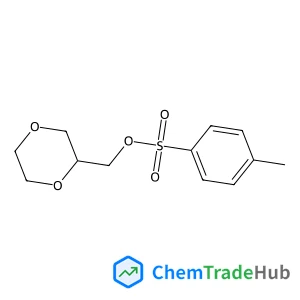
(S)-(1,4-Dioxan-2-yl)methyl 4-methylbenzenesulfonate
CAS Number:
917882-64-5
Molecular Formula:
C12H16O5S
Recommended Suppliers








Disclaimer
This page provides academic journal information for reference and research purposes only. We are not affiliated with any journal publishers and do not handle publication submissions. For publication-related inquiries, please contact the respective journal publishers directly.
If you notice any inaccuracies in the information displayed, please contact us at support@chemtradehub.com. We will promptly review and address your concerns.