












Turn-off mode fluorescent norbornadiene-based photoswitches
Literature Information
Publication Date
2018-08-16
DOI
10.1039/C8CP04329A
Impact Factor
3.676
Authors
Behabitu Ergette Tebikachew, Fredrik Edhborg, Nina Kann, Bo Albinsson, Kasper Moth-Poulsen
View Original
Abstract
Single-molecule fluorescence emission of certain positive photochromic systems such as diarylethenes have been exploited for biological imaging and optical memory storage applications. However, there is a lack of understanding if negative photochromic systems can be used for such type of applications. Hence, to explore the potential of negative photochromic molecules for possible optical memory storage applications, we have here synthesized and studied a series of four norbornadiene–quadricyclane (NBD–QC) photoswitching molecules. These molecules feature either linearly conjugated or cross-conjugated pi-electron systems. Upon photoisomerization, the UV-vis absorption spectra of the molecules revealed a strong blue shift in the QC-form, with a photoisomerization quantum yield close to 80% for the cross-conjugated systems. In contrast, a strong intrinsic emission (up to Φf = 49%) for the linearly conjugated compounds in the NBD form was observed. Upon light-induced isomerization, the emission was completely turned off in the QC-form in all the compounds studied. Further, the robustness of the system was evaluated by performing several switching cycles. Under nitrogen, the emission can be turned off and recovered with almost no loss of emission. We also show that the QC-form can be photochemically triggered to convert back to the NBD-form using a low energy UV light (340 nm), allowing an all optical conversion to both species. The demonstrated properties can make the NBD–QC system attractive for potential applications such as optical memory storage devices.
Related Literature
Construction of J-type aggregates as multi-functional interlayers for nonfullerene polymer solar cells
Minming Wu, Jiadong Zhou, Yinqi Luo, Nan Zheng, Cong Wang, Linlin Liu, Zengqi Xie, Yuguang Ma
2018-10-09
Research Article
DOI: 10.1039/C8QO00934A
Selective modification of natural nucleophilic residues in peptides and proteins using arylpalladium complexes
Wan-Min Cheng, Xi Lu, Jing Shi, Lei Liu
2018-09-21
Review Article
DOI: 10.1039/C8QO00765A
Heteropore covalent organic frameworks: a new class of porous organic polymers with well-ordered hierarchical porosities
Rong-Ran Liang, Xin Zhao
2018-09-17
Review Article
DOI: 10.1039/C8QO00830B
Gold-catalyzed oxidative cycloalkenations of alkynes with quinoline N-oxides
Sachin Bhausaheb Wagh, Pankaj Sharma, Manoj D. Patil, Rai-Shung Liu
2018-12-12
Research Article
DOI: 10.1039/C8QO01175C
Ag(i)-Catalyzed solvent-free CO2 capture with homopropargylic amines: an efficient access to 1,3-oxazinan-2-ones
Weilin Wang, Yixin Fu, Yimeng Li, Ruitong Yao, Lingyan Liu, Weixing Chang
2018-10-10
Research Article
DOI: 10.1039/C8QO00978C
Palladium-catalyzed denitrogenative cycloadditions and alkenylations of benzotriazoles with alkynes
Yuanhao Wang, Zhiguo Wang, Xuewei Chen
2018-08-24
Research Article
DOI: 10.1039/C8QO00778K
Hydrofunctionalization of alkenols triggered by the addition of diverse radicals to unactivated alkenes and subsequent remote hydrogen atom translocation
Liu Ye, Zhong-Liang Li, Lei Li, Zhuang Li, Hong-Xia Zhang, Zhen Guo, Qiang-Shuai Gu, Xin-Yuan Liu
2018-08-22
Research Article
DOI: 10.1039/C8QO00734A
You might also like
Compound Q&A
Is 2-(2-chloroacetamido)-3-phenylpropanoic acid (CAS: 7765-11-9) safe?
2-(2-Chloroacetamido)-3-phenylpropanoic acid (CAS: 7765-11-9) is generally consi...
7765-11-92-(2-chloroacetamido...
Compound Q&A
Is 2-(Benzyloxy)-5-bromobenzoic acid (CAS: 62176-31-2) safe?
2-(Benzyloxy)-5-bromobenzoic acid can be handled safely if appropriate precautio...
62176-31-22-(Benzyloxy)-5-brom...
Compound Q&A
What is (4-Methyl-1,2,5-oxadiazol-3-yl)methanamine hydrochloride (CAS: 1159825-48-5)?
(4-Methyl-1,2,5-oxadiazol-3-yl)methanamine hydrochloride is a chemical compound ...
1159825-48-5(4-Methyl-1,2,5-oxad...
Compound Q&A
What is 2-(5-Hexylthiophen-2-yl)-4,4,5,5-tetramethyl-1,3,2-dioxaborolane (CAS: 917985-54-7)?
2-(5-Hexylthiophen-2-yl)-4,4,5,5-tetramethyl-1,3,2-dioxaborolane (CAS: 917985-54...
917985-54-72-(5-Hexylthiophen-2...
Compound Q&A
Are there alternatives to 4-(8-Methyl-9H-1,3-dioxolo[4,5-h][2,3]benzodiazepin-5-yl)benzenamine (CAS: 102771-26-6) in synthesis?
While 4-(8-Methyl-9H-1,3-dioxolo[4,5-h][2,3]benzodiazepin-5-yl)benzenamine (CAS:...
102771-26-64-(8-Methyl-9H-1,3-d...
Compound Q&A
What is the market or research trend for tert-butyl 3-hydroxy-4,5,7,8-tetrahydro-2H-pyrazolo[3,4-d]azepine-6-carboxylate (CAS: 851376-80-2)?
The market for tert-butyl 3-hydroxy-4,5,7,8-tetrahydro-2H-pyrazolo[3,4-d]azepine...
851376-80-2tert-butyl 3-hydroxy...
Compound Q&A
How should waste containing 3,5-Diamino-1H-pyrazole-4-carbonitrile (CAS: 6844-58-2) be handled?
Waste containing 3,5-Diamino-1H-pyrazole-4-carbonitrile (CAS: 6844-58-2) should ...
6844-58-23,5-Diamino-1H-pyraz...
Compound Q&A
How is (6-Fluoro-3-pyridinyl)boronic acid (CAS: 351019-18-6) typically synthesized?
(6-Fluoro-3-pyridinyl)boronic acid can be synthesized through the reaction of 6-...
351019-18-6(6-Fluoro-3-pyridiny...
Compound Q&A
What industries use Dibenzyl carbonimidoylbiscarbamate (CAS: 10065-79-9)?
Dibenzyl carbonimidoylbiscarbamate (CAS: 10065-79-9) finds applications in vario...
10065-79-9Dibenzyl carbonimido...
Compound Q&A
What is the market or research trend for (beta,beta,2,3,4,5,6-~2~H_7_)Phenylalanine (CAS: 74228-83-4)?
The market for (beta,beta,2,3,4,5,6-~2~H_7_)Phenylalanine (CAS: 74228-83-4) is g...
74228-83-4(beta,beta,2,3,4,5,6...
Source Journal
Physical Chemistry Chemical Physics

CiteScore:
5.5
Self-citation Rate:
10.3%
Articles per Year:
3036
Physical Chemistry Chemical Physics (PCCP) is an international journal co-owned by 19 physical chemistry and physics societies from around the world. This journal publishes original, cutting-edge research in physical chemistry, chemical physics and biophysical chemistry. To be suitable for publication in PCCP, articles must include significant innovation and/or insight into physical chemistry; this is the most important criterion that reviewers and Editors will judge against when evaluating submissions. The journal has a broad scope and welcomes contributions spanning experiment, theory, computation and data science. Topical coverage includes spectroscopy, dynamics, kinetics, statistical mechanics, thermodynamics, electrochemistry, catalysis, surface science, quantum mechanics, quantum computing and machine learning. Interdisciplinary research areas such as polymers and soft matter, materials, nanoscience, energy, surfaces/interfaces, and biophysical chemistry are welcomed if they demonstrate significant innovation and/or insight into physical chemistry. Joined experimental/theoretical studies are particularly appreciated when complementary and based on up-to-date approaches.
Recommended Compounds
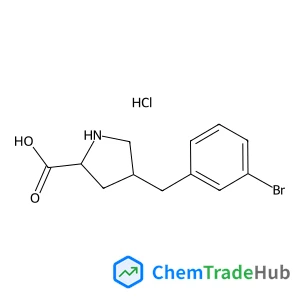
(2S,4R)-4-(3-Bromobenzyl)pyrrolidine-2-carboxylic acid hydrochloride
CAS Number:
1049734-10-2
Molecular Formula:
C12H15BrClNO2
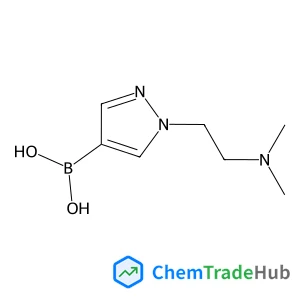
(1-(2-(Dimethylamino)ethyl)-1H-pyrazol-4-yl)boronic acid
CAS Number:
1086063-73-1
Molecular Formula:
C7H14BN3O2
Recommended Suppliers






Disclaimer
This page provides academic journal information for reference and research purposes only. We are not affiliated with any journal publishers and do not handle publication submissions. For publication-related inquiries, please contact the respective journal publishers directly.
If you notice any inaccuracies in the information displayed, please contact us at support@chemtradehub.com. We will promptly review and address your concerns.