


Q-model of electrode reactions: altering force constants of intramolecular vibrations
Literature Information
Publication Date
2018-08-31
DOI
10.1039/C8CP03759K
Impact Factor
3.676
Authors
Dmitry V. Matyushov, Marshall D. Newton
View Original
Abstract
A theory of redox reactions involving electron transfer between a metal electrode and a molecule in solution is formulated in terms of two types of nuclear coordinates of the thermal bath: electrostatic polarization of the medium and local low-frequency vibrations. The polarization fluctuations follow Gaussian statistics. In contrast, the vibrational coordinate is allowed to change its force constant between two oxidation states of the reactant, which is projected onto non-Gaussian fluctuations of the reactant's electronic states. A closed-form analytical theory for the electrode redox reactions is formulated in terms of three reorganization energies: the reorganization energy for the electrostatic polarization of the medium and two internal (vibrational) reorganization energies for the reduced and oxidized states of the reactant. The theory predicts asymmetry between the cathodic and anodic branches of the electrode current driven by the corresponding difference in the vibrational force constants.
Recommended Journals

Journal of Medical Biochemistry

Molecular Diversity

Current Pharmaceutical Biotechnology

European Journal of Organic Chemistry

Angewandte Chemie International Edition

Faraday Discussions

Journal of Enzyme inhibition and Medicinal Chemistry

Coloration Technology

Mini-Reviews in Medicinal Chemistry

Environmental Toxicology and Pharmacology
Related Literature
Solvent-free N-iodosuccinimide-promoted synthesis of spiroimidazolines from alkenes and amidines under ball-milling conditions
Hui Xu, Kuan Chen, Hong-Wei Liu
2018-09-03
Research Article
DOI: 10.1039/C8QO00723C
Dual photoredox and nickel-catalyzed desymmetric C–O coupling reactions: visible light-mediated enantioselective synthesis of 1,4-benzodioxanes
Quan-Quan Zhou, Fu-Dong Lu, Dan Liu, Liang-Qiu Lu
2018-09-17
Research Article
DOI: 10.1039/C8QO00805A
Concise asymmetric total synthesis of bruceolline J
Dattatraya H. Dethe, Vijay Kumar B
2015-03-03
Research Article
DOI: 10.1039/C5QO00030K
Retracted Article: A miraculous chiral Ir–Rh bimetallic nanocatalyst for asymmetric hydrogenation of activated ketones
Xiuru Xue, Zhaohui Zhao, Yanhua Wang
2018-11-16
Research Article
DOI: 10.1039/C8QO01011K
Secopaxilline A, an indole-diterpenoid derivative from an aciduric Penicillium fungus, its identification and semisynthesis
Yaqin Fan, Yi Wang, Arthit Chairoungdua, Pawinee Piyachaturawat
2018-08-24
Research Article
DOI: 10.1039/C8QO00756J
Copper-catalyzed stereoselective oxytrifluoromethylation of propargyl amides for the construction of oxazolines
Yanan Wang, Min Jiang, Jin-Tao Liu
2015-03-13
Research Article
DOI: 10.1039/C5QO00044K
Pd/Gorlos-Phos-catalyzed cross-coupling between two different aryl chlorides in the presence of B2Pin2 and cytotoxicity studies of the products
Xinyu Duan, Pengbin Li, Guirong Zhu, Chunling Fu, Qin Chen, Xin Huang
2018-10-11
Research Article
DOI: 10.1039/C8QO00781K
Aryne triggered dearomatization reaction of isoquinolines and quinolines with chloroform‡
Jiajing Tan, Binbin Liu, Shuaisong Su
2018-09-19
Research Article
DOI: 10.1039/C8QO00838H
You might also like
Compound Q&A
Is 2-(2-chloroacetamido)-3-phenylpropanoic acid (CAS: 7765-11-9) safe?
2-(2-Chloroacetamido)-3-phenylpropanoic acid (CAS: 7765-11-9) is generally consi...
7765-11-92-(2-chloroacetamido...
Compound Q&A
Is 2-(Benzyloxy)-5-bromobenzoic acid (CAS: 62176-31-2) safe?
2-(Benzyloxy)-5-bromobenzoic acid can be handled safely if appropriate precautio...
62176-31-22-(Benzyloxy)-5-brom...
Compound Q&A
What is (4-Methyl-1,2,5-oxadiazol-3-yl)methanamine hydrochloride (CAS: 1159825-48-5)?
(4-Methyl-1,2,5-oxadiazol-3-yl)methanamine hydrochloride is a chemical compound ...
1159825-48-5(4-Methyl-1,2,5-oxad...
Compound Q&A
What is 2-(5-Hexylthiophen-2-yl)-4,4,5,5-tetramethyl-1,3,2-dioxaborolane (CAS: 917985-54-7)?
2-(5-Hexylthiophen-2-yl)-4,4,5,5-tetramethyl-1,3,2-dioxaborolane (CAS: 917985-54...
917985-54-72-(5-Hexylthiophen-2...
Compound Q&A
Are there alternatives to 4-(8-Methyl-9H-1,3-dioxolo[4,5-h][2,3]benzodiazepin-5-yl)benzenamine (CAS: 102771-26-6) in synthesis?
While 4-(8-Methyl-9H-1,3-dioxolo[4,5-h][2,3]benzodiazepin-5-yl)benzenamine (CAS:...
102771-26-64-(8-Methyl-9H-1,3-d...
Compound Q&A
What is the market or research trend for tert-butyl 3-hydroxy-4,5,7,8-tetrahydro-2H-pyrazolo[3,4-d]azepine-6-carboxylate (CAS: 851376-80-2)?
The market for tert-butyl 3-hydroxy-4,5,7,8-tetrahydro-2H-pyrazolo[3,4-d]azepine...
851376-80-2tert-butyl 3-hydroxy...
Compound Q&A
How should waste containing 3,5-Diamino-1H-pyrazole-4-carbonitrile (CAS: 6844-58-2) be handled?
Waste containing 3,5-Diamino-1H-pyrazole-4-carbonitrile (CAS: 6844-58-2) should ...
6844-58-23,5-Diamino-1H-pyraz...
Compound Q&A
How is (6-Fluoro-3-pyridinyl)boronic acid (CAS: 351019-18-6) typically synthesized?
(6-Fluoro-3-pyridinyl)boronic acid can be synthesized through the reaction of 6-...
351019-18-6(6-Fluoro-3-pyridiny...
Compound Q&A
What industries use Dibenzyl carbonimidoylbiscarbamate (CAS: 10065-79-9)?
Dibenzyl carbonimidoylbiscarbamate (CAS: 10065-79-9) finds applications in vario...
10065-79-9Dibenzyl carbonimido...
Compound Q&A
What is the market or research trend for (beta,beta,2,3,4,5,6-~2~H_7_)Phenylalanine (CAS: 74228-83-4)?
The market for (beta,beta,2,3,4,5,6-~2~H_7_)Phenylalanine (CAS: 74228-83-4) is g...
74228-83-4(beta,beta,2,3,4,5,6...
Source Journal
Physical Chemistry Chemical Physics

CiteScore:
5.5
Self-citation Rate:
10.3%
Articles per Year:
3036
Physical Chemistry Chemical Physics (PCCP) is an international journal co-owned by 19 physical chemistry and physics societies from around the world. This journal publishes original, cutting-edge research in physical chemistry, chemical physics and biophysical chemistry. To be suitable for publication in PCCP, articles must include significant innovation and/or insight into physical chemistry; this is the most important criterion that reviewers and Editors will judge against when evaluating submissions. The journal has a broad scope and welcomes contributions spanning experiment, theory, computation and data science. Topical coverage includes spectroscopy, dynamics, kinetics, statistical mechanics, thermodynamics, electrochemistry, catalysis, surface science, quantum mechanics, quantum computing and machine learning. Interdisciplinary research areas such as polymers and soft matter, materials, nanoscience, energy, surfaces/interfaces, and biophysical chemistry are welcomed if they demonstrate significant innovation and/or insight into physical chemistry. Joined experimental/theoretical studies are particularly appreciated when complementary and based on up-to-date approaches.
Recommended Compounds
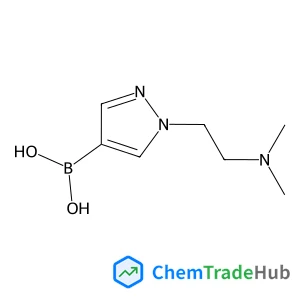
(1-(2-(Dimethylamino)ethyl)-1H-pyrazol-4-yl)boronic acid
CAS Number:
1086063-73-1
Molecular Formula:
C7H14BN3O2
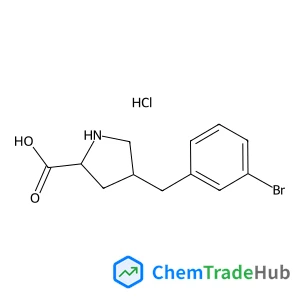
(2S,4R)-4-(3-Bromobenzyl)pyrrolidine-2-carboxylic acid hydrochloride
CAS Number:
1049734-10-2
Molecular Formula:
C12H15BrClNO2
Recommended Suppliers




Disclaimer
This page provides academic journal information for reference and research purposes only. We are not affiliated with any journal publishers and do not handle publication submissions. For publication-related inquiries, please contact the respective journal publishers directly.
If you notice any inaccuracies in the information displayed, please contact us at support@chemtradehub.com. We will promptly review and address your concerns.