












Defects and impurities induced structural and electronic changes in pyrite CoS2: first principles studies
Literature Information
Publication Date
2018-03-28
DOI
10.1039/C8CP00443A
Impact Factor
3.676
Authors
Shengwen Li, Yanning Zhang, Xiaobin Niu
View Original
Abstract
Cobalt pyrite (CoS2) and related materials are attracting much attention due to their potential use in renewable energy applications. In this work, first-principles studies were performed to investigate the effects of various neutral defects and ion dopants on the structural, energetic, magnetic and electronic properties of the bulk CoS2. Our theoretical results show that the concentrations of single cobalt (VCo) and sulfur (VS) vacancies in CoS2 samples can be high under S-rich and S-poor conditions, respectively. Although the single vacancies induce defect states near the gap edge, they are still half-metallic. We find that the substitution of one S with the O atom does not obviously change the structural, magnetic and electronic features near the Fermi level of the system. Most transition metal impurities (MnCo, FeCo, and MoCo) and Group IV and V anion impurities (CS, SiS, NS, PS, and AsS) create impurity states that are deep and/or near the gap edge. However, NiCo and Group VII elements (FS, ClS, and BrS) cause very localized gap states close to the Fermi level in the minority spin channel, which may modify their electrochemical performances. Our extensive calculations provide instructive information for the design and optimization of CoS2-related energy materials.
Related Literature
2-Chloromalonaldehyde, a model system of resonance-assisted hydrogen bonding: vibrational investigation
Michèle Chevalier, Justinas Ceponkus, Germán A. Rojas-Lorenzo, Claudine Crépin
2018-04-16
Paper
DOI: 10.1039/C7CP06481K
Microscopic properties of ionic liquid/organic semiconductor interfaces revealed by molecular dynamics simulations
Yasuyuki Yokota, Hiroo Miyamoto, Akihito Imanishi, Kouji Inagaki, Ken-ichi Fukui
2018-04-25
Paper
DOI: 10.1039/C8CP01043A
Molecular dynamics simulations of the structure of mixtures of protic ionic liquids and monovalent and divalent salts at the electrochemical interface
Víctor Gómez-González, Borja Docampo-Álvarez, J. Manuel Otero-Mato, Oscar Cabeza, Luis J. Gallego, Luis M. Varela
2018-04-26
Paper
DOI: 10.1039/C8CP01180J
Identification of a new substrate effect that enhances the electrocatalytic activity of dendritic tin in CO2 reduction
Xiaolong Zhang
2018-01-31
Paper
DOI: 10.1039/C7CP07723H
Thermodynamics of faceted palladium(–gold) nanoparticles supported on rutile titania nanorods studied using transmission electron microscopy
Nhat Tai Nguyen, Jaysen Nelayah, Damien Alloyeau, Guillaume Wang, Laurent Piccolo, Pavel Afanasiev, Christian Ricolleau
2018-04-05
Paper
DOI: 10.1039/C8CP00737C
Energy dispersive spectrometry and first principles studies on the oxidation of pentlandite
Xiaolu Xiong, Guangshi Li, Hongwei Cheng, Qian Xu
2018-04-03
Paper
DOI: 10.1039/C8CP00873F
Phase transition dynamics of single optically trapped aqueous potassium carbonate particles
Kıvanç Esat, Grégory David, Theodoros Poulkas, Mikhail Shein, Ruth Signorell
2018-04-05
Paper
DOI: 10.1039/C8CP00599K
Ultrafast coherent vibrational dynamics in dimethyl methylphosphonate radical cation
Derrick Ampadu Boateng, Gennady L. Gutsev, Puru Jena, Katharine Moore Tibbetts
2017-12-05
Communication
DOI: 10.1039/C7CP07261A
The origin of absorptive features in the two-dimensional electronic spectra of rhodopsin
Marwa H. Farag, Thomas L. C. Jansen, Jasper Knoester
2018-04-18
Paper
DOI: 10.1039/C8CP00638E
Origin of enhancement in Raman scattering from Ag-dressed carbon-nanotube antennas: experiment and modelling
T. V. Raziman, J. A. Duenas, W. I. Milne, O. J. F. Martin, P. Dawson
2018-01-31
Paper
DOI: 10.1039/C7CP06416K
You might also like
Compound Q&A
What are the main uses of 1-(3-Aminophenyl)-3-[(3R)-1-(3,3-dimethyl-2-oxobutyl)-2-oxo-5-(2-pyridinyl)-2,3-dihydro-1H-1,4-benzodiazepin-3-yl]urea (CAS: 155412-88-7)?
This compound is mainly used as an intermediate in the synthesis of antipsychoti...
155412-88-71-(3-Aminophenyl)-3-...
Compound Q&A
How should waste containing 1-(D-Ribofuranosyl)-1,4-dihydro-3-pyridinecarboxamide (CAS: 19132-12-8) be handled?
Waste containing 1-(D-Ribofuranosyl)-1,4-dihydro-3-pyridinecarboxamide (CAS: 191...
19132-12-81-(D-Ribofuranosyl)-...
Compound Q&A
What regulatory guidelines apply to 2-Methyl-2-propanyl 3-bromo-3-(hydroxymethyl)-1-azetidinecarboxylate (CAS: 2007919-81-3)?
2-Methyl-2-propanyl 3-bromo-3-(hydroxymethyl)-1-azetidinecarboxylate (CAS: 20079...
2007919-81-32-Methyl-2-propanyl ...
Compound Q&A
What is N-(4-Chloro-2-pyridinyl)acetamide (CAS: 245056-66-0)?
N-(4-Chloro-2-pyridinyl)acetamide (CAS: 245056-66-0) is a chemical compound with...
245056-66-0N-(4-Chloro-2-pyridi...
Compound Q&A
What is 5-Chloro-2-hydroxybenzoic acid (CAS: 321-14-2)?
5-Chloro-2-hydroxybenzoic acid, also known as 5-chlorosalicylic acid, is an arom...
321-14-25-Chloro-2-hydroxybe...
Compound Q&A
What precautions should be taken when handling 1,1-Dichloro-1-fluoroethane (CAS: 1717-00-6)?
When handling 1,1-Dichloro-1-fluoroethane (CAS: 1717-00-6), it is important to u...
1717-00-61,1-Dichloro-1-fluor...
Compound Q&A
What are the physical and chemical properties of Fmoc-(2S,3R)-3-phenylpyrrolidine-2-carboxylic acid (CAS: 281655-32-1)?
Fmoc-(2S,3R)-3-phenylpyrrolidine-2-carboxylic acid is a white crystalline solid ...
281655-32-1Fmoc-(2S,3R)-3-pheny...
Compound Q&A
What are the main uses of 4-Amino-5-bromo-2-pyridinecarboxylic acid (CAS: 1363381-01-4)?
4-Amino-5-bromo-2-pyridinecarboxylic acid is primarily used as a precursor in th...
1363381-01-44-Amino-5-bromo-2-py...
Compound Q&A
What precautions should be taken when handling (S)-tert-butyl 2-((2-(4-bromophenyl)-2-oxoethyl)carbamoyl)pyrrolidine-1-carboxylate (CAS: 1007881-98-2)?
Handling this compound should be done with personal protective equipment (PPE) i...
1007881-98-2(S)-tert-butyl 2-((2...
Compound Q&A
What precautions should be taken when handling 8-bromo-2,2-dimethyl-3,4-dihydro-2H-1,4-benzoxazin-3-one (CAS: 688363-73-7)?
When handling 8-bromo-2,2-dimethyl-3,4-dihydro-2H-1,4-benzoxazin-3-one, use prop...
688363-73-78-bromo-2,2-dimethyl...
Source Journal
Physical Chemistry Chemical Physics

CiteScore:
5.5
Self-citation Rate:
10.3%
Articles per Year:
3036
Physical Chemistry Chemical Physics (PCCP) is an international journal co-owned by 19 physical chemistry and physics societies from around the world. This journal publishes original, cutting-edge research in physical chemistry, chemical physics and biophysical chemistry. To be suitable for publication in PCCP, articles must include significant innovation and/or insight into physical chemistry; this is the most important criterion that reviewers and Editors will judge against when evaluating submissions. The journal has a broad scope and welcomes contributions spanning experiment, theory, computation and data science. Topical coverage includes spectroscopy, dynamics, kinetics, statistical mechanics, thermodynamics, electrochemistry, catalysis, surface science, quantum mechanics, quantum computing and machine learning. Interdisciplinary research areas such as polymers and soft matter, materials, nanoscience, energy, surfaces/interfaces, and biophysical chemistry are welcomed if they demonstrate significant innovation and/or insight into physical chemistry. Joined experimental/theoretical studies are particularly appreciated when complementary and based on up-to-date approaches.
Recommended Compounds
![Methyl 4-({[(2-methyl-2-propanyl)oxy]carbonyl}amino)bicyclo[2.2.2]octane-1-carboxylate structure](https://static.chemtradehub.com/structs/943/943845-74-7-b7e5.webp "Methyl 4-({[(2-methyl-2-propanyl)oxy]carbonyl}amino)bicyclo[2.2.2]octane-1-carboxylate structure")
Methyl 4-({[(2-methyl-2-propanyl)oxy]carbonyl}amino)bicyclo[2.2.2]octane-1-carboxylate
CAS Number:
943845-74-7
Molecular Formula:
C15H25NO4
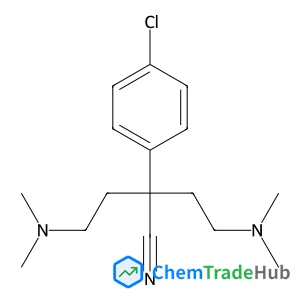
2-(4-Chlorophenyl)-4-(dimethylamino)-2-(2-(dimethylamino)ethyl)butanenitrile
CAS Number:
1246816-57-8
Molecular Formula:
C16H24ClN3
Recommended Suppliers





Disclaimer
This page provides academic journal information for reference and research purposes only. We are not affiliated with any journal publishers and do not handle publication submissions. For publication-related inquiries, please contact the respective journal publishers directly.
If you notice any inaccuracies in the information displayed, please contact us at support@chemtradehub.com. We will promptly review and address your concerns.