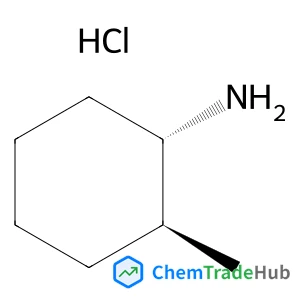
(1R,2R)-2-Methylcyclohexanamine hydrochloride (1:1)
CAS Number:
39558-31-1
Molecular Formula:
C7H16ClN
E. Y. Choi, L. Mager, M. Gwon, D. Pitrat, J. C. Mulatier, C. Monnereau, A. Fort, A. J. Attias, K. Dorkenoo, J. E. Kwon, Y. Xiao, K. Matczyszyn, M. Samoc, D.-W. Kim, A. Nakao, B. Heinrich, D. Hashizume, S. Y. Park, F. Mathevet, T. Aoyama, C. Andraud, J. W. Wu, A. Barsella, J. C. Ribierre
We investigate the photophysical and amplified spontaneous emission properties of a series of monodisperse solution-processable oligofluorenes functionalized with hexyl chains at the C9 position of each fluorene unit. Thin films of these oligofluorenes are then used in organic field-effect transistors and their charge transport properties are examined. We have particularly focused our attention on the influence of oligofluorene length on the absorption and steady-state fluorescence spectra, on the HOMO/LUMO energy levels, on the photoluminescence lifetime and quantum yield as well as on the amplified spontaneous emission properties and the charge carrier mobilities. Differential scanning calorimetry and X-ray diffraction measurements demonstrate that, among all oligofluorene derivatives used in this study, only the structure and morphology of the pentafluorene film is significantly modified by a thermal treatment above the glass transition temperature, resulting in a 9 nm blue-shift of the fluorescence spectrum without significant changes in the photoluminescence quantum yield and in the amplified spontaneous emission threshold. In parallel, hole field-effect mobility is significantly increased from 8.6 × 10⁻⁷ to 3.8 × 10⁻⁵ cm2 V−1 s−1 upon thermal treatment, due to an increase of crystallinity. This study provides useful insights into the morphological control of oligofluorene thin films and how it affects their photophysical and charge transport properties. Moreover, we provide evidence that, because of the low threshold, the tunability of the amplified spontaneous emission and the photostability of the films, these oligofluorenes are promising candidates for organic solid-state laser applications.
Mandeep K. Chahal, Muniappan Sankar, Ray J. Butcher
DOI: 10.1039/C6CP08396J
G. W. Driver, Y. Huang, A. Laaksonen, T. Sparrman, Y.-L. Wang, P.-O. Westlund
DOI: 10.1039/C6CP05801A
Eesh Vaghela, M. J. Keshvani, Keval Gadani, Zalak Joshi, Hetal Boricha, K. Asokan, D. Venkateshwarlu, V. Ganesan, N. A. Shah, P. S. Solanki
DOI: 10.1039/C6CP07730G
Hao Jin, Jianwei Li, Ying Dai, Yadong Wei
DOI: 10.1039/C6CP08158D
H. W. Wang, C. L. Li, S. L. Yuan, J. F. Wang, C. L. Lu, J.-M. Liu
DOI: 10.1039/C6CP06369A
Guillaume Bareigts, Christophe Labbez
DOI: 10.1039/C6CP08056A
A. R. Alian, S. A. Meguid
DOI: 10.1039/C6CP07464B
Ke Zhang, Rashid Khan, Hongyan Guo, Irfan Ali, Xiuling Li, Yunxiang Lin, Haiping Chen, Wensheng Yan, Xiaojun Wu, Li Song
DOI: 10.1039/C6CP07270D
Marnik Bercx, Nasrin Sarmadian, Rolando Saniz, Bart Partoens, Dirk Lamoen
DOI: 10.1039/C7CP90033C
Stefan Vuckovic, Tom J. P. Irons, Lucas O. Wagner, Andrew M. Teale, Paola Gori-Giorgi
DOI: 10.1039/C6CP08704C
(5-Sulfamoyl-3-pyridinyl)boronic acid is primarily used in chemical synthesis, p...
Benzyl 2-methyl-2-(methylsulfonyl)-4-pentenoate is typically synthesized via est...
When handling 8-Fluoroquinolin-6-ol (CAS: 209353-22-0), it is important to use p...
1,3-Dibromo-5-(2-methyl-2-propanyl)benzene (CAS: 129316-09-2) is a crystalline c...
Ethyl 7-chloro-4-oxo-1-(1,3-thiazol-2-yl)-1,4-dihydro-1,8-naphthyridine-3-carbox...
When handling Delta-7-Avenasterol (CAS: 23290-26-8), it is important to wear app...
Proper handling involves the use of personal protective equipment such as gloves...
When handling 2-Methyl-2-proanyl 4-[(2-aminophenyl)amino]-1-piperidinecarboxylat...
N-Methyl-4-chlorobenzylamine hydrochloride (CAS: 65542-24-7) is a organic compou...
[2-(Dodecyloxy)ethoxy]acetic acid (CAS: 27306-90-7) is generally considered safe...

Physical Chemistry Chemical Physics (PCCP) is an international journal co-owned by 19 physical chemistry and physics societies from around the world. This journal publishes original, cutting-edge research in physical chemistry, chemical physics and biophysical chemistry. To be suitable for publication in PCCP, articles must include significant innovation and/or insight into physical chemistry; this is the most important criterion that reviewers and Editors will judge against when evaluating submissions. The journal has a broad scope and welcomes contributions spanning experiment, theory, computation and data science. Topical coverage includes spectroscopy, dynamics, kinetics, statistical mechanics, thermodynamics, electrochemistry, catalysis, surface science, quantum mechanics, quantum computing and machine learning. Interdisciplinary research areas such as polymers and soft matter, materials, nanoscience, energy, surfaces/interfaces, and biophysical chemistry are welcomed if they demonstrate significant innovation and/or insight into physical chemistry. Joined experimental/theoretical studies are particularly appreciated when complementary and based on up-to-date approaches.
![[3-Fluoro-4-(1-pyrrolidinylcarbonyl)phenyl]boronic acid structure](https://static.chemtradehub.com/structs/874/874289-09-5-e3d4.webp "[3-Fluoro-4-(1-pyrrolidinylcarbonyl)phenyl]boronic acid structure")
![2-Azaspiro[4.5]decane-3,8-dione structure](https://static.chemtradehub.com/structs/914/914780-96-4-e94b.webp "2-Azaspiro[4.5]decane-3,8-dione structure")