












Effective pair potential between charged nanoparticles at high volume fractions
Literature Information
Publication Date
2017-01-20
DOI
10.1039/C6CP08056A
Impact Factor
3.676
Authors
Guillaume Bareigts, Christophe Labbez
View Original
Abstract
Simulations of charged colloidal dispersions are technically challenging. One possible workaround consists in reducing the system to the colloids only, whose interactions are described through an effective pair potential, wf. Still, the determination of wf is difficult mainly because it depends on the colloidal density, ϕ. Here we propose to calculate wf from simulations of a pair of colloids placed in a cubic box with periodic boundary conditions. The variation in ϕ is mimicked by an appropriate change in the concentration of counterions neutralized by an homogeneous background charge. The method is tested at the level of the primitive model. A good description of the structure of the colloidal dispersion is obtained in the low and high coupling regimes, even at high ϕ (≈30%). Furthermore, the method can easily be used in popular molecular simulation program packages and extended to non-spherical objects.
Related Literature
Hollow microspherical carbazole-based conjugated polymers by photoinduced step-growth polymerization
Tugba Celiker, Ali Suerkan, Sinem Altinisik, Mert Akgun, Sermet Koyuncu
2021-07-21
Paper
DOI: 10.1039/D1PY00822F
Structural design of pyrene-functionalized TEMPO-containing polymers for enhanced electrochemical storage performance
Hatice Mutlu, Hongjiao Li, Wolfgang Wenzel
2021-04-06
Paper
DOI: 10.1039/D0PY01421D
NMR investigations of polytrifluoroethylene (PTrFE) synthesized by RAFT
Vincent Bouad, Marc Guerre, Sami Zeliouche, Bruno Améduri, Cédric Totée, Gilles Silly, Rinaldo Poli, Vincent Ladmiral
2021-03-15
Paper
DOI: 10.1039/D0PY01753A
Polymerizability of exomethylene monomers based on adamantyl frameworks
Raita Goseki, Shogo Miyai, Satoshi Uchida, Takashi Ishizone
2021-06-02
Paper
DOI: 10.1039/D1PY00500F
Improved enantioselectivity in thiol–ene photopolymerization of sulphur-containing polymers with circularly polarized luminescence
Chen-Lu He, Zeyu Feng, Yan Li, Manman Zhou, Liyang Zhao, Sizhen Shan, Mengqiao Wang, Xin Chen, Xi-Sheng Wang, Gang Zou
2021-03-31
Paper
DOI: 10.1039/D1PY00082A
High molar mass poly(ricinoleic acid) via entropy-driven ring-opening metathesis polymerization
Marc A. Hillmyer
2021-03-23
Paper
DOI: 10.1039/D1PY00185J
Photo cleavable thioacetal block copolymers for controlled release
Yongjun Men, Tobias G. Brevé, Antonia G. Denkova, Rienk Eelkema
2021-06-08
Paper
DOI: 10.1039/D1PY00514F
Practical phosphorylation of polymers: an easy access to fully alcohol soluble synthetically and industrially important polymers
Gokhan Sagdic, Ozgun Daglar, Ufuk Saim Gunay, Emrah Cakmakci, Gurkan Hizal, Umit Tunca, Hakan Durmaz
2021-07-05
Paper
DOI: 10.1039/D1PY00726B
Correction: Synthesis and structural characterization of bio-based bis(cyclic carbonate)s for the preparation of non-isocyanate polyurethanes
Kamila Błażek, Hynek Beneš, Zuzana Walterová, Sabina Abbrent, Arantxa Eceiza, Tamara Calvo-Correas, Janusz Datta
2021-03-31
Correction
DOI: 10.1039/D1PY90040D
Visible light-degradable supramolecular gels comprising cross-linked polyrotaxanes capped with trithiocarbonate groups
Tae Woong Kang, Atsushi Tamura, Yoshinori Arisaka, Nobuhiko Yui
2021-06-09
Paper
DOI: 10.1039/D1PY00569C
You might also like
Compound Q&A
What precautions should be taken when handling 4-(2-Furylmethyl)thiomorpholine 1,1-dioxide (CAS: 79206-94-3)?
When handling 4-(2-Furylmethyl)thiomorpholine 1,1-dioxide (CAS: 79206-94-3), it ...
79206-94-34-(2-Furylmethyl)thi...
Compound Q&A
What precautions should be taken when handling 4-Chloro-N-[2-(4-morpholinyl)ethyl]benzamide (CAS: 71320-77-9)?
When handling 4-Chloro-N-[2-(4-morpholinyl)ethyl]benzamide (CAS: 71320-77-9), it...
71320-77-94-Chloro-N-[2-(4-mor...
Compound Q&A
How should waste containing 2-[2-(2-Methoxyethoxy)ethoxy]ethyl 4-methylbenzenesulfonate (CAS: 62921-74-8) be handled?
Waste containing this compound (CAS: 62921-74-8) should be handled according to ...
62921-74-82-[2-(2-Methoxyethox...
Compound Q&A
How should waste containing (S)-Methyl 2-amino-3-cyclohexylpropanoate be handled?
Waste containing (S)-Methyl 2-amino-3-cyclohexylpropanoate should be collected i...
40056-18-6(S)-Methyl 2-amino-3...
Compound Q&A
How is 5-({4-[(2S,4R)-4-Hydroxy-2-methyltetrahydro-2H-pyran-4-yl]-2-thienyl}sulfanyl)-1-methyl-1,3-dihydro-2H-indol-2-one (CAS: 166882-70-8) typically synthesized?
This compound can be synthesized using a multi-step process involving the conjug...
166882-70-85-({4-[(2S,4R)-4-Hyd...
Compound Q&A
Are there alternatives to (2E)-3-(3,4-Dichlorophenyl)acrylic acid (CAS: 7312-27-8) in synthesis?
There are several alternatives to (2E)-3-(3,4-Dichlorophenyl)acrylic acid in syn...
7312-27-8(2E)-3-(3,4-Dichloro...
Compound Q&A
How should Ethyl 6-(2-nitrophenyl)imidazo[2,1-b][1,3]thiazole-3-carboxylate (CAS: 925437-84-9) be stored?
Ethyl 6-(2-nitrophenyl)imidazo[2,1-b][1,3]thiazole-3-carboxylate (CAS: 925437-84...
925437-84-9Ethyl 6-(2-nitrophen...
Compound Q&A
How should waste containing 2-(1,3-Thiazol-2-yl)ethanamine (CAS: 18453-07-1) be handled?
Waste containing 2-(1,3-Thiazol-2-yl)ethanamine (CAS: 18453-07-1) should be coll...
18453-07-12-(1,3-Thiazol-2-yl)...
Compound Q&A
How is Methyl 5-iodo-2-methylbenzoate (CAS: 103440-54-6) typically synthesized?
Methyl 5-iodo-2-methylbenzoate can be synthesized through the iodination of meth...
103440-54-6Methyl 5-iodo-2-meth...
Compound Q&A
How is 5-Chloro[1,2,4]triazolo[1,5-a]pyridine (CAS: 1427399-34-5) typically synthesized?
5-Chloro[1,2,4]triazolo[1,5-a]pyridine is commonly synthesized via the condensat...
1427399-34-55-Chloro[1,2,4]triaz...
Source Journal
Physical Chemistry Chemical Physics

CiteScore:
5.5
Self-citation Rate:
10.3%
Articles per Year:
3036
Physical Chemistry Chemical Physics (PCCP) is an international journal co-owned by 19 physical chemistry and physics societies from around the world. This journal publishes original, cutting-edge research in physical chemistry, chemical physics and biophysical chemistry. To be suitable for publication in PCCP, articles must include significant innovation and/or insight into physical chemistry; this is the most important criterion that reviewers and Editors will judge against when evaluating submissions. The journal has a broad scope and welcomes contributions spanning experiment, theory, computation and data science. Topical coverage includes spectroscopy, dynamics, kinetics, statistical mechanics, thermodynamics, electrochemistry, catalysis, surface science, quantum mechanics, quantum computing and machine learning. Interdisciplinary research areas such as polymers and soft matter, materials, nanoscience, energy, surfaces/interfaces, and biophysical chemistry are welcomed if they demonstrate significant innovation and/or insight into physical chemistry. Joined experimental/theoretical studies are particularly appreciated when complementary and based on up-to-date approaches.
Recommended Compounds
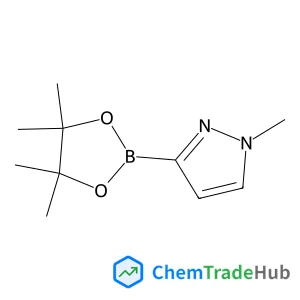
1-Methyl-3-(4,4,5,5-tetramethyl-1,3,2-dioxaborolan-2-yl)-1H-pyrazole
CAS Number:
1020174-04-2
Molecular Formula:
C10H17BN2O2
Recommended Suppliers



Disclaimer
This page provides academic journal information for reference and research purposes only. We are not affiliated with any journal publishers and do not handle publication submissions. For publication-related inquiries, please contact the respective journal publishers directly.
If you notice any inaccuracies in the information displayed, please contact us at support@chemtradehub.com. We will promptly review and address your concerns.