












An insight into the communication between β-olefin/phenyl olefin-mediated acceptors and porphyrin π-system: a way to establish porphyrin based chemodosimeters and chemosensors
Literature Information
Publication Date
2017-01-04
DOI
10.1039/C6CP08396J
Impact Factor
3.676
Authors
Mandeep K. Chahal, Muniappan Sankar, Ray J. Butcher
View Original
Abstract
The synthesis of three new classes of mixed β-pyrrole substituted tetraphenylporphyrins, MTPP(R), MTPP(Br)2(R) (where R = –CHC(CN)2, –CHC(CN)(COOC2H5), –CH(CN)(COOH) and M = 2H, Ni(II), Cu(II)) and MTPP(NO2)(Ph-p-R′)2 (R′ = –CHO and –CHC(CN)2 and M = 2H, Ni(II), Cu(II)) have been reported. The crystal structures of CuTPP(Br)2-ECA (7a), NiTPP(NO2)(Ph-p-CHO)2 (9) and NiTPP(NO2)(Ph-p-CH(CN)2)2 (10) are highly nonplanar among β-trisubstituted porphyrins reported to date as evidenced from the mean displacement of β-pyrrole carbon (ΔCβ) in the range ±(0.39–0.674) Å. The olefin mediated ethyl cyanoacetate is in plane with the porphyrin core in CuTPP(Br)2-ECA (the dihedral angle relative to the pyrrole NC4-mean plane is 39.81°) while dicyanovinyl stays aside for NiTPP(NO2)(Ph-p-CH(CN)2)2 (dihedral angles relative to the pyrrole NC4-mean plane are 75.03° and 67.47°). NiTPP-MN (2), NiTPP-ECA (3), NiTPP(Br)2-MN (6) and NiTPP(Br)2-ECA (7) act as chemodosimeters for toxic CN− ions whereas NiTPP-CAA (4) and NiTPP(Br)2-CAA (8) act as chemosensors to detect toxic ions such as CN−, F− and OAc− depending on the acceptor strength and an obstacle in the conjugation pathway. The dicyanovinyl group in the phenyl olefinic-mediated porphyrin NiTPP(NO2)(Ph-p-CH(CN)2)2 (10) also acts as chemodosimeter for CN− ions but no vivid changes are observed via different spectroscopic methods.
Related Literature
Olefin cross metathesis and ring-closing metathesis in polymer chemistry
Fern Sinclair, Joëlle Prunet, Michael P. Shaver
2017-04-24
Review Article
DOI: 10.1039/C7PY00340D
Electron beam lithography of poly(glycidol) nanogels for immobilization of a three-enzyme cascade
Jacob N. Lockhart, Anthony B. Hmelo, Eva Harth
2018-01-17
Paper
DOI: 10.1039/C7PY01904A
Light-responsive polymer brushes: active topographic cues for cell culture applications
A. C. Manikas, V. Pagliarulo, P. Ferraro, S. Cavalli
2017-04-28
Paper
DOI: 10.1039/C7PY00462A
Compartmentalization of an ABC triblock copolymer single-chain nanoparticle via coordination-driven orthogonal self-assembly
Zhigang Cui, Hui Cao, Yi Ding, Pan Gao, Xinhua Lu, Yuanli Cai
2017-05-26
Paper
DOI: 10.1039/C7PY00582B
N-[2-(Dimethylamino)ethyl]-1,8-naphthalimide derivatives as photoinitiators under LEDs
Nicolas Zivic, Frédéric Dumur, Bernadette Graff, Jean Pierre Fouassier, Didier Gigmes, Jacques Lalevée
2018-01-22
Paper
DOI: 10.1039/C8PY00055G
Acrylate-based poly-high internal phase emulsions for effective enzyme immobilization and activity retention: from computationally-assisted synthesis to pharmaceutical applications
G. Tripodo, G. Marrubini, M. Corti, G. Brusotti, C. Milanese, M. Sorrenti, L. Catenacci, G. Massolini, E. Calleri
2017-11-29
Paper
DOI: 10.1039/C7PY01626C
Ugi multicomponent reaction to prepare peptide–peptoid hybrid structures with diverse chemical functionalities
Manuel Hartweg, Elham Radvar, Dominic Collis, Mehedi Reza, Janne Ruokolainen, Robert Rambo, Ian W. Hamley, Helena S. Azevedo, C. Remzi Becer
2017-12-21
Paper
DOI: 10.1039/C7PY01953J
In situ polymerization of supramolecular nanorods assembled from polymerizable perylene bisimide
Zhibo Li
2017-07-03
Paper
DOI: 10.1039/C7PY00895C
All-conjugated P3HT donor PCDTBT acceptor graft copolymers synthesised via a grafting through approach
Daniel Schiefer, Ralf Hanselmann
2017-06-27
Paper
DOI: 10.1039/C7PY00612H
You might also like
Compound Q&A
What precautions should be taken when handling 4-(2-Furylmethyl)thiomorpholine 1,1-dioxide (CAS: 79206-94-3)?
When handling 4-(2-Furylmethyl)thiomorpholine 1,1-dioxide (CAS: 79206-94-3), it ...
79206-94-34-(2-Furylmethyl)thi...
Compound Q&A
What precautions should be taken when handling 4-Chloro-N-[2-(4-morpholinyl)ethyl]benzamide (CAS: 71320-77-9)?
When handling 4-Chloro-N-[2-(4-morpholinyl)ethyl]benzamide (CAS: 71320-77-9), it...
71320-77-94-Chloro-N-[2-(4-mor...
Compound Q&A
How should waste containing 2-[2-(2-Methoxyethoxy)ethoxy]ethyl 4-methylbenzenesulfonate (CAS: 62921-74-8) be handled?
Waste containing this compound (CAS: 62921-74-8) should be handled according to ...
62921-74-82-[2-(2-Methoxyethox...
Compound Q&A
How should waste containing (S)-Methyl 2-amino-3-cyclohexylpropanoate be handled?
Waste containing (S)-Methyl 2-amino-3-cyclohexylpropanoate should be collected i...
40056-18-6(S)-Methyl 2-amino-3...
Compound Q&A
How is 5-({4-[(2S,4R)-4-Hydroxy-2-methyltetrahydro-2H-pyran-4-yl]-2-thienyl}sulfanyl)-1-methyl-1,3-dihydro-2H-indol-2-one (CAS: 166882-70-8) typically synthesized?
This compound can be synthesized using a multi-step process involving the conjug...
166882-70-85-({4-[(2S,4R)-4-Hyd...
Compound Q&A
Are there alternatives to (2E)-3-(3,4-Dichlorophenyl)acrylic acid (CAS: 7312-27-8) in synthesis?
There are several alternatives to (2E)-3-(3,4-Dichlorophenyl)acrylic acid in syn...
7312-27-8(2E)-3-(3,4-Dichloro...
Compound Q&A
How should Ethyl 6-(2-nitrophenyl)imidazo[2,1-b][1,3]thiazole-3-carboxylate (CAS: 925437-84-9) be stored?
Ethyl 6-(2-nitrophenyl)imidazo[2,1-b][1,3]thiazole-3-carboxylate (CAS: 925437-84...
925437-84-9Ethyl 6-(2-nitrophen...
Compound Q&A
How should waste containing 2-(1,3-Thiazol-2-yl)ethanamine (CAS: 18453-07-1) be handled?
Waste containing 2-(1,3-Thiazol-2-yl)ethanamine (CAS: 18453-07-1) should be coll...
18453-07-12-(1,3-Thiazol-2-yl)...
Compound Q&A
How is Methyl 5-iodo-2-methylbenzoate (CAS: 103440-54-6) typically synthesized?
Methyl 5-iodo-2-methylbenzoate can be synthesized through the iodination of meth...
103440-54-6Methyl 5-iodo-2-meth...
Compound Q&A
How is 5-Chloro[1,2,4]triazolo[1,5-a]pyridine (CAS: 1427399-34-5) typically synthesized?
5-Chloro[1,2,4]triazolo[1,5-a]pyridine is commonly synthesized via the condensat...
1427399-34-55-Chloro[1,2,4]triaz...
Source Journal
Physical Chemistry Chemical Physics

CiteScore:
5.5
Self-citation Rate:
10.3%
Articles per Year:
3036
Physical Chemistry Chemical Physics (PCCP) is an international journal co-owned by 19 physical chemistry and physics societies from around the world. This journal publishes original, cutting-edge research in physical chemistry, chemical physics and biophysical chemistry. To be suitable for publication in PCCP, articles must include significant innovation and/or insight into physical chemistry; this is the most important criterion that reviewers and Editors will judge against when evaluating submissions. The journal has a broad scope and welcomes contributions spanning experiment, theory, computation and data science. Topical coverage includes spectroscopy, dynamics, kinetics, statistical mechanics, thermodynamics, electrochemistry, catalysis, surface science, quantum mechanics, quantum computing and machine learning. Interdisciplinary research areas such as polymers and soft matter, materials, nanoscience, energy, surfaces/interfaces, and biophysical chemistry are welcomed if they demonstrate significant innovation and/or insight into physical chemistry. Joined experimental/theoretical studies are particularly appreciated when complementary and based on up-to-date approaches.
Recommended Compounds
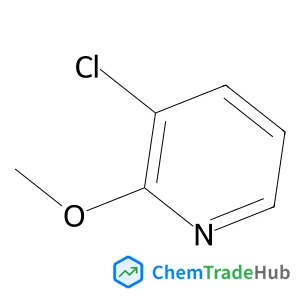

(3beta,7beta,12beta)-3,7,12-Trihydroxy-11,15,23-trioxolanost-8-en-26-oic acid
CAS Number:
98665-22-6
Molecular Formula:
C30H44O8

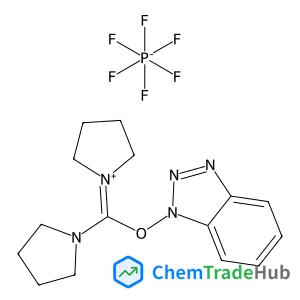
(1H-Benzotriazol-1-yloxy)(di-1-pyrrolidinyl)methylium hexafluorophosphate
CAS Number:
105379-24-6
Molecular Formula:
C15H21F6N5OP
Recommended Suppliers






Disclaimer
This page provides academic journal information for reference and research purposes only. We are not affiliated with any journal publishers and do not handle publication submissions. For publication-related inquiries, please contact the respective journal publishers directly.
If you notice any inaccuracies in the information displayed, please contact us at support@chemtradehub.com. We will promptly review and address your concerns.