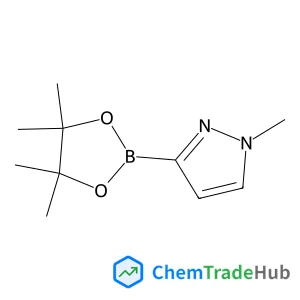
1-Methyl-3-(4,4,5,5-tetramethyl-1,3,2-dioxaborolan-2-yl)-1H-pyrazole
CAS Number:
1020174-04-2
Molecular Formula:
C10H17BN2O2
Stefan Vuckovic, Tom J. P. Irons, Lucas O. Wagner, Andrew M. Teale, Paola Gori-Giorgi
We investigate the construction of approximated exchange–correlation functionals by interpolating locally along the adiabatic connection between the weak- and the strong-coupling regimes, focussing on the effect of using approximate functionals for the strong-coupling energy densities. The gauge problem is avoided by dealing with quantities that are all locally defined in the same way. Using exact ingredients at weak coupling we are able to isolate the error coming from the approximations at strong coupling only. We find that the nonlocal radius model, which retains some of the non-locality of the exact strong-coupling regime, yields very satisfactory results. We also use interpolation models and quantities from the weak- and strong-coupling regimes to define a correlation-type indicator and a lower bound to the exact exchange–correlation energy. Open problems, related to the nature of the local and global slope of the adiabatic connection at weak coupling, are also discussed.
Chao Li, Li Han, Xiping Chen, Xinyu Bao, Qi Sun, Hongwei Ma, Yang Li
DOI: 10.1039/D1PY00416F
Anaïs Pitto-Barry
DOI: 10.1039/D0PY01392G
Bingfeng Shi, Jianhua Lü, Ying Liu, Yang Xiao, Changli Lü
DOI: 10.1039/D1PY00308A
Raita Goseki, Shogo Miyai, Satoshi Uchida, Takashi Ishizone
DOI: 10.1039/D1PY00500F
Jacob J. Lessard, Georg M. Scheutz, Angie B. Korpusik, Rebecca A. Olson, C. Adrian Figg, Brent S. Sumerlin
DOI: 10.1039/D1PY00208B
Shunsuke Ohtani, Natsumi Yamada, Masayuki Gon, Kazuo Tanaka, Yoshiki Chujo
DOI: 10.1039/D1PY00213A
When handling 4-(2-Furylmethyl)thiomorpholine 1,1-dioxide (CAS: 79206-94-3), it ...
When handling 4-Chloro-N-[2-(4-morpholinyl)ethyl]benzamide (CAS: 71320-77-9), it...
Waste containing this compound (CAS: 62921-74-8) should be handled according to ...
Waste containing (S)-Methyl 2-amino-3-cyclohexylpropanoate should be collected i...
This compound can be synthesized using a multi-step process involving the conjug...
There are several alternatives to (2E)-3-(3,4-Dichlorophenyl)acrylic acid in syn...
Ethyl 6-(2-nitrophenyl)imidazo[2,1-b][1,3]thiazole-3-carboxylate (CAS: 925437-84...
Waste containing 2-(1,3-Thiazol-2-yl)ethanamine (CAS: 18453-07-1) should be coll...
Methyl 5-iodo-2-methylbenzoate can be synthesized through the iodination of meth...
5-Chloro[1,2,4]triazolo[1,5-a]pyridine is commonly synthesized via the condensat...

Physical Chemistry Chemical Physics (PCCP) is an international journal co-owned by 19 physical chemistry and physics societies from around the world. This journal publishes original, cutting-edge research in physical chemistry, chemical physics and biophysical chemistry. To be suitable for publication in PCCP, articles must include significant innovation and/or insight into physical chemistry; this is the most important criterion that reviewers and Editors will judge against when evaluating submissions. The journal has a broad scope and welcomes contributions spanning experiment, theory, computation and data science. Topical coverage includes spectroscopy, dynamics, kinetics, statistical mechanics, thermodynamics, electrochemistry, catalysis, surface science, quantum mechanics, quantum computing and machine learning. Interdisciplinary research areas such as polymers and soft matter, materials, nanoscience, energy, surfaces/interfaces, and biophysical chemistry are welcomed if they demonstrate significant innovation and/or insight into physical chemistry. Joined experimental/theoretical studies are particularly appreciated when complementary and based on up-to-date approaches.