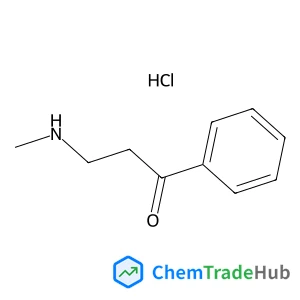
3-(Methylamino)-1-phenyl-1-propanone hydrochloride (1:1)
CAS Number:
2538-50-3
Molecular Formula:
C10H14ClNO
Hao Jin, Jianwei Li, Ying Dai, Yadong Wei
In this paper, we present a comprehensive study on the electronic and optoelectronic properties of indium monochalcogenide (InX with X = S, Se, Te) monolayers with and without strains. Our results show that InX monolayers are indirect semiconductors. Upon the application of strain, the band structures can be modulated and an indirect-to-direct bandgap transition is observed in an InSe monolayer. The electron mobility of up to 2.0 × 103 cm2 (V s)−1 is quantitatively determined in the framework of deformation potential theory. Though the mobility of holes is relatively small, it can be greatly improved by introducing compressive strain, with a value up to 2.8 × 103 cm2 (V s)−1. In addition, the performance of the photoresponse of InX monolayers is evaluated based on first-principles calculations. Under illumination, the InX based systems exhibit high photoresponsivity (Rph = 0.18 A W−1) and external quantum efficiency (EQE = 62.5%), which can be further enhanced via strain. Owing to such excellent electronic and optoelectronic merits, InX monolayers will become promising candidates for next-generation ultrathin and flexible electronic and optoelectronic devices.
Xue-Yi Sun, Ya-Xuan Liang, Cheng-Yan Wu, Quan Tang, Rui Liu, Zhong-Lin Lu, Lan He
DOI: 10.1039/D1PY00232E
Huiqun Wang, Sebla Onbulak, Steven Weigand, Frank S. Bates, Marc A. Hillmyer
DOI: 10.1039/D0PY01728K
Hatice Mutlu, Hongjiao Li, Wolfgang Wenzel
DOI: 10.1039/D0PY01421D
Lishan Li, Yiwen Li, Shuyuan Wang, Liandong Ye, Wei Zhang, Nianchen Zhou, Zhengbiao Zhang, Xiulin Zhu
DOI: 10.1039/D1PY00099C
Marcel Fickenscher, Tom Reimers, Holger Frey
DOI: 10.1039/D1PY00302J
Vincent Bouad, Marc Guerre, Sami Zeliouche, Bruno Améduri, Cédric Totée, Gilles Silly, Rinaldo Poli, Vincent Ladmiral
DOI: 10.1039/D0PY01753A
Younes Saadat, Kyungtae Kim, Reza Foudazi
DOI: 10.1039/D1PY00127B
Jiaxin Shi, Tianze Zheng, Yao Zhang, Baohua Guo, Jun Xu
DOI: 10.1039/D1PY00157D
When handling 4-(2-Furylmethyl)thiomorpholine 1,1-dioxide (CAS: 79206-94-3), it ...
When handling 4-Chloro-N-[2-(4-morpholinyl)ethyl]benzamide (CAS: 71320-77-9), it...
Waste containing this compound (CAS: 62921-74-8) should be handled according to ...
Waste containing (S)-Methyl 2-amino-3-cyclohexylpropanoate should be collected i...
This compound can be synthesized using a multi-step process involving the conjug...
There are several alternatives to (2E)-3-(3,4-Dichlorophenyl)acrylic acid in syn...
Ethyl 6-(2-nitrophenyl)imidazo[2,1-b][1,3]thiazole-3-carboxylate (CAS: 925437-84...
Waste containing 2-(1,3-Thiazol-2-yl)ethanamine (CAS: 18453-07-1) should be coll...
Methyl 5-iodo-2-methylbenzoate can be synthesized through the iodination of meth...
5-Chloro[1,2,4]triazolo[1,5-a]pyridine is commonly synthesized via the condensat...

Physical Chemistry Chemical Physics (PCCP) is an international journal co-owned by 19 physical chemistry and physics societies from around the world. This journal publishes original, cutting-edge research in physical chemistry, chemical physics and biophysical chemistry. To be suitable for publication in PCCP, articles must include significant innovation and/or insight into physical chemistry; this is the most important criterion that reviewers and Editors will judge against when evaluating submissions. The journal has a broad scope and welcomes contributions spanning experiment, theory, computation and data science. Topical coverage includes spectroscopy, dynamics, kinetics, statistical mechanics, thermodynamics, electrochemistry, catalysis, surface science, quantum mechanics, quantum computing and machine learning. Interdisciplinary research areas such as polymers and soft matter, materials, nanoscience, energy, surfaces/interfaces, and biophysical chemistry are welcomed if they demonstrate significant innovation and/or insight into physical chemistry. Joined experimental/theoretical studies are particularly appreciated when complementary and based on up-to-date approaches.

![[4-(Heptyloxy)phenyl]boronic acid structure](https://static.chemtradehub.com/structs/136/136370-19-9-ad33.webp "[4-(Heptyloxy)phenyl]boronic acid structure")