












Particle aggregation mechanisms in ionic liquids
Literature Information
Publication Date
2014-04-07
DOI
10.1039/C4CP00804A
Impact Factor
3.676
Authors
Istvan Szilagyi, Tamas Szabo, Anthony Desert, Gregor Trefalt, Tamas Oncsik, Michal Borkovec
View Original
Abstract
Aggregation of sub-micron and nano-sized polystyrene latex particles was studied in room temperature ionic liquids (ILs) and in their water mixtures by time-resolved light scattering. The aggregation rates were found to vary with the IL-to-water molar ratio in a systematic way. At the water side, the aggregation rate is initially small, but increases rapidly with increasing IL content, and reaches a plateau value. This behaviour resembles simple salts, and can be rationalized by the competition of double-layer and van der Waals forces as surmised by the classical theory of Derjaguin, Landau, Verwey, and Overbeek (DLVO). At the IL side, aggregation slows down again. Two generic mechanisms could be identified to be responsible for the stabilization in ILs, namely viscous stabilization and solvation stabilization. Viscous stabilization is important in highly viscous ILs, as it originates from the slowdown of the diffusion controlled aggregation due to the hindrance of the diffusion in a viscous liquid. The solvation stabilization mechanism is system specific, but can lead to a dramatic slowdown of the aggregation rate in ILs. This mechanism is related to repulsive solvation forces that are operational in ILs due to the layering of the ILs close to the surfaces. These two stabilization mechanisms are suspected to be generic, as they both occur in different ILs, and for particles differing in surface functionalities and size.
Recommended Journals
Related Literature
Two novel non-viral gene delivery vectors: low molecular weight polyethylenimine cross-linked by (2-hydroxypropyl)-β-cyclodextrin or (2-hydroxypropyl)-γ-cyclodextrin
Hongliang Huang, Guping Tang, Qingqing Wang, Da Li, Fenping Shen, Jun Zhou, Hai Yu
2006-03-22
Communication
DOI: 10.1039/B601130F
Monitoring the formation of TTF dimers by Na+ complexation
Marc Sallé, Jean-Yves Balandier, Franck Le Derf, Eric Levillain, Magali Allain, Pascal Viel, Serge Palacin
2006-03-30
Communication
DOI: 10.1039/B518275A
Biocatalytic deuterium- and hydrogen-transfer using over-expressed ADH-‘A’: enhanced stereoselectivity and 2H-labeled chiral alcohols
Christian C. Gruber, Tina M. Poessl, Frank Niehaus, Juergen Eck, Reinhold Oehrlein, Andreas Hafner
2006-04-11
Communication
DOI: 10.1039/B602487D
Hemiaminals as substrates for sulfur ylides: Direct asymmetric syntheses of functionalised pyrrolidines and piperidines
Christoforos G. Kokotos, Varinder K. Aggarwal
2006-04-13
Communication
DOI: 10.1039/B602226J
Low pressure Pd-catalyzed carbonylation in an ionic liquid using a multiphase microflow system
Md. Taifur Rahman, Takahide Fukuyama, Naoya Kamata, Masaaki Sato, Ilhyong Ryu
2006-04-28
Communication
DOI: 10.1039/B600970K
ortho-Hydroxylation of benzoic acids with hydrogen peroxide at a non-heme iron center
Sonia Taktak, Margaret Flook, Bruce M. Foxman, Lawrence Que, Jr., Elena V. Rybak-Akimova
2005-09-23
Communication
DOI: 10.1039/B508004E
Scanning electrochemical microscopy under illumination: an elegant tool to directly determine the mobility of charge carriers within dye-sensitized nanostructured semiconductors
Biljana Bozic, Egbert Figgemeier
2006-04-25
Communication
DOI: 10.1039/B601587E
Selective aerobic oxidation in supercritical carbon dioxide catalyzed by the H5PV2Mo10O40 polyoxometalate
Galia Maayan, Benjamin Ganchegui, Ronny Neumann
2006-04-25
Communication
DOI: 10.1039/B603148J
Metal complexes of selenophosphinates from reactions with (R2PSe)2Se: [M(R2PSe2)n] (M = ZnII, CdII, PbII, InIII, GaIII, CuI, BiIII, NiII; R = iPr, Ph) and [MoV2O2Se2(Se2PiPr2)2]
Chinh Q. Nguyen, Adekunle Adeogun, Mohammad Afzaal, Mohammad A. Malik, Paul O'Brien
2006-04-21
Communication
DOI: 10.1039/B603198F
Organolithium-mediated conversion of β-functionalised aziridines into alkynyl amino alcohols and diamines
Jianhui Huang, Peter O'Brien
2005-10-20
Communication
DOI: 10.1039/B510920E
You might also like
Compound Q&A
What are the main uses of 1H-Indazole-6-carbonitrile (CAS: 141290-59-7)?
1H-Indazole-6-carbonitrile finds applications in pharmaceuticals, where it serve...
141290-59-71H-Indazole-6-carbon...
Compound Q&A
How should waste containing Dioctyl (2E)-2-butenedioate (CAS: 2997-85-5) be handled?
Waste containing Dioctyl (2E)-2-butenedioate (CAS: 2997-85-5) should be collecte...
2997-85-5Dioctyl (2E)-2-buten...
Compound Q&A
What industries use Sodium [(1,2-benzoxazol-3-ylmethyl)sulfonyl]azanide (CAS: 68291-98-5)?
Sodium [(1,2-benzoxazol-3-ylmethyl)sulfonyl]azanide is primarily used in pharmac...
68291-98-5Sodium [(1,2-benzoxa...
Compound Q&A
Are there alternatives to Dimethyl 4-(4,4,5,5-tetramethyl-1,3,2-dioxaborolan-2-yl)-2,6-pyridinedicarboxylate (CAS: 741709-66-0) in synthesis?
Dimethyl 4-(4,4,5,5-tetramethyl-1,3,2-dioxaborolan-2-yl)-2,6-pyridinedicarboxyla...
741709-66-0Dimethyl 4-(4,4,5,5-...
Compound Q&A
How should waste containing 2-Fluoro-6-hydrazinopyridine (CAS: 80714-39-2) be handled?
Waste containing 2-Fluoro-6-hydrazinopyridine (CAS: 80714-39-2) should be manage...
80714-39-22-Fluoro-6-hydrazino...
Compound Q&A
What is 6-Formyl-2-pyridinecarboxylic acid (CAS: 499214-11-8)?
6-Formyl-2-pyridinecarboxylic acid is an organic compound with the molecular for...
499214-11-86-Formyl-2-pyridinec...
Compound Q&A
What is the market or research trend for 3-(3,4-dimethoxyphenyl)-2,5-dimethyl-N-(2-morpholin-4-ylethyl)pyrazolo[1,5-a]pyrimidin-7-amine (CAS: 900874-91-1)?
Research trends for this compound indicate a focus on its potential applications...
900874-91-13-(3,4-dimethoxyphen...
Compound Q&A
How is 9H-Tribenzo[b,d,f]azepine (CAS: 29875-73-8) typically synthesized?
9H-Tribenzo[b,d,f]azepine is typically synthesized via a multi-step process invo...
29875-73-89H-Tribenzo[b,d,f]az...
Compound Q&A
How is 1-Cyclopropyl-7-ethoxy-6-fluoro-8-methoxy-4-oxo-1,4-dihydro-3-quinolinecarboxylic acid (CAS: 1797982-51-4) typically synthesized?
1-Cyclopropyl-7-ethoxy-6-fluoro-8-methoxy-4-oxo-1,4-dihydro-3-quinolinecarboxyli...
1797982-51-41-Cyclopropyl-7-etho...
Compound Q&A
How should waste containing Methyl 3-oxo-1,2,3,4-tetrahydro-6-quinoxalinecarboxylate (CAS: 671820-52-3) be handled?
Waste containing Methyl 3-oxo-1,2,3,4-tetrahydro-6-quinoxalinecarboxylate (CAS: ...
671820-52-3Methyl 3-oxo-1,2,3,4...
Source Journal
Physical Chemistry Chemical Physics

CiteScore:
5.5
Self-citation Rate:
10.3%
Articles per Year:
3036
Physical Chemistry Chemical Physics (PCCP) is an international journal co-owned by 19 physical chemistry and physics societies from around the world. This journal publishes original, cutting-edge research in physical chemistry, chemical physics and biophysical chemistry. To be suitable for publication in PCCP, articles must include significant innovation and/or insight into physical chemistry; this is the most important criterion that reviewers and Editors will judge against when evaluating submissions. The journal has a broad scope and welcomes contributions spanning experiment, theory, computation and data science. Topical coverage includes spectroscopy, dynamics, kinetics, statistical mechanics, thermodynamics, electrochemistry, catalysis, surface science, quantum mechanics, quantum computing and machine learning. Interdisciplinary research areas such as polymers and soft matter, materials, nanoscience, energy, surfaces/interfaces, and biophysical chemistry are welcomed if they demonstrate significant innovation and/or insight into physical chemistry. Joined experimental/theoretical studies are particularly appreciated when complementary and based on up-to-date approaches.
Recommended Compounds
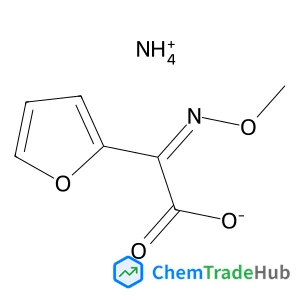
Ammonium (Z)-2-(furan-2-yl)-2-(methoxyimino)acetate
CAS Number:
97148-39-5
Molecular Formula:
C7H10N2O4
![Sodium 3-[(E)-(4-anilinophenyl)diazenyl]benzenesulfonate structure](https://static.chemtradehub.com/structs/587/587-98-4-035f.webp "Sodium 3-[(E)-(4-anilinophenyl)diazenyl]benzenesulfonate structure")
Sodium 3-[(E)-(4-anilinophenyl)diazenyl]benzenesulfonate
CAS Number:
587-98-4
Molecular Formula:
C18H14N3NaO3S
Recommended Suppliers





Disclaimer
This page provides academic journal information for reference and research purposes only. We are not affiliated with any journal publishers and do not handle publication submissions. For publication-related inquiries, please contact the respective journal publishers directly.
If you notice any inaccuracies in the information displayed, please contact us at support@chemtradehub.com. We will promptly review and address your concerns.