












Dissolution of NaCl nanocrystals: an ab initio molecular dynamics study
Literature Information
Publication Date
2014-03-26
DOI
10.1039/C4CP00635F
Impact Factor
3.676
Authors
Nico Holmberg
View Original
Abstract
The dissolution of NaCl has been systematically investigated by employing ab initio molecular dynamics (AIMD) on different NaCl nanocrystals as well as on a surface system immersed in water. We discovered a complex dissolution process simultaneously involving multiple ions initiated at the corner sites of the crystal. Our simulations indicated a difference in the dissolution rates of sodium and chlorine. While sodiums readily became partially solvated, chlorines more frequently transitioned into the fully solvated state leading to an overall greater dissolution rate for Cl. We determined that this difference arises due to faster water mediated elongations of individual ionic bonds to Na, but a significantly slower process for the last bond in comparison to Cl. In an attempt to investigate this phenomenon further, we performed metadynamics based free energy simulations on a surface slab presenting corner sites similar to those in cubic crystals, aiming to extract the dissolution free energy profile of corner ions. In qualitative agreement with the nanocrystal simulations, this revealed a shallower first free energy minimum for Na, but no statistically significant difference in the corresponding barriers and inconclusive results for the latter stage. Finally, simulations of smaller NaCl crystals illustrated how dissolution proceeds beyond the point of crystal lattice collapse, highlighting the strength of solvated ion interactions.
Related Literature
Charge transfer in steam purified arc discharge single walled carbon nanotubes filled with lutetium halides
Ana Santidrián, Magdalena Kierkowicz, Elzbieta Pach, Denisa Darvasiová, Belén Ballesteros, Gerard Tobias, Martin Kalbáč
2020-04-23
Paper
DOI: 10.1039/D0CP01408G
Low-index dielectric metasurfaces supported by metallic substrates for efficient second-harmonic generation in the blue-ultraviolet range
Kwang-Hyon Kim
2020-02-29
Paper
DOI: 10.1039/D0CP00150C
Phase separation in pore-spanning membranes induced by differences in surface adhesion
Jeremias Sibold, Vera E. Tewaag, Thomas Vagedes, Ingo Mey
2020-04-08
Paper
DOI: 10.1039/D0CP00335B
Induced magnetic field in sp-hybridized carbon rings: analysis of double aromaticity and antiaromaticity in cyclo[2N]carbon allotropes
Nickolas D. Charistos, Alvaro Muñoz-Castro
2020-04-06
Paper
DOI: 10.1039/D0CP01252A
Structural and electronic properties of NaTaO3 cubic nanowires
Guilherme Ribeiro Portugal, Jeverson Teodoro Arantes
2020-03-16
Paper
DOI: 10.1039/C9CP06769H
Study of the surface species during thermal and plasma-enhanced atomic layer deposition of titanium oxide films using in situ IR-spectroscopy and in vacuo X-ray photoelectron spectroscopy
Elisabeth Levrau, Matthias M. Minjauw, Michiel Van Daele, Rita Vos, Jolien Dendooven, Christophe Detavernier
2020-04-08
Paper
DOI: 10.1039/D0CP00395F
Unconventional deformation potential and half-metallicity in zigzag nanoribbons of 2D-Xenes
Jin-Lei Shi, Xing-Ju Zhao, Gotthard Seifert, Su-Huai Wei
2020-03-02
Paper
DOI: 10.1039/C9CP06416H
Clarifying the impacts of surface hydroxyls on CO oxidation on CeO2(100) surfaces: a DFT+U study
Hui Zhou, Dong Wang, Xue-Qing Gong
2020-03-09
Paper
DOI: 10.1039/D0CP00204F
Characterisation of the temperature-dependent M1 to R phase transition in W-doped VO2 nanorod aggregates by Rietveld refinement and theoretical modelling
Dianhui Wang, Jihui Liang, Chaohao Hu, Lixian Sun, Craig A. J. Fisher
2020-03-26
Paper
DOI: 10.1039/D0CP01058H
You might also like
Compound Q&A
What are the main uses of 1-(3-Aminophenyl)-3-[(3R)-1-(3,3-dimethyl-2-oxobutyl)-2-oxo-5-(2-pyridinyl)-2,3-dihydro-1H-1,4-benzodiazepin-3-yl]urea (CAS: 155412-88-7)?
This compound is mainly used as an intermediate in the synthesis of antipsychoti...
155412-88-71-(3-Aminophenyl)-3-...
Compound Q&A
How should waste containing 1-(D-Ribofuranosyl)-1,4-dihydro-3-pyridinecarboxamide (CAS: 19132-12-8) be handled?
Waste containing 1-(D-Ribofuranosyl)-1,4-dihydro-3-pyridinecarboxamide (CAS: 191...
19132-12-81-(D-Ribofuranosyl)-...
Compound Q&A
What regulatory guidelines apply to 2-Methyl-2-propanyl 3-bromo-3-(hydroxymethyl)-1-azetidinecarboxylate (CAS: 2007919-81-3)?
2-Methyl-2-propanyl 3-bromo-3-(hydroxymethyl)-1-azetidinecarboxylate (CAS: 20079...
2007919-81-32-Methyl-2-propanyl ...
Compound Q&A
What is N-(4-Chloro-2-pyridinyl)acetamide (CAS: 245056-66-0)?
N-(4-Chloro-2-pyridinyl)acetamide (CAS: 245056-66-0) is a chemical compound with...
245056-66-0N-(4-Chloro-2-pyridi...
Compound Q&A
What is 5-Chloro-2-hydroxybenzoic acid (CAS: 321-14-2)?
5-Chloro-2-hydroxybenzoic acid, also known as 5-chlorosalicylic acid, is an arom...
321-14-25-Chloro-2-hydroxybe...
Compound Q&A
What precautions should be taken when handling 1,1-Dichloro-1-fluoroethane (CAS: 1717-00-6)?
When handling 1,1-Dichloro-1-fluoroethane (CAS: 1717-00-6), it is important to u...
1717-00-61,1-Dichloro-1-fluor...
Compound Q&A
What are the physical and chemical properties of Fmoc-(2S,3R)-3-phenylpyrrolidine-2-carboxylic acid (CAS: 281655-32-1)?
Fmoc-(2S,3R)-3-phenylpyrrolidine-2-carboxylic acid is a white crystalline solid ...
281655-32-1Fmoc-(2S,3R)-3-pheny...
Compound Q&A
What are the main uses of 4-Amino-5-bromo-2-pyridinecarboxylic acid (CAS: 1363381-01-4)?
4-Amino-5-bromo-2-pyridinecarboxylic acid is primarily used as a precursor in th...
1363381-01-44-Amino-5-bromo-2-py...
Compound Q&A
What precautions should be taken when handling (S)-tert-butyl 2-((2-(4-bromophenyl)-2-oxoethyl)carbamoyl)pyrrolidine-1-carboxylate (CAS: 1007881-98-2)?
Handling this compound should be done with personal protective equipment (PPE) i...
1007881-98-2(S)-tert-butyl 2-((2...
Compound Q&A
What precautions should be taken when handling 8-bromo-2,2-dimethyl-3,4-dihydro-2H-1,4-benzoxazin-3-one (CAS: 688363-73-7)?
When handling 8-bromo-2,2-dimethyl-3,4-dihydro-2H-1,4-benzoxazin-3-one, use prop...
688363-73-78-bromo-2,2-dimethyl...
Source Journal
Physical Chemistry Chemical Physics

CiteScore:
5.5
Self-citation Rate:
10.3%
Articles per Year:
3036
Physical Chemistry Chemical Physics (PCCP) is an international journal co-owned by 19 physical chemistry and physics societies from around the world. This journal publishes original, cutting-edge research in physical chemistry, chemical physics and biophysical chemistry. To be suitable for publication in PCCP, articles must include significant innovation and/or insight into physical chemistry; this is the most important criterion that reviewers and Editors will judge against when evaluating submissions. The journal has a broad scope and welcomes contributions spanning experiment, theory, computation and data science. Topical coverage includes spectroscopy, dynamics, kinetics, statistical mechanics, thermodynamics, electrochemistry, catalysis, surface science, quantum mechanics, quantum computing and machine learning. Interdisciplinary research areas such as polymers and soft matter, materials, nanoscience, energy, surfaces/interfaces, and biophysical chemistry are welcomed if they demonstrate significant innovation and/or insight into physical chemistry. Joined experimental/theoretical studies are particularly appreciated when complementary and based on up-to-date approaches.
Recommended Compounds
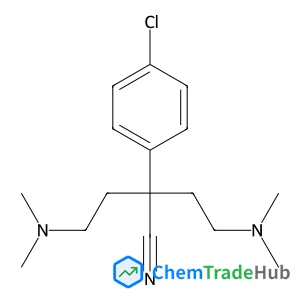
2-(4-Chlorophenyl)-4-(dimethylamino)-2-(2-(dimethylamino)ethyl)butanenitrile
CAS Number:
1246816-57-8
Molecular Formula:
C16H24ClN3
Recommended Suppliers





Disclaimer
This page provides academic journal information for reference and research purposes only. We are not affiliated with any journal publishers and do not handle publication submissions. For publication-related inquiries, please contact the respective journal publishers directly.
If you notice any inaccuracies in the information displayed, please contact us at support@chemtradehub.com. We will promptly review and address your concerns.