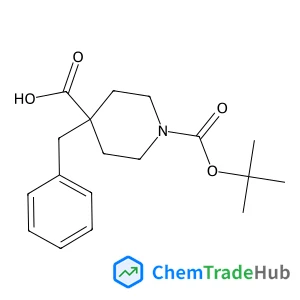
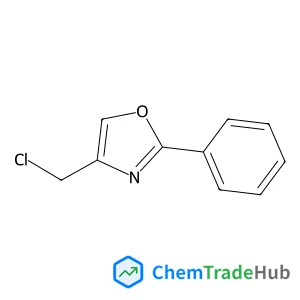
![Methyl 4-({[(2-methyl-2-propanyl)oxy]carbonyl}amino)bicyclo[2.2.2]octane-1-carboxylate structure](https://static.chemtradehub.com/structs/943/943845-74-7-b7e5.webp "Methyl 4-({[(2-methyl-2-propanyl)oxy]carbonyl}amino)bicyclo[2.2.2]octane-1-carboxylate structure")
Methyl 4-({[(2-methyl-2-propanyl)oxy]carbonyl}amino)bicyclo[2.2.2]octane-1-carboxylate
CAS Number:
943845-74-7
Molecular Formula:
C15H25NO4
Guilherme Ribeiro Portugal, Jeverson Teodoro Arantes
Sodium tantalate nanostructures have been classified among the best materials to conduct photocatalytic reactions. Therefore, understanding the relationship between nanoscale surface phenomena and photocatalytic properties is of fundamental importance. We performed Density Functional Theory calculations to investigate how chemically different facets may affect intrinsic properties of NaTaO3 cubic nanowires. Besides half-metallicity, the NaO-terminated wire relaxes structurally, presenting unoccupied down O 2p levels located above its valence band due to severely reduced coordination of its edges, which may allow it to be applied in spintronics systems. NaTaO-terminated wires have surface TaO4 units that, upon structural reconstruction, become more planar and introduce occupied Ta 5d levels below their conduction band. The emergence of such levels is also related to the overlap of Ta dz2 orbitals from adjacent NaTaO facets. Amongst other properties discussed herein, localized levels may be relevant for photocatalysis not only in terms of intrinsic bandgap engineering but also concerning the alignment with water redox potentials.

Current Pharmaceutical Biotechnology

Photochemical & Photobiological Sciences

Advanced Engineering Materials

Physical Chemistry Chemical Physics

Molecular Diversity

Angewandte Chemie International Edition

Environmental Toxicology and Pharmacology

Coloration Technology

European Journal of Organic Chemistry

Faraday Discussions
Bartlomiej Wiendlocha, Jean-Baptiste Vaney, Christophe Candolfi, Anne Dauscher, Bertrand Lenoir, Janusz Tobola
DOI: 10.1039/C8CP00431E
Xiuting Li, Christopher Batchelor-McAuley, Javor K. Novev, Richard G. Compton
DOI: 10.1039/C8CP01360H
Katharina Kohse-Höinghaus, Jürgen Troe, Jens-Uwe Grabow, Matthias Olzmann, Gernot Friedrichs, Klaus-Dieter Hungenberg
DOI: 10.1039/C8CP90054J
Charles K. Westbrook, Marco Mehl, William J. Pitz, Goutham Kukkadapu, Scott Wagnon, Kuiwen Zhang
DOI: 10.1039/C7CP07901J
Wei-Wei Guo, Teng-Shuo Zhang, Wei-Hai Fang, Ganglong Cui
DOI: 10.1039/C7CP08696B
Cinzia Chiappe, Christian Silvio Pomelli
DOI: 10.1039/C7CP07289A
S. Liu, D. Baugh, K. Motobayashi, X. Zhao, S. Gawinkowski, L. Grill, M. Persson, T. Kumagai
DOI: 10.1039/C8CP00178B
Antony Cyril Arulrajan, Christophe Renault, Stanley C. S. Lai
DOI: 10.1039/C8CP01835A
Xianming Cheng, Yane Zheng
DOI: 10.1039/C7CP08376A
This compound is mainly used as an intermediate in the synthesis of antipsychoti...
Waste containing 1-(D-Ribofuranosyl)-1,4-dihydro-3-pyridinecarboxamide (CAS: 191...
2-Methyl-2-propanyl 3-bromo-3-(hydroxymethyl)-1-azetidinecarboxylate (CAS: 20079...
N-(4-Chloro-2-pyridinyl)acetamide (CAS: 245056-66-0) is a chemical compound with...
5-Chloro-2-hydroxybenzoic acid, also known as 5-chlorosalicylic acid, is an arom...
When handling 1,1-Dichloro-1-fluoroethane (CAS: 1717-00-6), it is important to u...
Fmoc-(2S,3R)-3-phenylpyrrolidine-2-carboxylic acid is a white crystalline solid ...
4-Amino-5-bromo-2-pyridinecarboxylic acid is primarily used as a precursor in th...
Handling this compound should be done with personal protective equipment (PPE) i...
When handling 8-bromo-2,2-dimethyl-3,4-dihydro-2H-1,4-benzoxazin-3-one, use prop...
Physical Chemistry Chemical Physics (PCCP) is an international journal co-owned by 19 physical chemistry and physics societies from around the world. This journal publishes original, cutting-edge research in physical chemistry, chemical physics and biophysical chemistry. To be suitable for publication in PCCP, articles must include significant innovation and/or insight into physical chemistry; this is the most important criterion that reviewers and Editors will judge against when evaluating submissions. The journal has a broad scope and welcomes contributions spanning experiment, theory, computation and data science. Topical coverage includes spectroscopy, dynamics, kinetics, statistical mechanics, thermodynamics, electrochemistry, catalysis, surface science, quantum mechanics, quantum computing and machine learning. Interdisciplinary research areas such as polymers and soft matter, materials, nanoscience, energy, surfaces/interfaces, and biophysical chemistry are welcomed if they demonstrate significant innovation and/or insight into physical chemistry. Joined experimental/theoretical studies are particularly appreciated when complementary and based on up-to-date approaches.
![Pyrazolo[1,5-a]pyridine-3-carbothioamide structure](https://static.chemtradehub.com/structs/885/885275-44-5-aae0.webp "Pyrazolo[1,5-a]pyridine-3-carbothioamide structure")