











Study of the surface species during thermal and plasma-enhanced atomic layer deposition of titanium oxide films using in situ IR-spectroscopy and in vacuo X-ray photoelectron spectroscopy
Literature Information
Publication Date
2020-04-08
DOI
10.1039/D0CP00395F
Impact Factor
3.676
Authors
Elisabeth Levrau, Matthias M. Minjauw, Michiel Van Daele, Rita Vos, Jolien Dendooven, Christophe Detavernier
View Original
Abstract
The thermal and plasma-enhanced atomic layer deposition (ALD) growth of titanium oxide using an alkylamine precursor – tetrakis(dimethylamino)titanium (TDMAT) – was investigated. The surface species present during both the precursor and co-reactant pulse were studied with in situ reflection mid-IR spectroscopy (FTIR) and in vacuo X-ray photoelectron spectroscopy (XPS). The thermal process using H2O vapor proceeds through a typical ligand exchange reaction mechanism. The plasma-enhanced ALD processes using H2O-plasma or O2-plasma exhibit an additional decomposition and combustion reaction mechanism. After the plasma exposure, imine (NC) and isocyanate (NCO) surface species were observed by in situ FTIR. In addition, nitrites (NOx) were detected using in vacuo XPS during the O2-plasma process. This study presents the importance of the use of in situ FTIR and in vacuo XPS as complementary techniques to learn more about the ALD reaction mechanism. While in situ FTIR is very sensitive to changes of chemical bonds at the surface, exact identification and quantification could only be done with the aid of in vacuo XPS.
Recommended Journals
Related Literature
Electronic and optical properties of boron phosphide/blue phosphorus heterostructures
Yesim Mogulkoc, Aybey Mogulkoc, Bora Alkan
2018-04-20
Paper
DOI: 10.1039/C8CP00994E
Modifying bis(triflimide) ionic liquids by dissolving early transition metal carbamates
Cinzia Chiappe, Christian Silvio Pomelli
2018-01-18
Paper
DOI: 10.1039/C7CP07289A
Defect evolution in ZnO and its effect on radiation tolerance
Jinpeng Lv, Xingji Li
2018-04-03
Paper
DOI: 10.1039/C8CP01855C
Mechanistic insights into the interaction between energetic oxygen ions and nanosized ZnFe2O4: XAS-XMCD investigations
Jitendra Pal Singh, Baljeet Kaur, Aditya Sharma, So Hee Kim, Sanjeev Gautam, Ramesh Chandra Srivastava, Navdeep Goyal, Weol Cheol Lim, H.-J. Lin, J. M. Chen, K. Asokan, D. Kanjilal, Sung Ok Won, Ik-Jae Lee, Keun Hwa Chae
2018-04-03
Paper
DOI: 10.1039/C8CP00368H
H-Abstraction reactions by OH, HO2, O, O2 and benzyl radical addition to O2 and their implications for kinetic modelling of toluene oxidation
M. Pelucchi, C. Cavallotti, T. Faravelli, S. J. Klippenstein
2018-01-25
Paper
DOI: 10.1039/C7CP07779C
QM/MM studies on the excited-state relaxation mechanism of a semisynthetic dTPT3 base
Wei-Wei Guo, Teng-Shuo Zhang, Wei-Hai Fang, Ganglong Cui
2018-01-15
Paper
DOI: 10.1039/C7CP08696B
Hittorf's violet phosphorene as a promising candidate for optoelectronic and photocatalytic applications: first-principles characterization
Yi-Lin Lu, Wei Zhou, Shuhua Dai, Baozeng Zhou, Hui Zhao, Ping Wu
2018-03-28
Paper
DOI: 10.1039/C8CP01364K
Magnetization relaxation in the single-ion magnet DySc2N@C80: quantum tunneling, magnetic dilution, and unconventional temperature dependence
D. S. Krylov, F. Liu, A. Brandenburg, L. Spree, V. Bon, S. Kaskel, A. U. B. Wolter, B. Büchner, S. M. Avdoshenko, A. A. Popov
2018-04-10
Paper
DOI: 10.1039/C8CP01608A
Barriometry – an enhanced database of accurate barrier heights for gas-phase reactions
Bun Chan, John M. Simmie
2018-01-08
Paper
DOI: 10.1039/C7CP08045J
Plasmonic sphere-on-plane systems with semiconducting polymer spacer layers
Binxing Yu, Jill I. Tracey, Zhongkai Cheng, Martin Vacha
2018-03-26
Paper
DOI: 10.1039/C8CP01314D
You might also like
Compound Q&A
What are the main uses of 1-(3-Aminophenyl)-3-[(3R)-1-(3,3-dimethyl-2-oxobutyl)-2-oxo-5-(2-pyridinyl)-2,3-dihydro-1H-1,4-benzodiazepin-3-yl]urea (CAS: 155412-88-7)?
This compound is mainly used as an intermediate in the synthesis of antipsychoti...
155412-88-71-(3-Aminophenyl)-3-...
Compound Q&A
How should waste containing 1-(D-Ribofuranosyl)-1,4-dihydro-3-pyridinecarboxamide (CAS: 19132-12-8) be handled?
Waste containing 1-(D-Ribofuranosyl)-1,4-dihydro-3-pyridinecarboxamide (CAS: 191...
19132-12-81-(D-Ribofuranosyl)-...
Compound Q&A
What regulatory guidelines apply to 2-Methyl-2-propanyl 3-bromo-3-(hydroxymethyl)-1-azetidinecarboxylate (CAS: 2007919-81-3)?
2-Methyl-2-propanyl 3-bromo-3-(hydroxymethyl)-1-azetidinecarboxylate (CAS: 20079...
2007919-81-32-Methyl-2-propanyl ...
Compound Q&A
What is N-(4-Chloro-2-pyridinyl)acetamide (CAS: 245056-66-0)?
N-(4-Chloro-2-pyridinyl)acetamide (CAS: 245056-66-0) is a chemical compound with...
245056-66-0N-(4-Chloro-2-pyridi...
Compound Q&A
What is 5-Chloro-2-hydroxybenzoic acid (CAS: 321-14-2)?
5-Chloro-2-hydroxybenzoic acid, also known as 5-chlorosalicylic acid, is an arom...
321-14-25-Chloro-2-hydroxybe...
Compound Q&A
What precautions should be taken when handling 1,1-Dichloro-1-fluoroethane (CAS: 1717-00-6)?
When handling 1,1-Dichloro-1-fluoroethane (CAS: 1717-00-6), it is important to u...
1717-00-61,1-Dichloro-1-fluor...
Compound Q&A
What are the physical and chemical properties of Fmoc-(2S,3R)-3-phenylpyrrolidine-2-carboxylic acid (CAS: 281655-32-1)?
Fmoc-(2S,3R)-3-phenylpyrrolidine-2-carboxylic acid is a white crystalline solid ...
281655-32-1Fmoc-(2S,3R)-3-pheny...
Compound Q&A
What are the main uses of 4-Amino-5-bromo-2-pyridinecarboxylic acid (CAS: 1363381-01-4)?
4-Amino-5-bromo-2-pyridinecarboxylic acid is primarily used as a precursor in th...
1363381-01-44-Amino-5-bromo-2-py...
Compound Q&A
What precautions should be taken when handling (S)-tert-butyl 2-((2-(4-bromophenyl)-2-oxoethyl)carbamoyl)pyrrolidine-1-carboxylate (CAS: 1007881-98-2)?
Handling this compound should be done with personal protective equipment (PPE) i...
1007881-98-2(S)-tert-butyl 2-((2...
Compound Q&A
What precautions should be taken when handling 8-bromo-2,2-dimethyl-3,4-dihydro-2H-1,4-benzoxazin-3-one (CAS: 688363-73-7)?
When handling 8-bromo-2,2-dimethyl-3,4-dihydro-2H-1,4-benzoxazin-3-one, use prop...
688363-73-78-bromo-2,2-dimethyl...
Source Journal
Physical Chemistry Chemical Physics

CiteScore:
5.5
Self-citation Rate:
10.3%
Articles per Year:
3036
Physical Chemistry Chemical Physics (PCCP) is an international journal co-owned by 19 physical chemistry and physics societies from around the world. This journal publishes original, cutting-edge research in physical chemistry, chemical physics and biophysical chemistry. To be suitable for publication in PCCP, articles must include significant innovation and/or insight into physical chemistry; this is the most important criterion that reviewers and Editors will judge against when evaluating submissions. The journal has a broad scope and welcomes contributions spanning experiment, theory, computation and data science. Topical coverage includes spectroscopy, dynamics, kinetics, statistical mechanics, thermodynamics, electrochemistry, catalysis, surface science, quantum mechanics, quantum computing and machine learning. Interdisciplinary research areas such as polymers and soft matter, materials, nanoscience, energy, surfaces/interfaces, and biophysical chemistry are welcomed if they demonstrate significant innovation and/or insight into physical chemistry. Joined experimental/theoretical studies are particularly appreciated when complementary and based on up-to-date approaches.
Recommended Compounds
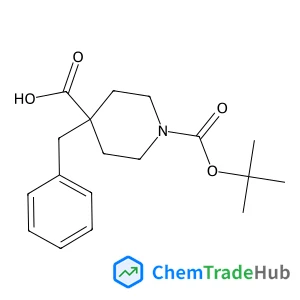
4-Benzyl-1-(tert-butoxycarbonyl)piperidine-4-carboxylic acid
CAS Number:
170838-87-6
Molecular Formula:
C18H25NO4


Recommended Suppliers






Disclaimer
This page provides academic journal information for reference and research purposes only. We are not affiliated with any journal publishers and do not handle publication submissions. For publication-related inquiries, please contact the respective journal publishers directly.
If you notice any inaccuracies in the information displayed, please contact us at support@chemtradehub.com. We will promptly review and address your concerns.